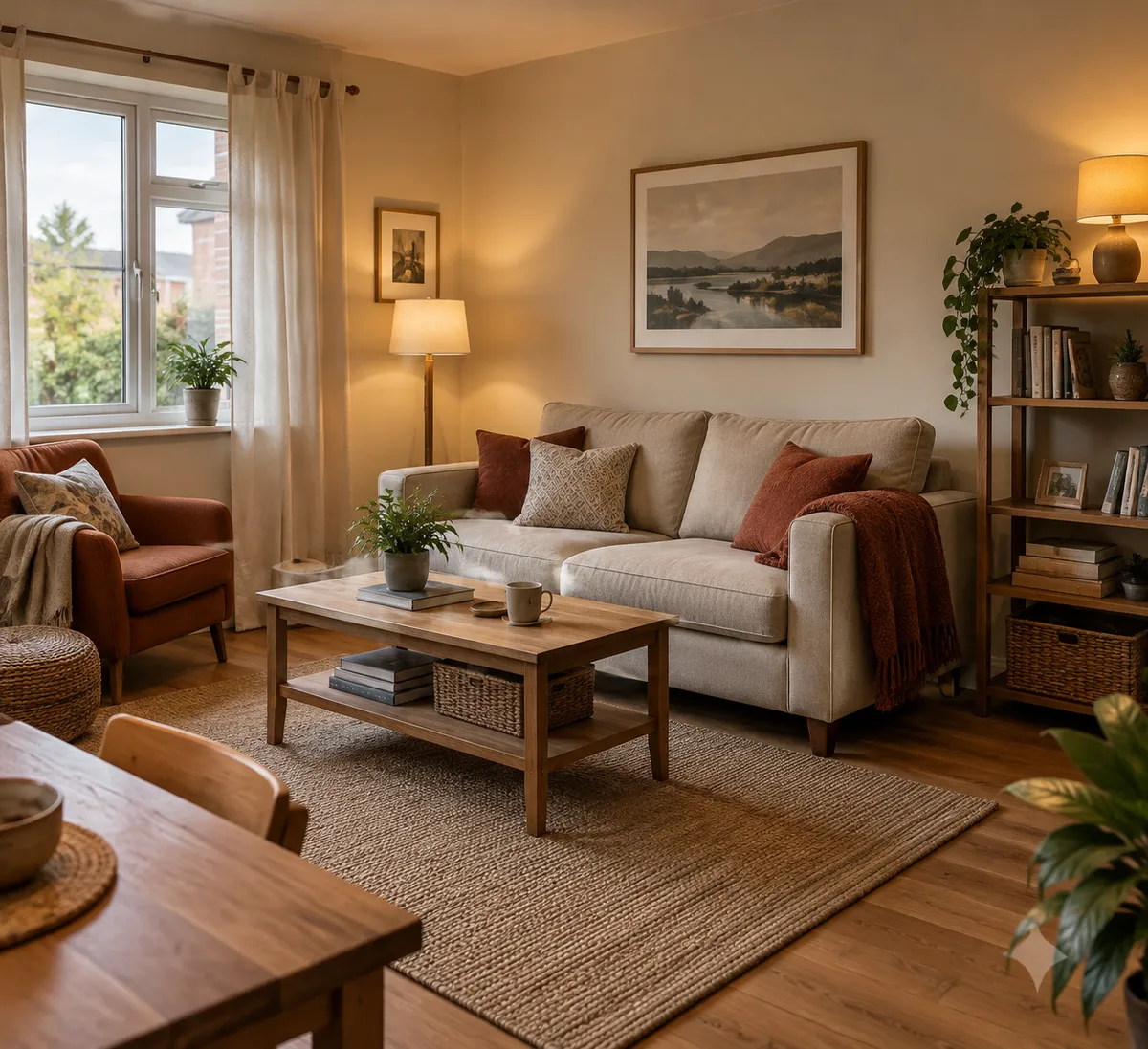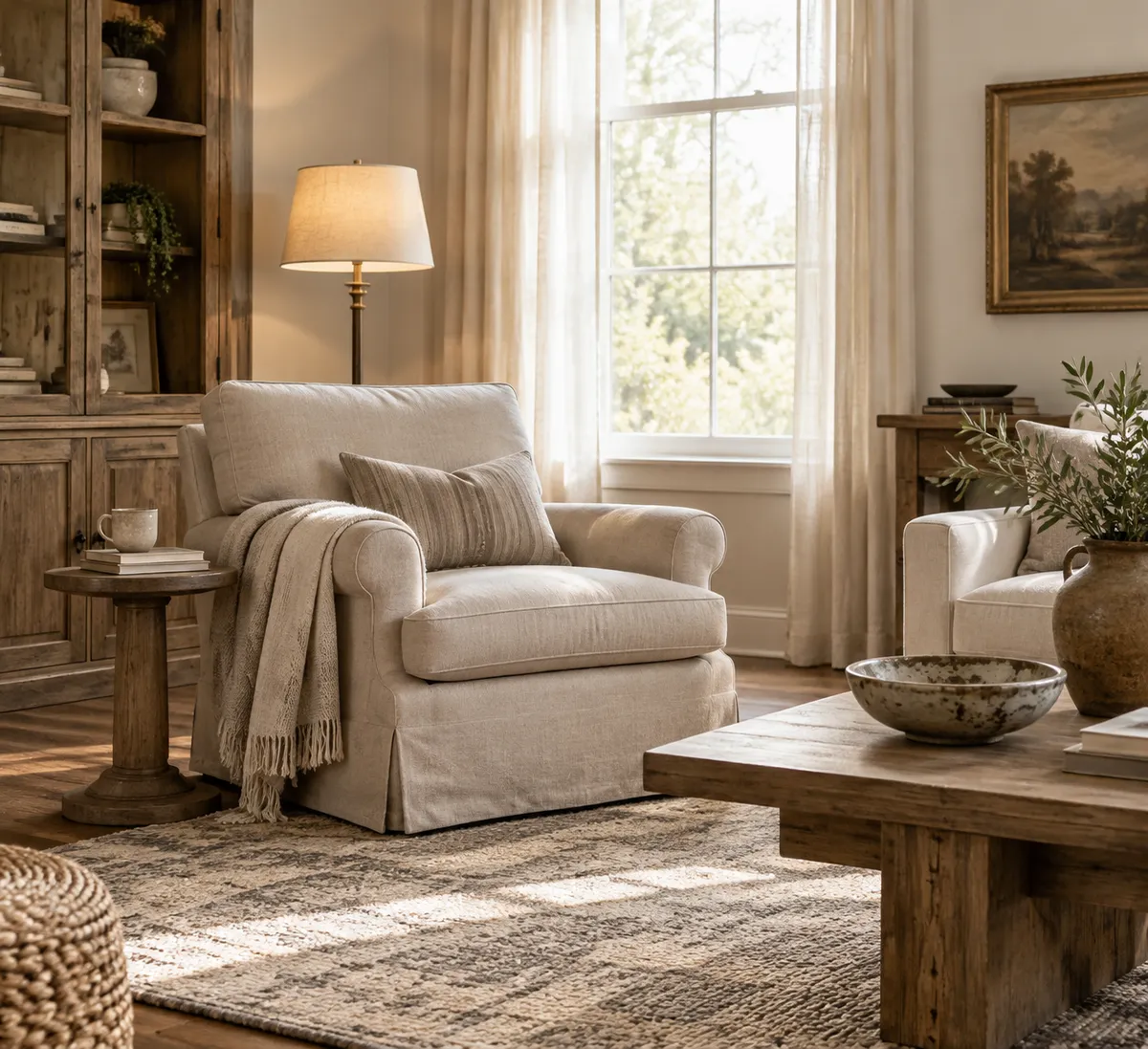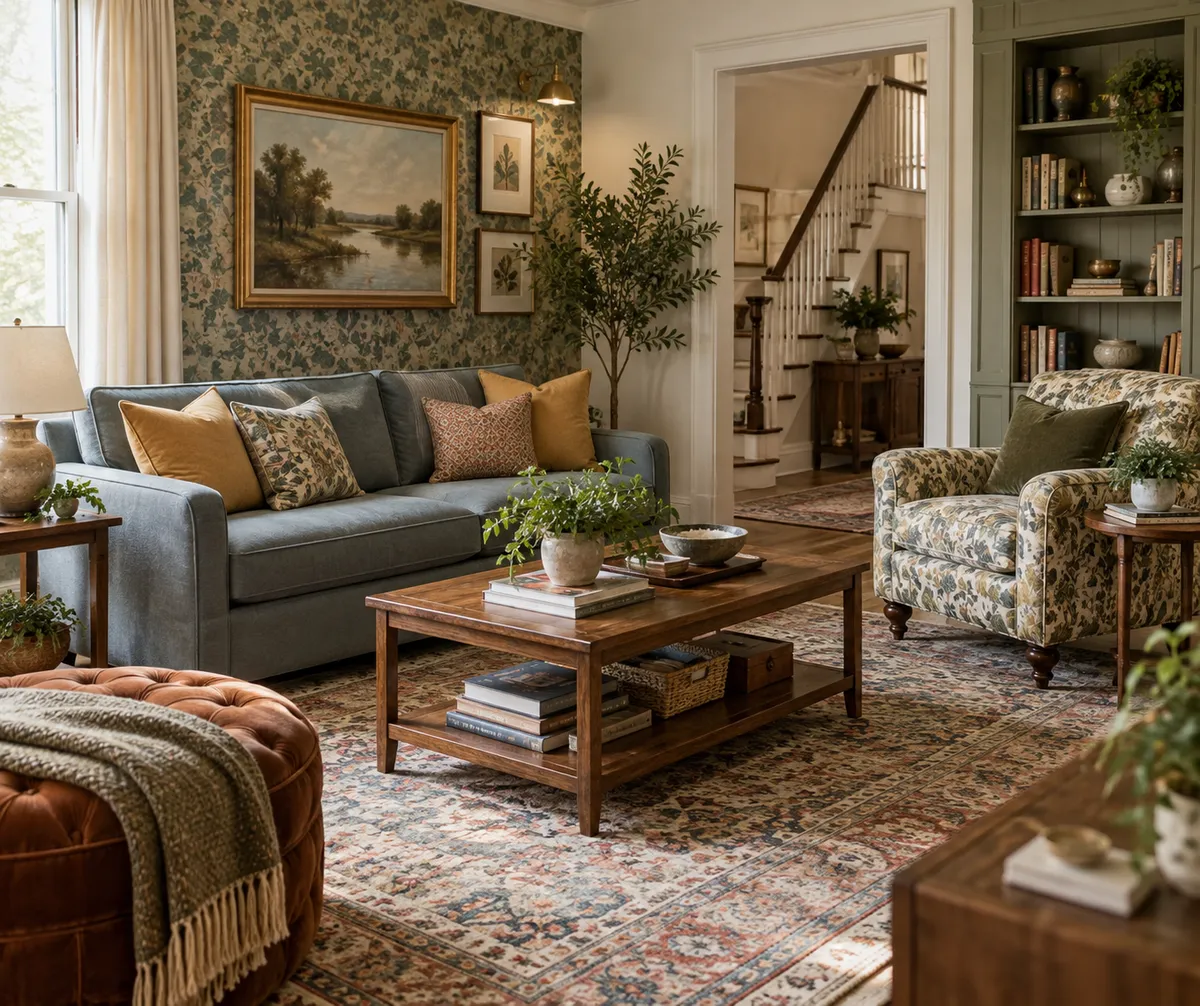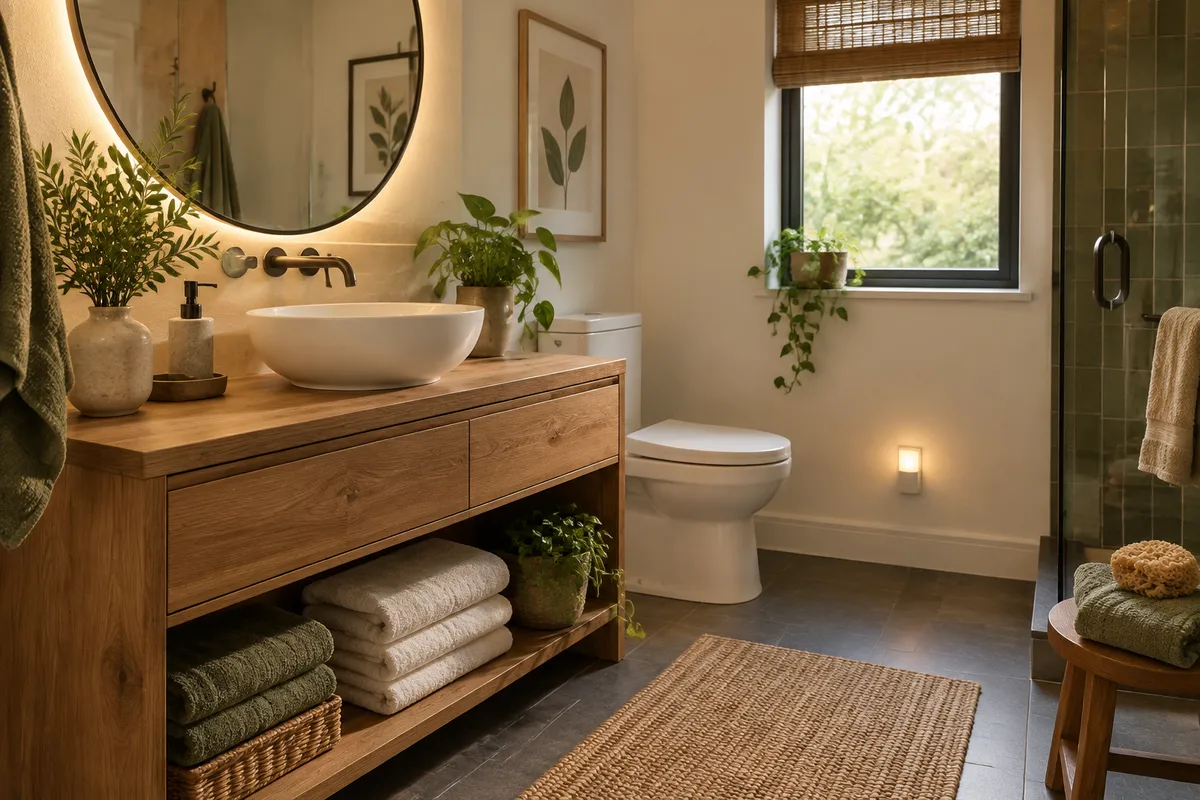
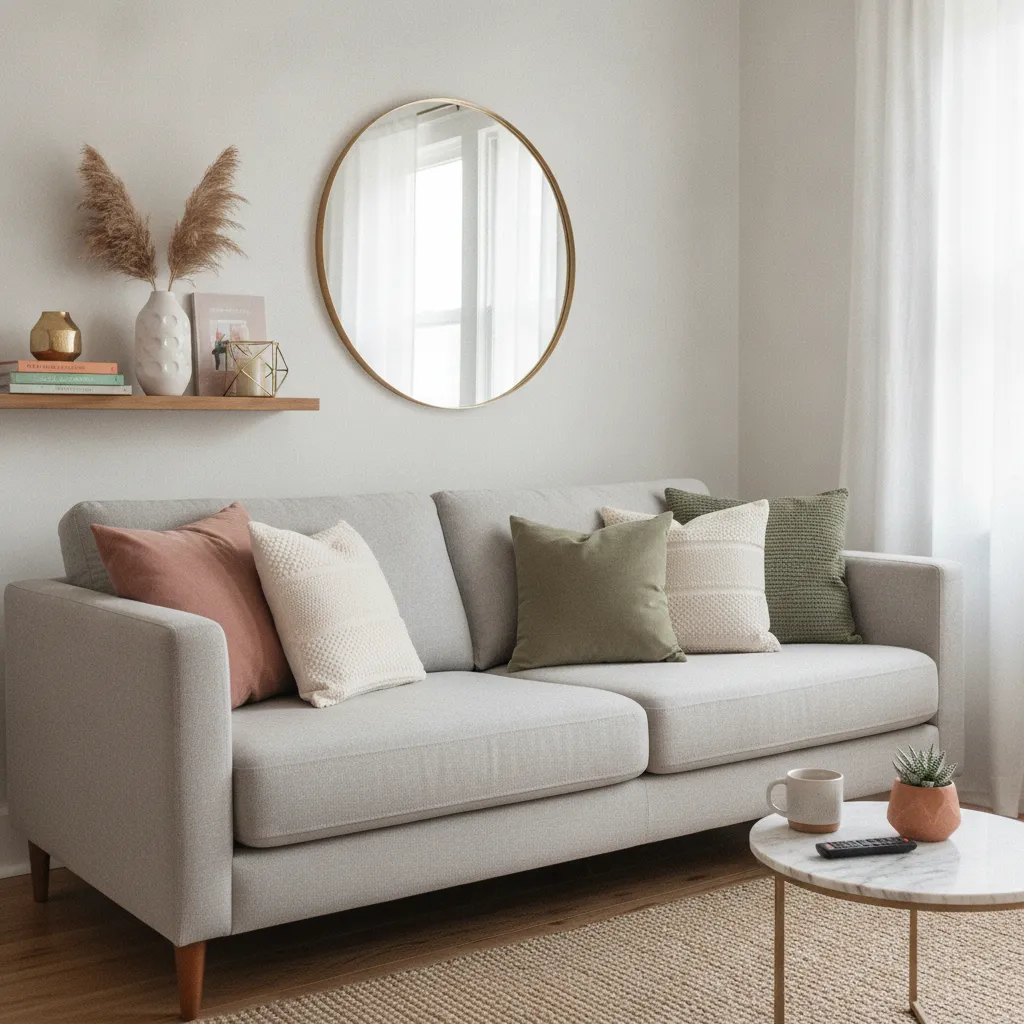
Fall doesn't need a mountain of themed decor to feel like fall. Homes & Gardens' "Very British Edit" makes the case for a quieter approach: small, practical updates in texture, color, storage and lighting that make your home feel snug without looking like a seasonal display aisle.
That's the approach here. You'll get a handful of low-cost swaps you can make in an afternoon, and most of them will still earn their place in February.
Start With Texture, Not Stuff
The fastest way to make a room feel cozier is to change what it feels like, not to add more objects. Per the Homes & Gardens piece, texture is one of the core ingredients of a warmer fall home.
Try this order:
- Sofa or bed first. Add one throw and one or two cushions in a different texture from what's already there. Think chunky knit, wool, or velvet against smooth linen or cotton.
- Then the floor. If you have a rug, consider layering a smaller one on top, or add a runner by the door.
- Stop at three. If a room starts to feel busy, you've added too much. Texture works because it's layered, not piled.
On a budget, shop your own house first. A blanket from the guest room or cushion covers from another room cost nothing and make a good test run.
Keep the Color Restrained
The "quiet" in quiet fall decorating comes mostly from color. Rather than bright orange everything, lean on a few autumnal shades and let them sit alongside the neutrals you already own.
A simple way to do it:
- Pick one warm accent shade that suits your room.
- Repeat it in two or three small places, such as a cushion cover, a vase, and a candle.
- Leave the big pieces, like sofas, curtains and walls, alone.
Swapping small items is cheap, reversible, and easy to change again when the season does.
Make Storage Part of the Look
Cold weather brings bulkier things: blankets, boots, coats, scarves. The trick is to give them somewhere attractive to live so they add to the mood instead of cluttering it.
For blankets
A basket or lidded box beside the sofa keeps throws within reach and off the floor. A ladder or a simple wall hook works if you'd rather keep them visible and folded.
For boots and shoes
A tray or a low bench by the door contains muddy pairs and gives you a spot to sit. In a small entry, a boot tray alone does a lot of the work.
For seasonal swaps
Light summer throws and linens can go into a under-bed box while the heavier ones come out. That rotation keeps surfaces clear and makes the change of season feel like a small ritual rather than a chore.
If you're in a small space, choose storage that doubles as furniture, like a lidded basket that works as a side table or a bench with room beneath.
Fix the Lighting
Shorter days make lighting matter more. Overhead lights tend to flatten a room, so the cozy move is to lower the light source.
- Use lamps instead of the ceiling light in the evening. Two or three lamps at different heights feel much warmer than one bright fixture.
- Check your bulbs. Warmer-toned bulbs make a room feel softer than cool white ones.
- Add candlelight on a table, shelf or windowsill for the final layer.
This is often the cheapest change on the list and the one people notice first.
Add Functional Details
The Homes & Gardens approach favors pieces that are useful as well as pretty. A few ideas in that spirit:
- A hook rail or pegs by the door for coats and bags
- A tray on the coffee table to corral remotes and a candle
- A ceramic bowl or jug that holds seasonal branches or dried stems instead of a themed ornament
- A doormat that handles wet weather
Each does a job, and none of them reads as "fall" in a way you'd have to pack away in November.
A Quick Weekend Plan
Don't try to do everything at once. Here's a sensible split:
- Saturday morning: Pull throws and cushions from around the house and restyle the sofa and bed.
- Saturday afternoon: Sort out one storage problem, whether that's the blanket basket or the boot tray.
- Sunday: Swap bulbs, move lamps, and add one warm accent in a small object.
You can spend very little or a bit more, depending on whether you reuse what you have or buy a few new pieces.
The One Rule to Keep
Before you buy anything seasonal, ask whether you'd still want it in spring. If the answer is yes, it's probably a good buy. If not, put it back and reach for a texture, a lamp or a basket instead.