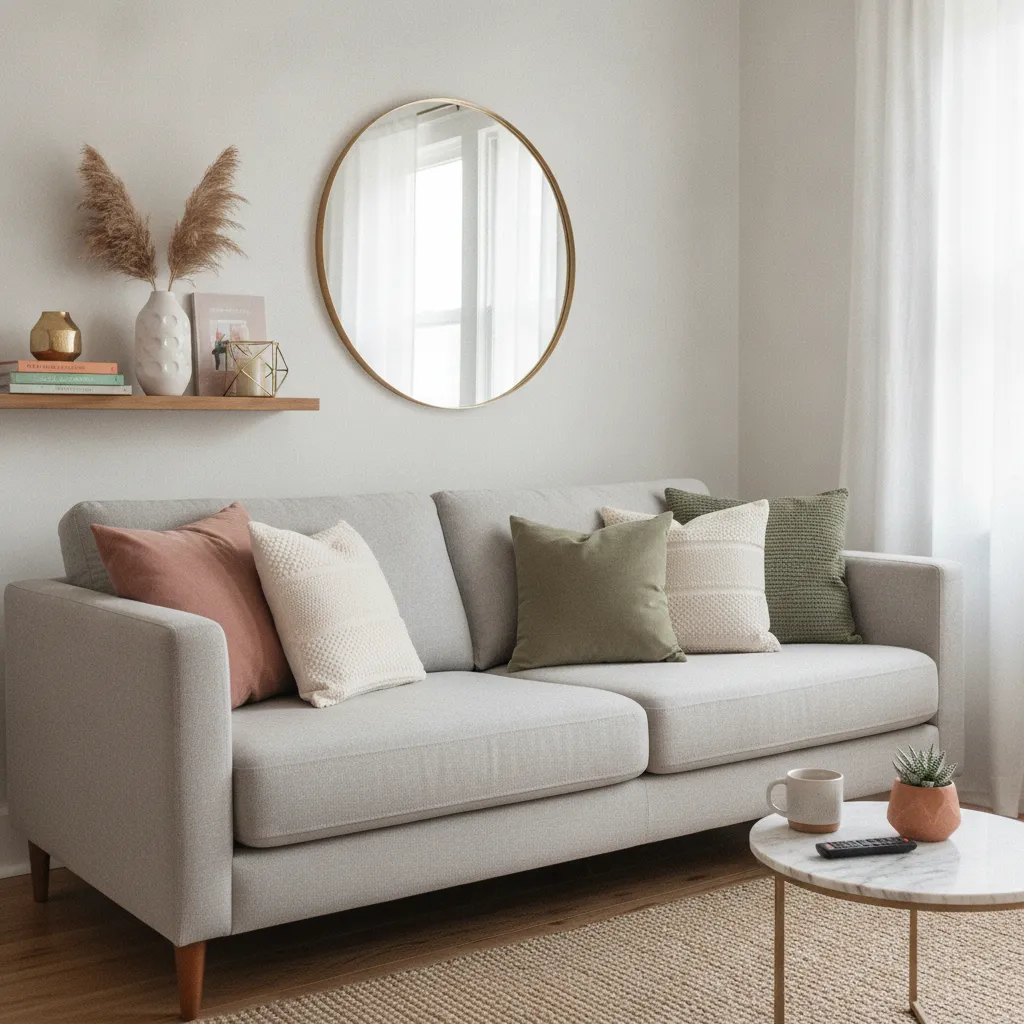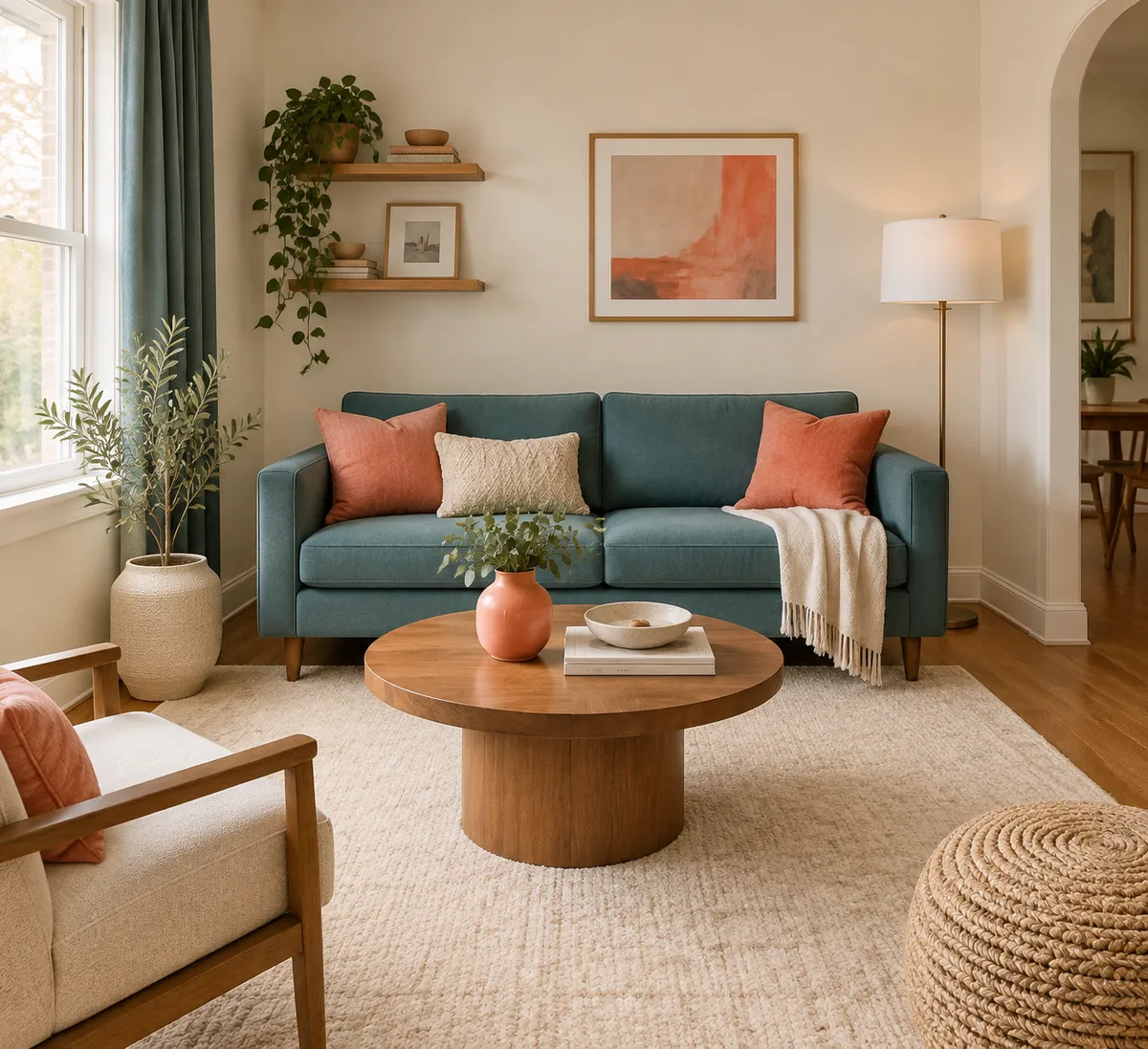
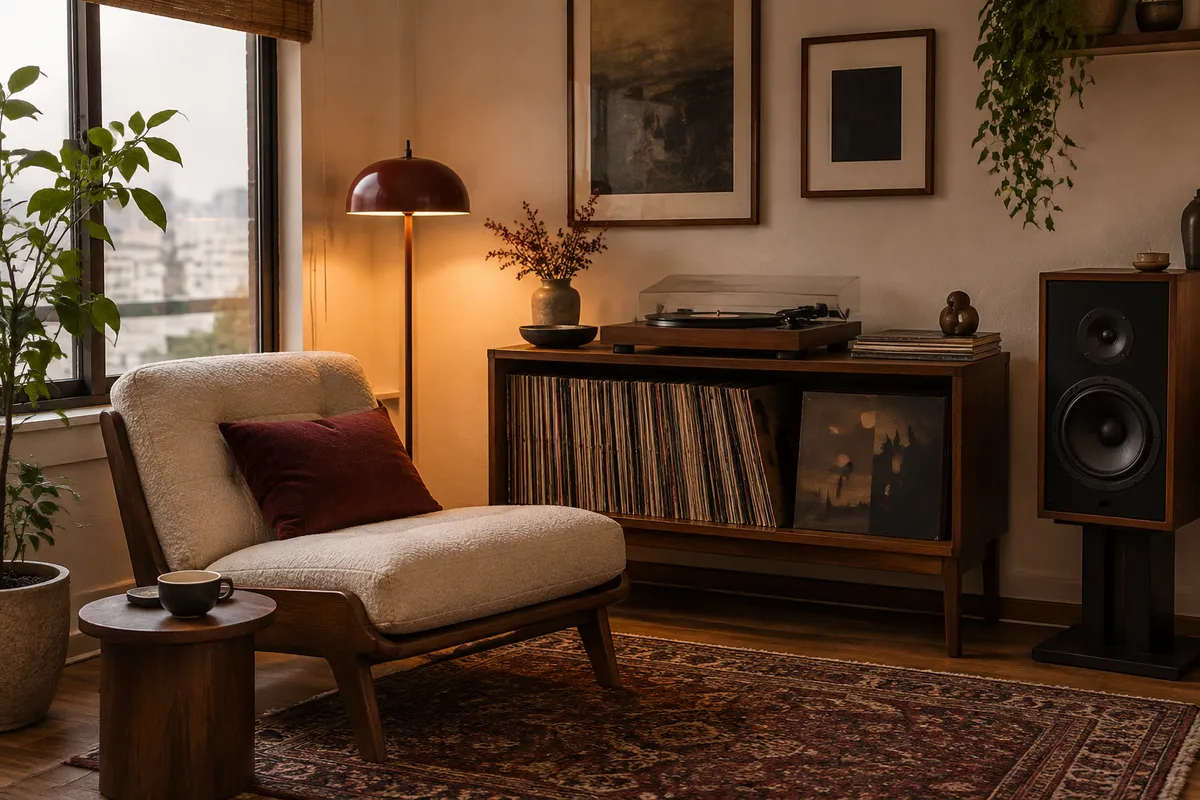
Listening rooms are on the rise, according to House Beautiful, and the idea is simple: a space in your home meant for one thing, pressing play. The trend draws on Japanese jazz kissa cafés, where vinyl, sound quality, and atmosphere turn music into a slow, deliberate ritual.
You don't need a spare room to borrow the idea. This guide shows you how to carve out a listening corner with the ingredients designers point to: plush seating, warm lighting, tactile materials, rich color, and a thoughtful audio setup.
Why a Listening Corner Makes Sense Right Now
Per House Beautiful, the appeal is partly a reaction to digital overload. People want screen-free spaces that feel restorative and sensory. The renewed popularity of vinyl and music-focused nightlife is now showing up in how homes are designed.
The takeaway for a small home: a listening spot doesn't need to be big. It needs to be a place where you sit down on purpose and the phone stays away.
Step 1: Pick the Spot
Look for a corner, a nook by a window, or a stretch of wall in your living room or bedroom. A few things to check:
- Can you sit comfortably? If the spot only fits you standing, it's a shelf, not a listening corner.
- Is it away from the TV? The point is a screen-free zone, so avoid placing it in your screen's line of sight if you can.
- Is there an outlet nearby? A turntable, amp, or speakers will need power.
In a studio apartment, a rug or a change in lighting can mark the zone without walls.
Step 2: Start With One Great Seat
Plush seating is the foundation. One chair you actually want to sink into does more than a crowded arrangement of seating you never use. An armchair with a throw and a small side table for your drink or record sleeve is a complete setup.
On a budget, try secondhand armchairs, then add a cushion or blanket for softness. You're after comfort first, matching second.
Step 3: Light It Low and Warm
Warm lighting is a core part of the look. Skip the overhead fixture and use a lamp or two at lower levels.
- Choose warm-toned bulbs.
- Place a lamp beside the seat, not behind the TV.
- Consider a dimmer or a lamp with a low setting so the mood can shift with the music.
A single lamp swap is among the cheapest changes in this whole project.
Step 4: Layer Tactile Materials and Rich Color
Designers quoted by House Beautiful point to tactile materials and rich colors as part of the listening-room feel. You can interpret that at any scale:
- Textiles: a wool or chunky knit throw, a velvet or corduroy cushion.
- Wood and woven pieces: a wooden side table or a basket for records.
- Color: deep tones are the direction. If you rent, you can bring them in through a large piece of fabric, a framed print, or the chair itself rather than repainting.
Soft surfaces have a practical bonus too. They tend to make a room feel less echoey, which suits music, though your results will depend on the room.
Step 5: Set Up the Audio Thoughtfully
Sound quality is central to the jazz kissa idea. You don't have to buy high-end gear to take the thinking behind it seriously:
- Put your speakers or turntable where you can reach them from your seat, so changing a record is part of the ritual.
- Keep the setup on a stable surface, since vinyl and bumpy shelves don't mix.
- Position your seat so you're actually facing the sound, not hearing it from another room.
If you're not into vinyl, the same principles apply to any music you want to listen to attentively.
Step 6: Make It a Ritual
The setting only works if you use it the way it's meant to be used. Treat the corner like a small appointment: pick an album, sit down, and listen through a side without scrolling. Slowness is the whole point of the jazz kissa model.
Keep a few records or a short playlist list nearby so choosing doesn't turn into a screen session.
Budget Ideas at Every Scale
- Under a small budget: one warm lamp, a throw, and a chair you already own, moved to a quieter corner.
- Moderate: add a secondhand chair, a side table, and a basket or shelf for records.
- Bigger project: if you do have a spare room, treat it fully with rich wall color, layered textiles, and a dedicated audio setup.
Start With the Lamp and the Chair
You can build the rest over time. This week, move one comfortable seat to a quiet corner, add a warm lamp, and play one full record or album with your phone in another room.