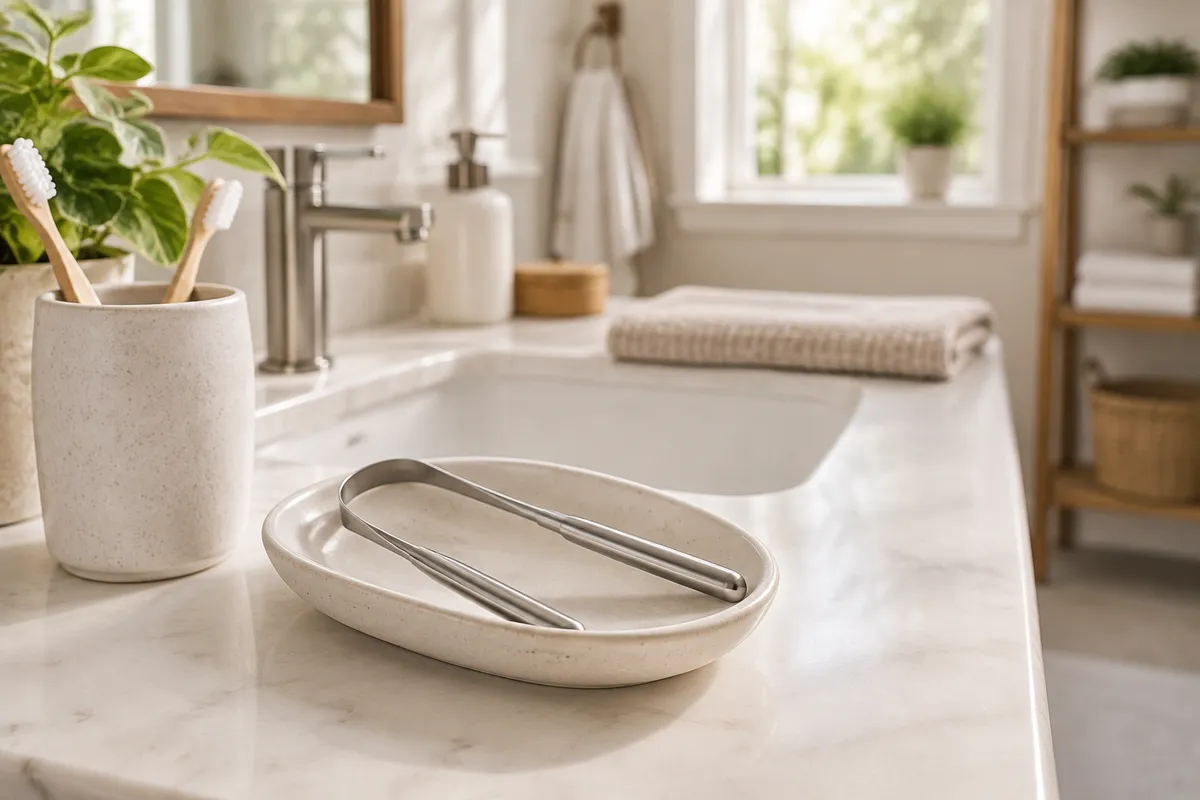
BuzzFeed recently published a list called "36 Things That Aren't Fancy, But Just Plain Work." It's led by a stainless-steel tongue scraper, which the post says does impressive work. The full list of 36 isn't something I can walk you through here, and I won't guess at the other 35. What the list does offer is a useful way of shopping, and that's what this article covers.
By the end, you'll have a simple test for finding plain, inexpensive items that earn their spot in your home, plus a few ways to apply it room by room.
Start With the Tongue Scraper Lesson
The headline pick is almost comically humble. It's a small piece of stainless steel. It isn't pretty, it won't show up in a styled photo, and nobody will compliment it on a shelf.
But that's the point of the whole list. The products that stay in your routine are often the ones that do one job without fuss. A tool like this has no batteries, no app, and no learning curve. You use it, you see the result, and you keep using it.
That's the standard to borrow: does it do one thing clearly, and will I notice if it's gone?
The Three-Question Test for Plain Products
Before you add anything to a cart, run it through these.
1. What annoyance does it solve?
Name the specific problem. "Cluttered counter" counts. "It looked nice online" doesn't. If you can't finish the sentence "I'm buying this because ___ keeps happening," wait a week.
2. Will I use it at least weekly?
Daily is better. Things that fit into an existing habit tend to survive. Things that require a new habit tend to end up in a drawer.
3. Is there a simple version?
Basic materials like stainless steel, glass, or sturdy plastic often outlast trendier versions with extra features. Fewer parts means fewer things to break or lose.
Where Plain Upgrades Pay Off at Home
The BuzzFeed list is a general shopping roundup, so these room ideas are my own suggestions for applying its spirit, not items from the list.
Entryway
A row of sturdy hooks beats a decorative console when you're short on space. Mount them at a height everyone in the house can reach. A small tray near the door gives keys and sunglasses one landing spot.
Kitchen
Look at what you reach for with frustration. A drawer divider can end the daily hunt for a spatula. A basic lidded container set in one matching shape stacks better than a mismatched pile.
Bathroom
This is where the tongue scraper lives, and it's a good room for the plain-product mindset. Small, cheap, stainless or easy-to-clean items tend to make sense here. Over-the-door hooks and a simple caddy can free up counter space without any drilling.
Bedroom
The most useful upgrades are often boring: a bedside tray, a charging cable long enough to reach the mattress, a laundry hamper with a handle you'll actually carry.
Small spaces
If you're in a studio or a small apartment, vertical storage and multi-use basics matter more than statement pieces. One plain basket that holds blankets can do more than three decorative objects.
Budget Guardrails That Keep It Practical
- Set a cap per fix. Many plain problem-solvers are inexpensive, so decide a ceiling (say, the price of a lunch) and compare options under it.
- Buy one, test it, then buy more. Don't order a set of six organizers before you know the first one works in your cabinet.
- Measure first. A tape measure is itself one of the most underrated tools for avoiding returns.
- Read the dull reviews. Skip the raves and look at three-star comments about size, material, and cleaning. That's where real use shows up.
Beware the Gimmick Trap
Plain doesn't automatically mean good. Plenty of products pitch themselves as simple while hiding flimsy materials or a single-use gimmick. Be skeptical of anything that promises to transform a space on its own. Judge claims by what you can verify yourself, such as dimensions, materials, and how you'd clean it.
Also keep in mind that a roundup like BuzzFeed's reflects its writers' picks. Treat it as a source of ideas, then check that each item fits your home and your budget.
Try This Weekend
Walk through your home with a notepad and write down five tiny annoyances: the drawer that sticks, the pile by the door, the cord that never reaches. Pick the one that bugs you most, find the plainest, cheapest tool that fixes it, and buy only that. If it earns its keep in a week, you've found your next boring favorite.