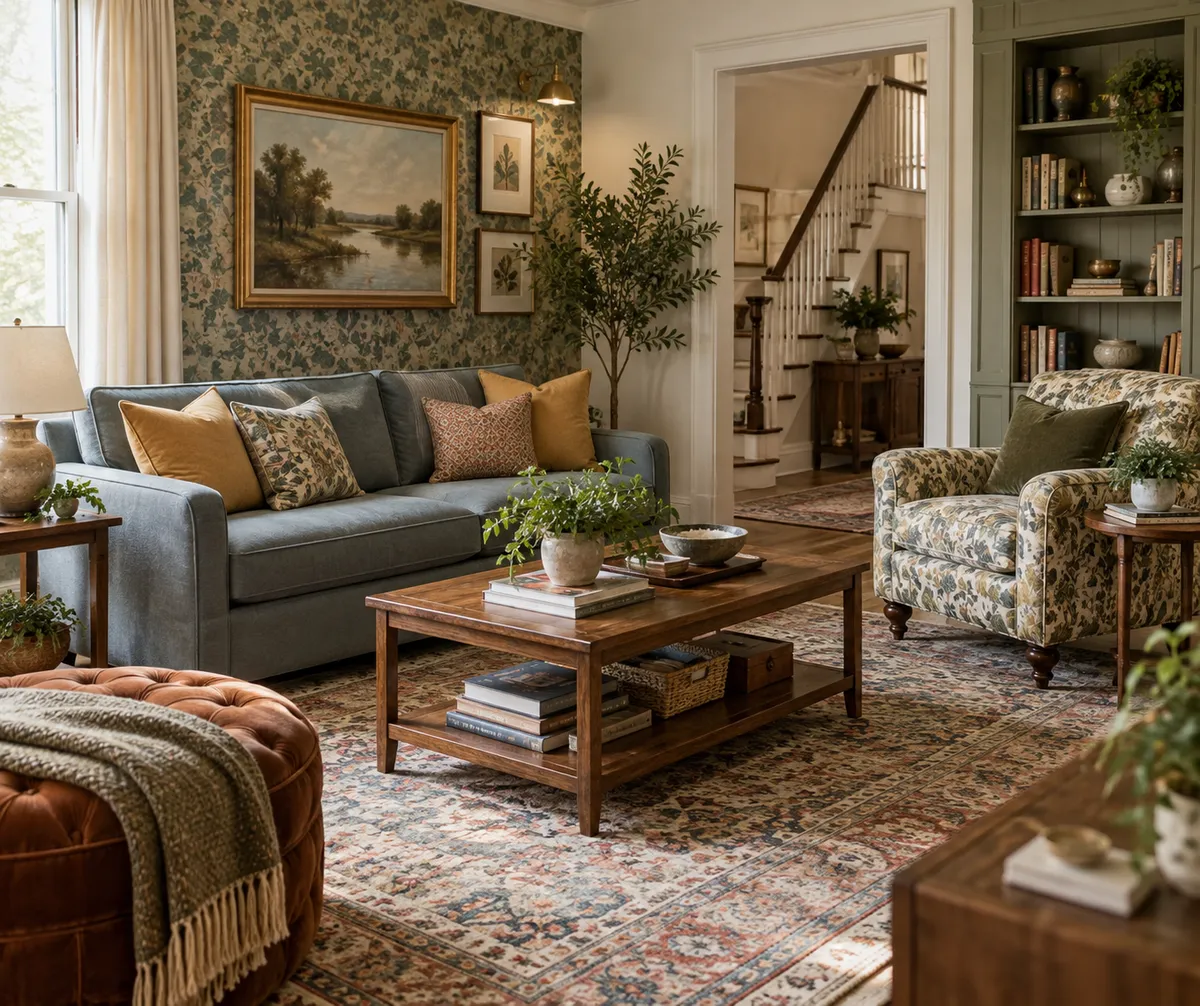
A fresh renovation can leave you with clean walls, new fixtures, and a home that feels like nobody lives there yet. That was the situation in a newly renovated Park Slope brownstone, which Brooklyn designers Mauri Weakley and Laura Rucker of Collyer's Mansion turned from a sterile "white box" into a layered, collected home, per House Beautiful.
You don't need a brownstone to use their playbook. Below is the approach, pulled apart room by room, with ways to scale it to your own space and budget.
Start With Wallpaper as the Anchor
The design team leaned on wallpaper, color, textiles, vintage pieces, and art to suggest accumulated history. Wallpaper shows up in nearly every room of this house, and it does the heavy lifting.
In the entryway, a graphic Zak + Fox wallpaper pairs with ornate molding. The first thing you see sets the tone for everything after it.
In the breakfast nook, a bold botanical Zak + Fox wallpaper turns a small, functional corner into a destination.
Try it yourself: Pick the one small room people pass through or linger in, such as an entry, a nook, or a powder room. A single roll count is manageable, and the payoff is outsized. If you rent, peel-and-stick versions are a reasonable stand-in, though check your lease first.
Let One Room Stay Calm
Pattern works better when it has quiet to play against. In the dining room, the designers used a grasscloth wallcovering to create visual balance. It adds texture without competing with the busier spaces nearby.
The primary bedroom follows similar logic: a neutral palette, with William Morris Roman shades supplying the pattern. The pattern lives in the window treatment rather than on every surface.
Try it yourself: After a loud room, give your eye a rest. Choose one space where texture does the work, or where a single patterned item (shades, a throw, a headboard) is the only star.
Use Color in Cabinetry and Floors, Not Just Walls
The kitchen uses sage green Farrow & Ball cabinetry and jute runners. Color on cabinets gives a kitchen personality without a single wall treatment, and jute adds warmth underfoot.
Try it yourself: If new cabinets aren't in the budget, a runner is the cheaper way to bring in texture. Painting existing cabinets is a common DIY route, but test your color in the room's light first.
Layer Textiles Where You Relax
The upstairs den is where the "collected" feeling is strongest. The designers layered African and Uzbek textiles alongside patterned elements. The result reads as a room built over years rather than installed in a weekend.
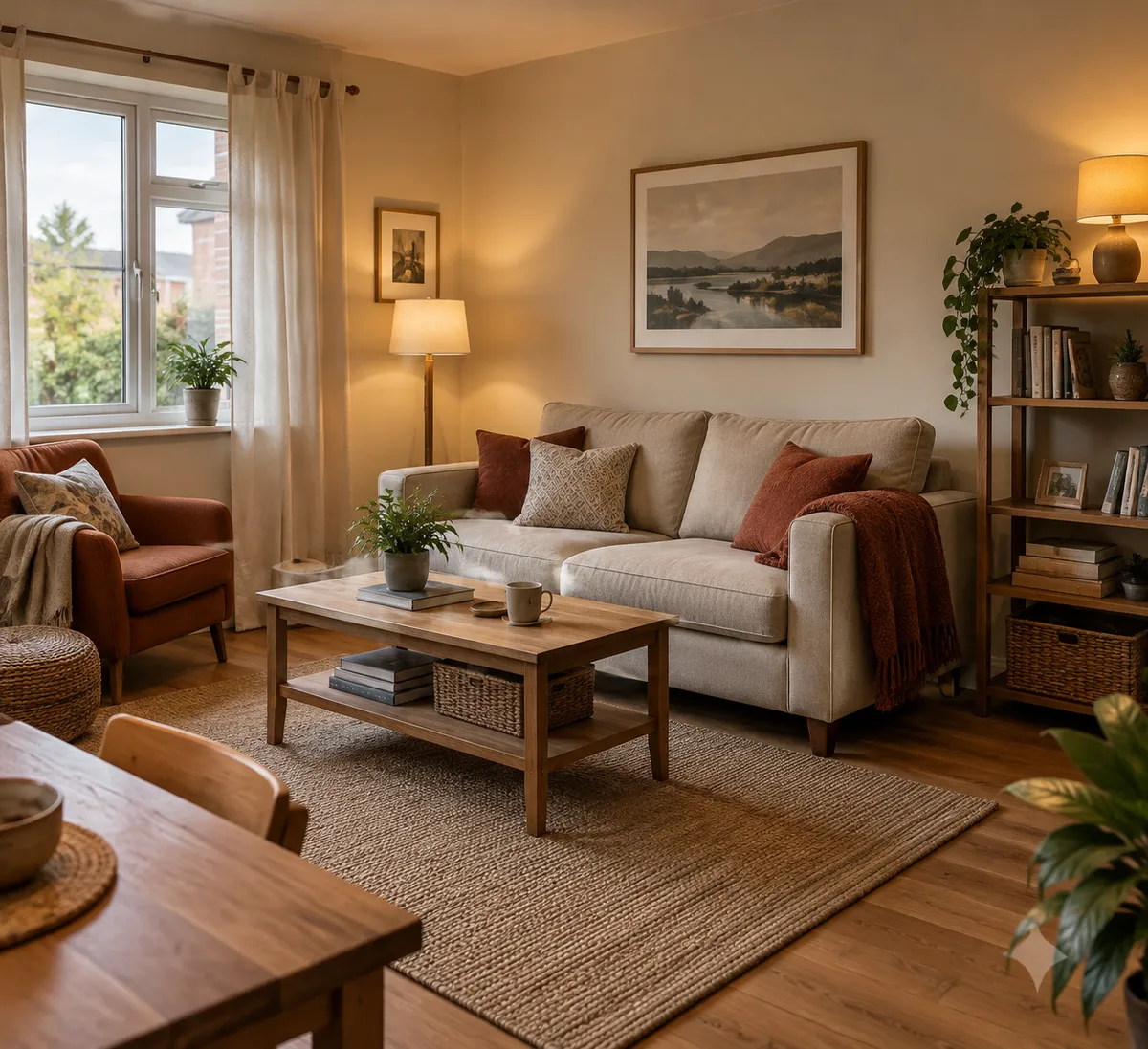
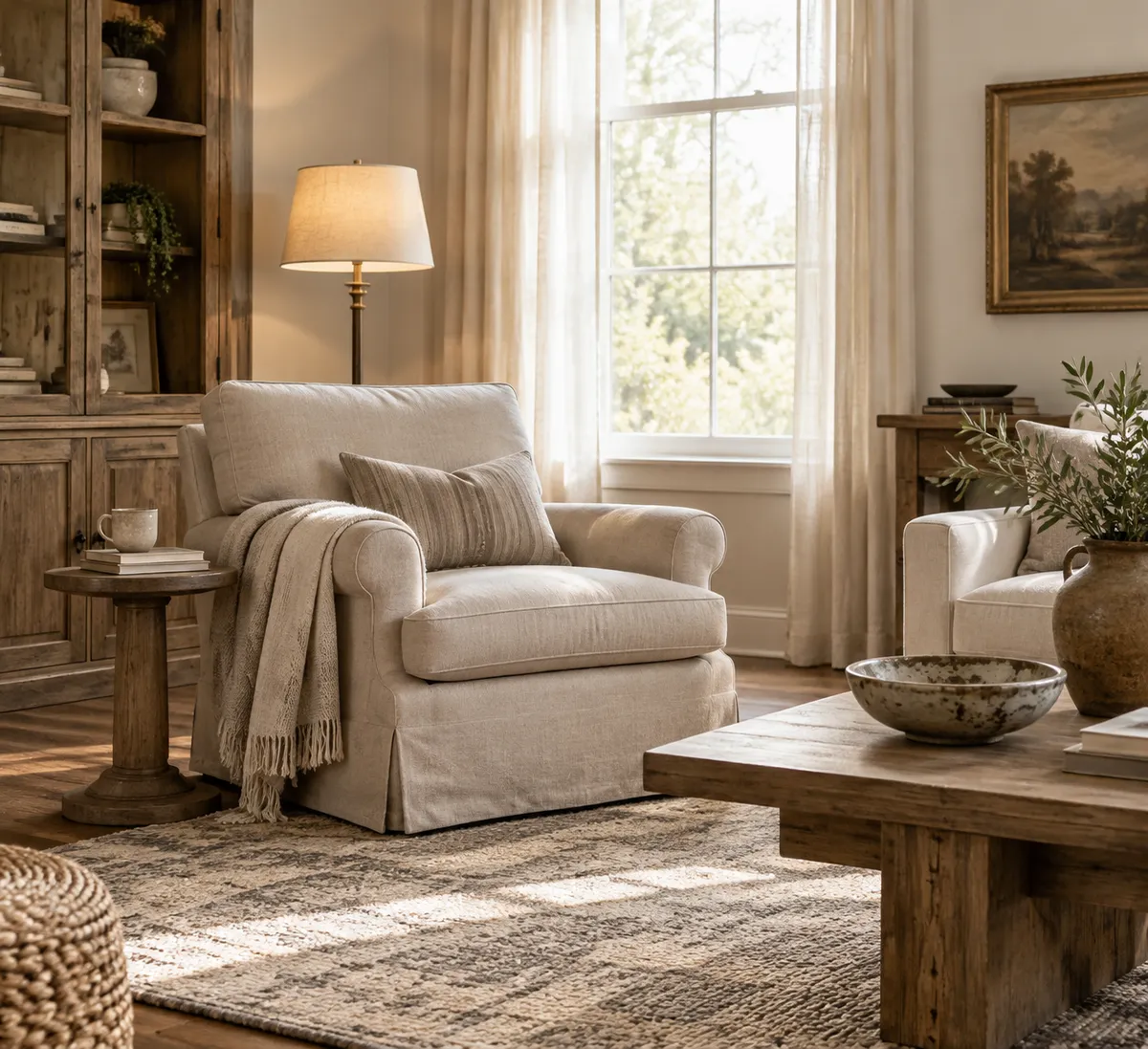
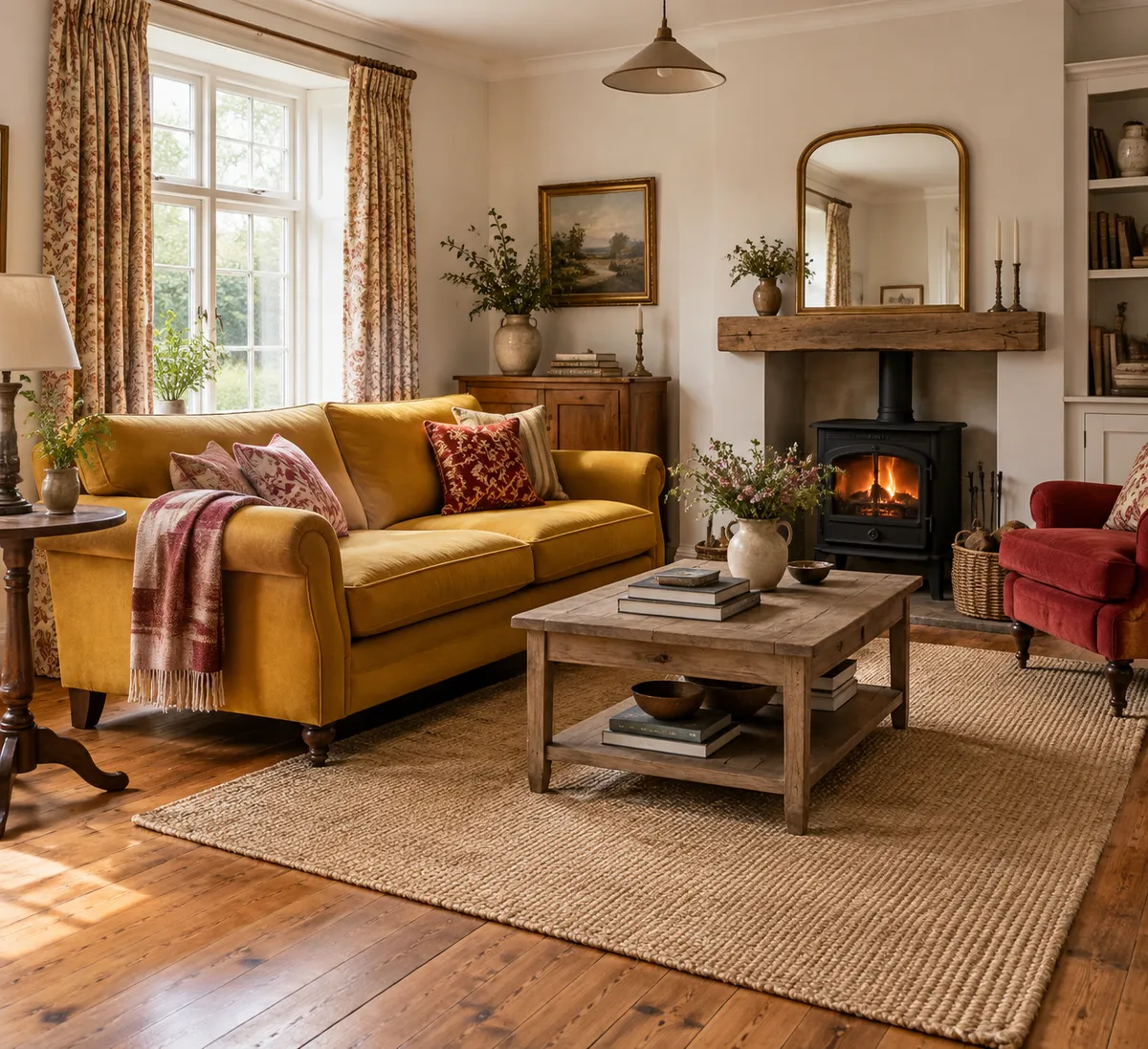
The living room works the same way: patterned wallpaper, a Cisco Home sofa, and a lounge chair upholstered in a botanical print. A solid, comfortable sofa gives the patterns a base to sit against.
Try it yourself:
- Start with a plain, comfortable sofa and let pillows, throws, and a single printed chair carry the pattern.
- Mix scales: pair one large-scale print with something smaller or more geometric.
- Hunt for textiles secondhand or at flea markets, where one-of-a-kind pieces are often cheaper than new ones.
Bring in Pieces With a Past
The whole project aims to create the impression of history, and vintage pieces and art are part of that. Nothing in a brand-new house has a backstory unless you add it.
Try it yourself: Add one or two older items per room: a framed print, a small side table, a worn rug. They don't have to match. Slight mismatches are what make a space feel lived in rather than staged.
Don't Forget the Kids' Rooms
The boy's room gets graphic striped wallpaper in primary colors. It's playful and bold, and it shows that pattern isn't reserved for grown-up spaces.
Try it yourself: Stripes are a forgiving entry point if you're nervous about pattern. You could also paint stripes for a cheaper, removable-in-spirit alternative, since a repaint fixes any regrets.
A Simple Formula You Can Follow
The approach here follows a rough order: wallpaper, then color, then textiles, then art. Doing it in that sequence keeps decisions manageable, because each layer responds to the one before.
- Pick your hero surface. One wallpaper or one strong paint color in a small room.
- Add color elsewhere. Cabinets, shades, or a rug that relates to the hero.
- Layer textiles. Pillows, throws, runners, and a patterned chair.
- Finish with art and vintage finds. Hang or place them last, once you can see what the room is missing.
Start Small, Then Keep Going
A blank house doesn't need to be fixed in a weekend. Choose the smallest room you walk through most often, give it one bold surface, and live with it for a few weeks. Let the next layer tell you what it needs.