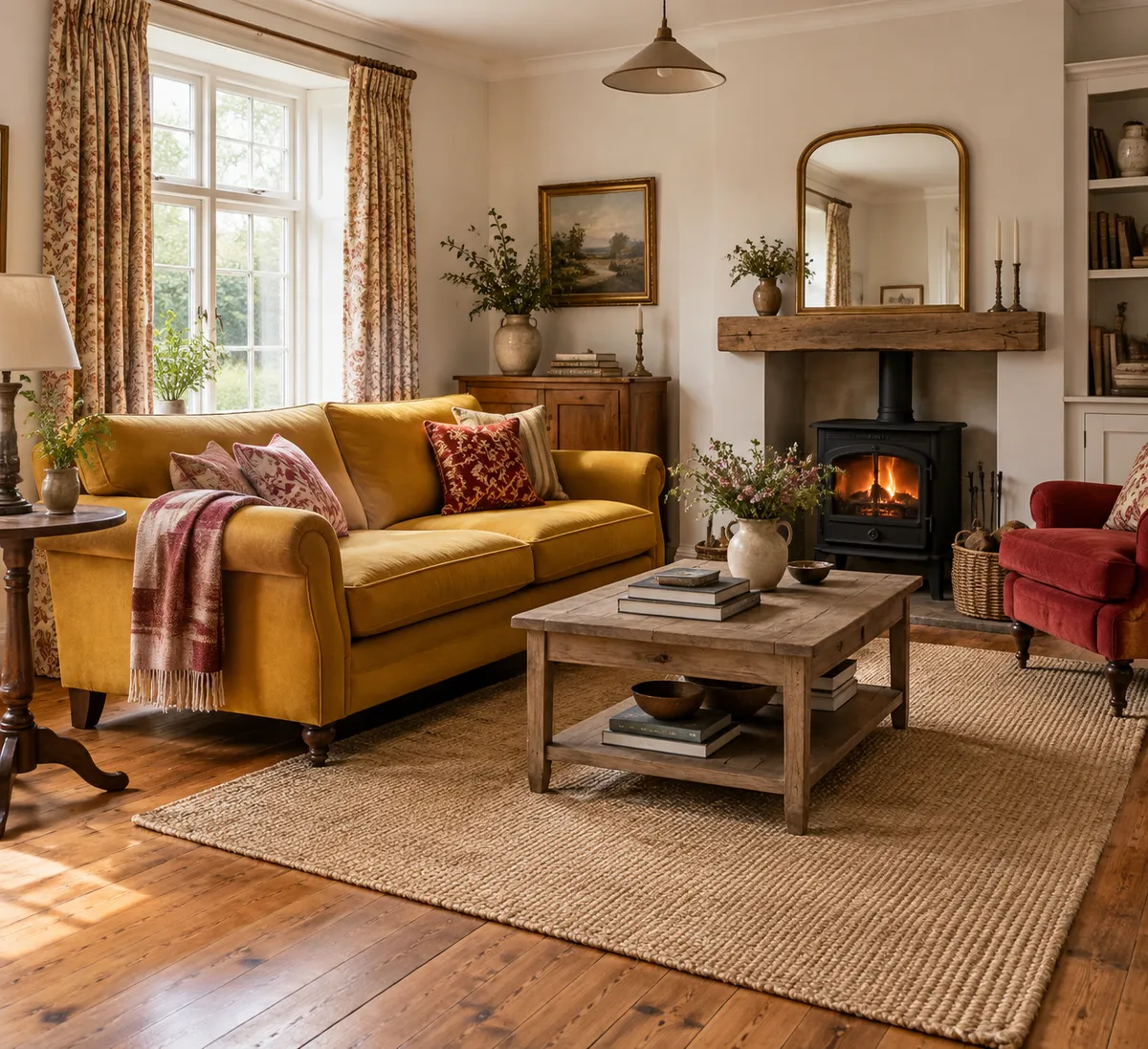
Apartment Therapy recently featured a living room that took a real color risk: mustard and red, together. The homeowner described the starting point this way: "The cottage's original details had been completely stripped away." The room had lost its character, and the bold pairing was how they brought personality back.
That's the useful part. If your living room feels flat or generic, a daring color pairing may do more than any new furniture. Here is how to try the mustard-and-red approach in your own space without overwhelming it, and without spending much.
The details below about the room come from Apartment Therapy's report. The how-to advice is my own take on applying the idea.
Start With the Problem the Colors Solve
The homeowner's issue wasn't a lack of furniture. It was a lack of character. When a home has been stripped of original details, such as trim, moldings, or other architectural features, walls and floors can feel blank, and neutral paint won't fix that.
Color can stand in for what's missing. Strong, warm shades give a plain room a focal point and a mood. Before you pick a paint chip, name what your room lacks. Is it warmth? A focal point? A sense of personality? That answer tells you how bold to go.
Why Mustard and Red Can Work Together
Both colors sit on the warm side of the wheel. That's the reason they can coexist: they share a golden, sun-baked undertone instead of fighting each other. Cool colors next to red can feel jarring, but mustard and red feel closer to a harvest table or a well-worn leather chair.
Warm saturated shades also tend to make a room feel cozy. That's my read, not a hard rule, but it's a good guide when you're deciding whether a bold palette will suit a living room, where people want to settle in.
How to Try It Without Going All In
You don't need to repaint everything to test the idea. Work from lowest commitment to highest.
Step 1: Test with textiles
Buy or borrow a mustard throw and a red pillow or two. Set them on your existing sofa and live with them for a week. Thrift stores, fabric remnants, and secondhand listings are cheap ways to experiment.
Step 2: Pick a leader and a supporter
Two saturated colors competing at equal volume can tire the eye. Choose one to dominate and let the other accent. For example, mustard on a larger surface like curtains or a chair, with red limited to smaller pieces like a rug border, a lampshade, or art.
Step 3: Give them breathing room
Bold colors need calm around them. Keep remaining surfaces simple: a warm white, a soft neutral, or natural wood. Let the pairing be the star instead of adding a third or fourth loud shade.
Step 4: Paint a small area first
If you want a commitment, start with one wall, a door, a bookcase interior, or a piece of furniture. A quart of paint and a free afternoon is a modest cost for a big visual shift. Always test a swatch and look at it in morning and evening light, since mustard can read very differently across the day.
Step 5: Scale up only if you still love it
If the small test makes you smile every time you walk in, expand it. If not, you've lost very little.
Tips for Different Home Sizes
Small rooms: Keep the saturated color to one wall or to accessories, and let the rest stay light so the space doesn't feel closed in. This is my suggestion; deeper shades can feel snug, which some people love and others don't.
Larger rooms: You have room to repeat each color in a few places, which helps the palette feel deliberate. Echo mustard on one side of the room and again across from it, and do the same with red.
Renters: Stick with removable pieces: pillows, throws, lampshades, framed prints, a rug. You can get the whole look without touching the walls.
Restoring Character Takes Intention
The lesson from this cottage isn't that everyone should buy mustard and red. It's that a room stripped of its original details can regain personality through decisions that feel a little daring. Pick colors because you respond to them, not because they're safe.
Your Next Step
This week, put one mustard item and one red item in your living room and see how the space feels at different times of day. If it makes the room feel more like you, you've found your direction.