Industrial style has a reputation problem: it can look great and feel like a loading dock. If your space has metal, glass, concrete, or bare bulbs and you want it to feel like a place to linger, Jennifer Aniston's dining room is a useful blueprint.
Per Homes & Gardens, the actress's Beverly Hills dining room, designed by Stephen Shadley, pairs exposed bulbs and sleek windows with natural materials for a cocooning, moody result. Below, you'll find the lessons from that approach, translated into steps you can take without a renovation.
The Core Idea: Let Raw Materials Meet Soft Ones
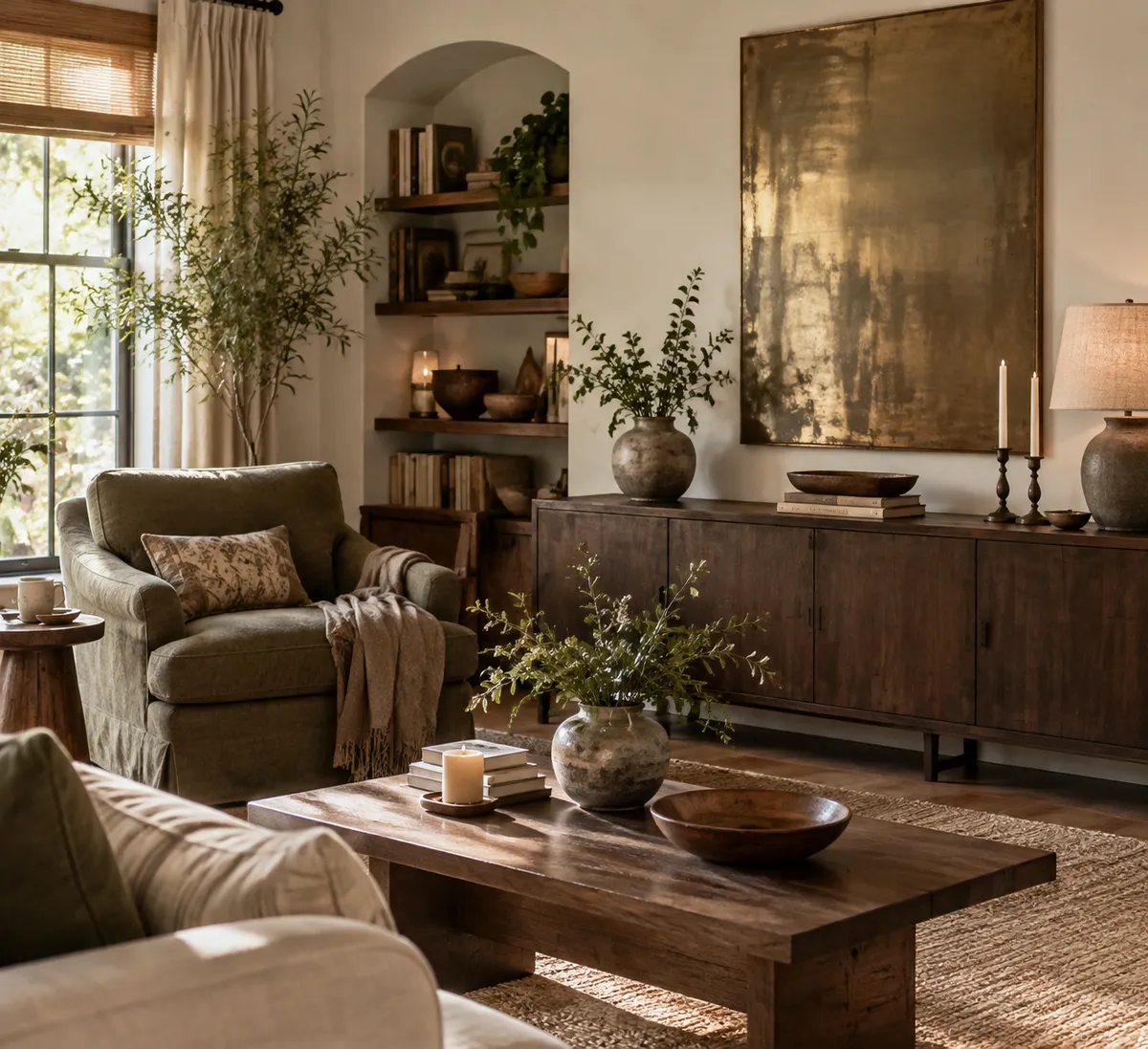
The room works because it doesn't hide its industrial bones. The exposed bulbs and sleek windows stay. What changes is everything around them. Homes & Gardens points to wood, stone, rugs, velvet, candles, and warm lighting as the elements that balance the rawness.
That's a handy formula: keep one or two hard, graphic elements, then surround them with materials you'd want to touch.
Step 1: Add Wood Where the Room Feels Cold
Wood is the fastest way to take the chill off metal, glass, and concrete. You don't need a new table.
- Budget move: Add wooden chairs, a bench, or a thrifted wood sideboard.
- Cheaper still: Use wooden bowls, cutting boards, or a tray as table styling.
- DIY: Restain or oil a tired wood surface to deepen its color. Test on a hidden spot first.
Mix tones if you like, but pick one that leans warm rather than gray.
Step 2: Bring In Stone-Look Texture
Stone is part of the Aniston room's material mix. Real stone is a big investment, so think in small doses.
- A marble or stone-look serving board or tray
- A stone vase, candle holder, or bowl
- A small stone-topped side table
These pieces add weight and natural variation, which polished industrial surfaces lack.
Step 3: Layer a Rug Under the Table
Hard floors and hard surfaces make a dining room echo, visually and literally. A rug fixes both.
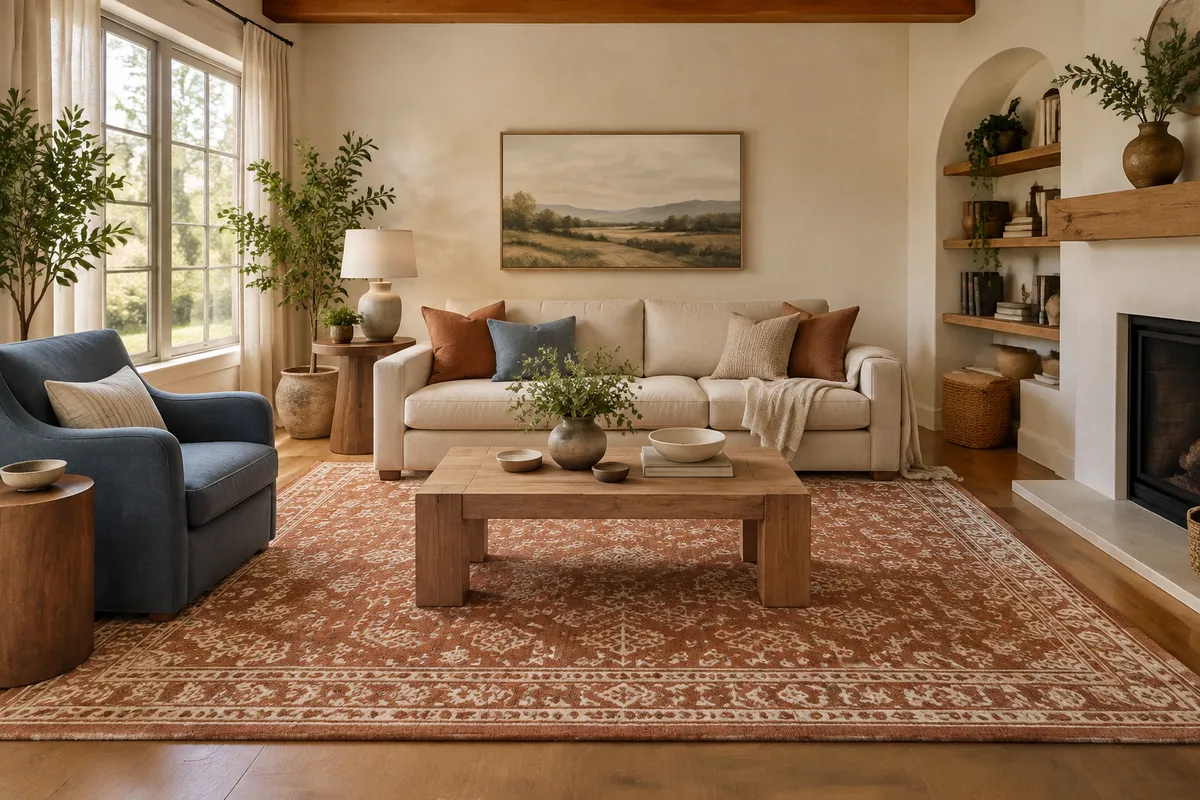
A practical sizing tip: choose one large enough that chairs stay on it when pulled out. Pick a low pile that's easy to clean under dining chairs, and go for a rich, muted color or a worn-in pattern rather than something stark.
Step 4: Use Velvet in Small, Smart Places
Velvet is the softening agent here. It catches light differently from metal and glass, which makes a room feel richer.
You don't have to reupholster anything:
- Swap in velvet cushions on dining chairs or a bench.
- Hang velvet curtains if your windows are bare and sleek.
- Add a velvet runner or table napkins for a low-cost hit.
Deep, moody shades suit the cocooning feel Homes & Gardens describes.
Step 5: Change the Light Bulbs and the Light Source
Exposed bulbs are part of the room's industrial look, and they can look harsh or inviting depending on what's in them. This is my take rather than something the article specifies: check the color temperature on the box and choose a warm white option over a cool one. A dimmer switch or plug-in dimmer, if your setup allows, lets you lower the mood for dinner.
Then add light at lower levels. A table lamp on a sideboard or a candle cluster on the table gives the room a glow that overhead fixtures can't.
Step 6: Finish With Candles
Candles are on Homes & Gardens' list of warming elements, and they're the cheapest item here. Group them in odd numbers, vary the heights, and set them on a wood or stone tray so they read as a deliberate arrangement.
Never leave burning candles unattended, and keep them clear of curtains and other fabrics.
Why This Look Fits Right Now
Per the reporting, interest is shifting away from cool, polished minimalism toward interiors that feel cozy, textured, and lived-in. Fall is a natural time to try it, because the changes here are seasonal-friendly: rugs, velvet, candles, and warmer bulbs all make a room feel more comforting as days shorten.
Adapting It to Your Space
Small apartment or rental: Focus on removable items: a rug, velvet cushions, candles, warm bulbs, and a wood tray or bowl.
Mid-size home: Add a wood bench or sideboard, plus curtains to soften big windows.
Larger budget: Consider a statement wood or stone table and upholstered chairs, keeping the industrial lighting or windows as the contrast.
Start With One Swap Tonight
Replace one cold-toned bulb with a warm one, light a few candles on a wood tray, and see how the room feels at dinner. Then add a rug or velvet piece when you're ready. Industrial doesn't need to go; it just needs company.