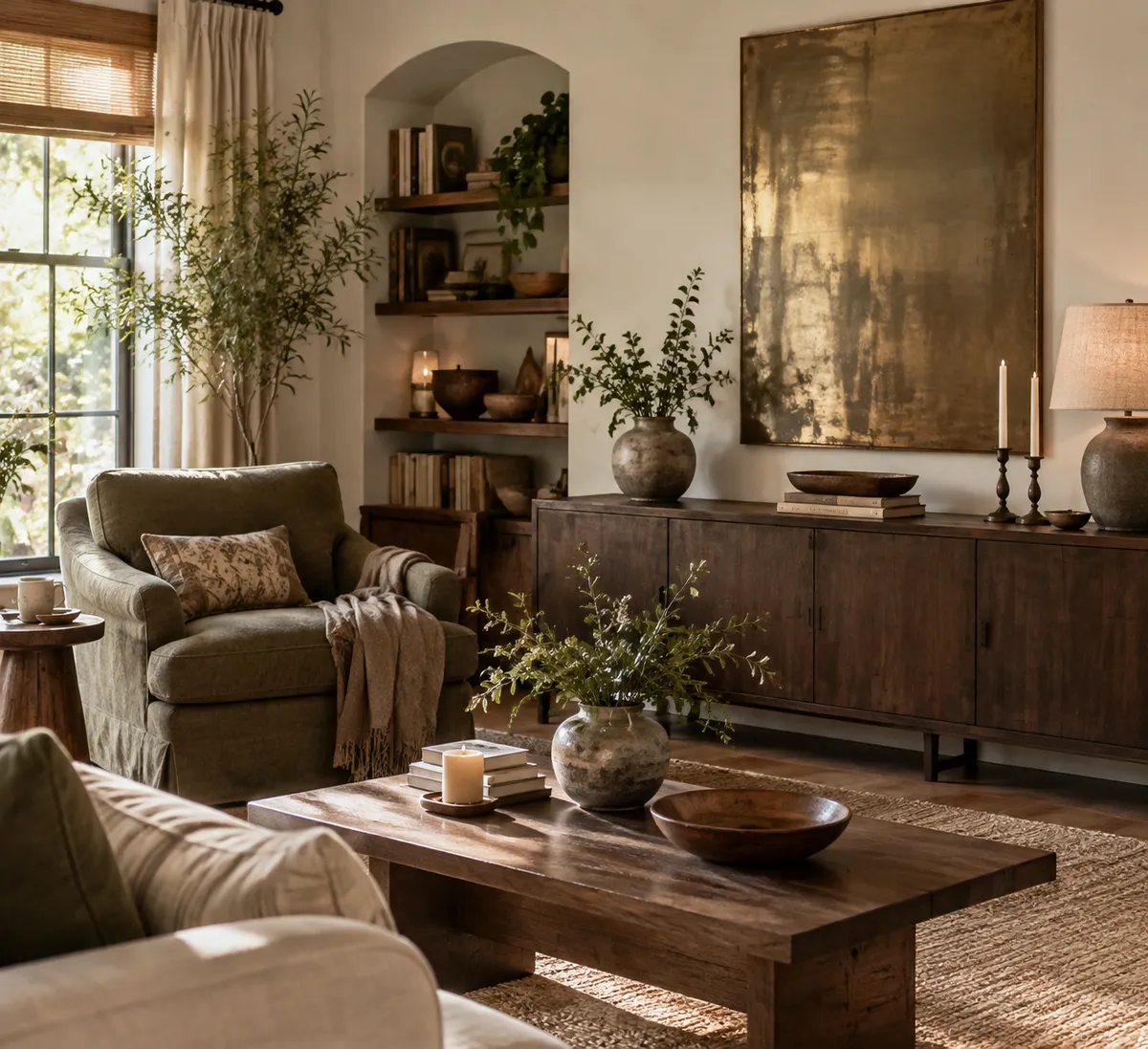
Rug color is one of the easiest design decisions you can make to help a living room feel cohesive and intentional. According to a recent Real Simple piece on designer advice, the right rug color can create a focal point that grounds the entire room. The article's broad takeaway is simple, and it's one you can act on this weekend.
The details of any one room will vary, so what follows is my own practical take on the idea: start with your sofa, decide whether the rug should blend in or stand out, and test before you buy.
Start With the Biggest Piece in the Room
Your sofa is usually the largest item in a living room, which makes it the easiest anchor for a color decision. Before you look at a single rug, answer one question: do you want the rug to support the sofa or to be the star?
That choice sorts nearly every option into two camps.
- Rug as support: pick a color close to, or gently contrasting with, your sofa. The room feels calm and pulled together.
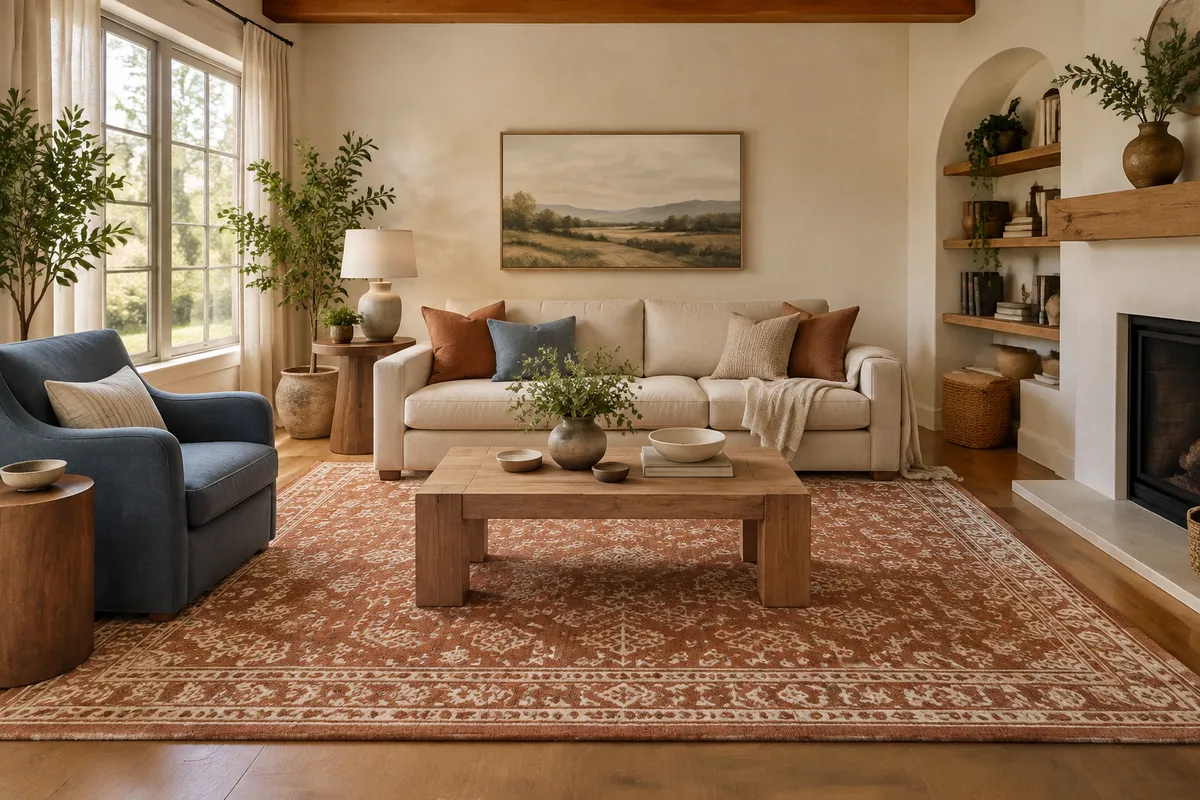
- Rug as focal point: pick a color or pattern that differs clearly from the sofa. The rug becomes the thing your eye lands on first.
Neither is wrong. Which one fits depends on how much visual energy you want in the room.
If You Want a Calm Room: Go Neutral
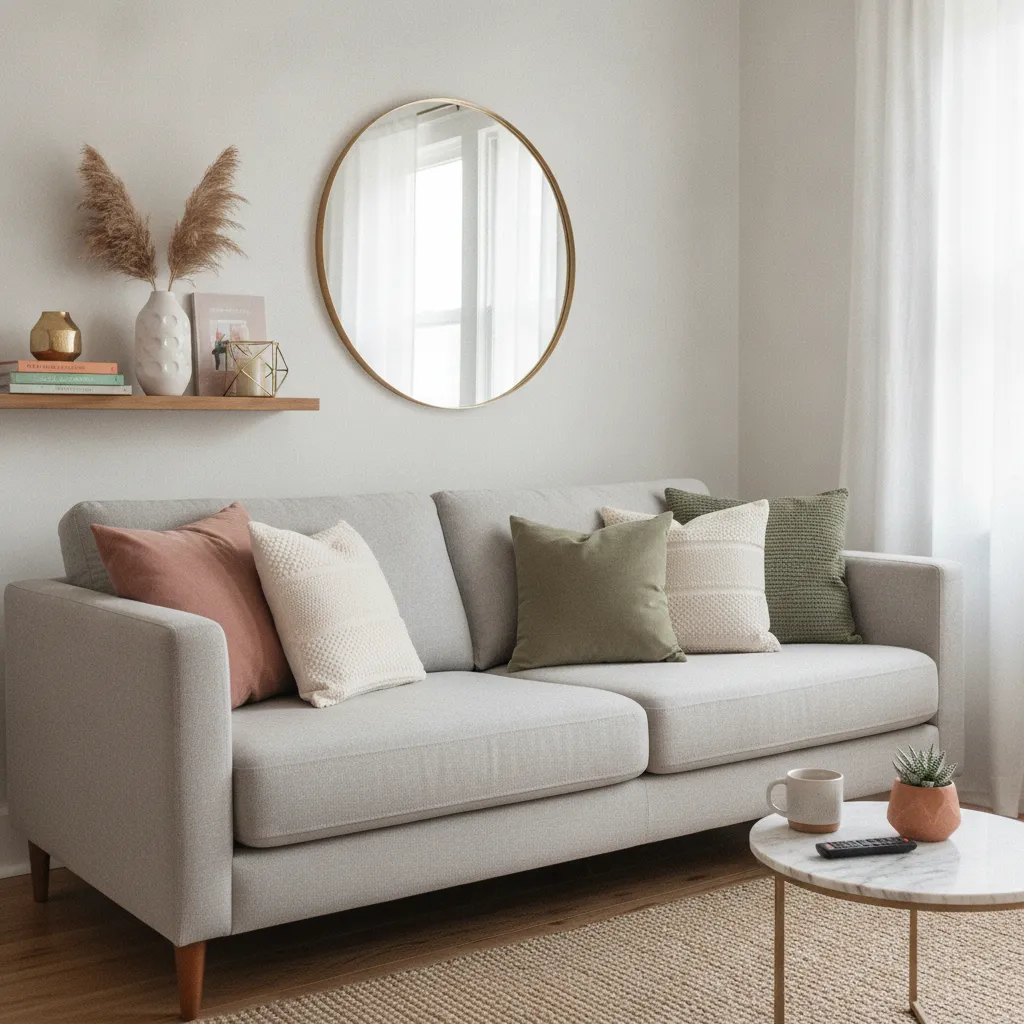
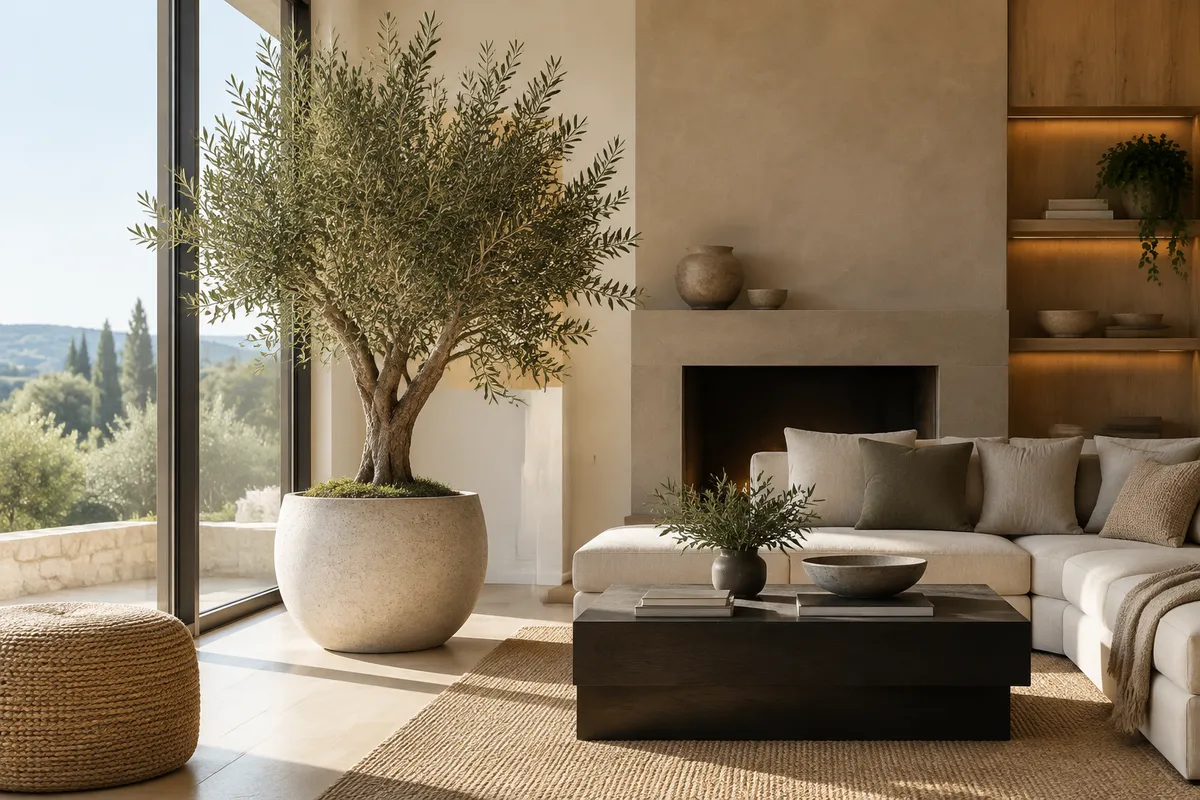
A neutral rug is the low-risk path. If your sofa is a strong color, a quiet rug keeps the two from competing. If your sofa is already neutral, a neutral rug in a slightly different shade adds depth without adding noise.
A few practical ways to use this:
- Hold a fabric swatch or a photo of your sofa next to rug samples in daylight, not just store lighting.
- Choose a rug a shade or two lighter or darker than the sofa so the two pieces read as separate layers.
- If you rent or change your look often, a neutral rug survives future furniture swaps.
If You Want a Focal Point: Go Bold
Color-forward interiors are having a moment, and a rug is one of the most accessible ways to join in. Swapping a sofa or repainting walls is a big commitment. Swapping a rug is not.
To make a bold rug work:
- Keep the rest of the palette quiet. If the rug is the star, let the sofa, curtains, and walls play supporting roles.
- Pull one color from the rug into the room. A throw pillow, a lamp base, or a framed print repeating one rug color makes the choice look planned.
- Size up. A bold rug that is too small can look like an accident. One that sits under at least the front legs of your seating looks like a decision.
Check Your Wall Tone Before You Commit
Walls are the other big color in the room, so they matter as much as the sofa. A rug that looks great beside your sofa can fall flat against a wall color that clashes with it.
A quick test: lay a sample, or even a large piece of fabric in the rug's color, on the floor and stand in the doorway. Look at the sofa, the wall, and the floor together. If one of the three feels off, it will feel off every day.
Match the Rug to Your Personal Style
A designer-approved rule only helps if you'd enjoy living with the result. If you gravitate toward quiet, airy spaces, a muted rug will feel right. If you love color, don't talk yourself into beige because it seems safe.
A useful gut check: scroll through the photos on your phone or the rooms you've saved. Which colors keep showing up? That's likely the palette you'll still like in a year.
Budget-Friendly Ways to Test a Color
Rugs can be a real expense, so test before you spend.
- Order swatches. Many rug sellers offer small samples. Look at them at different times of day.
- Use what you have. Drape a blanket or bedsheet in the candidate color across the floor to preview the effect.
- Shop secondhand first. Used and clearance rugs let you experiment with a bold color at a lower cost.
- Start small if needed. A bold accent rug layered over a larger neutral one lets you add color without a big commitment.
Small Rooms vs. Larger Rooms
In a small living room, keeping the rug close to the tone of your floors and sofa tends to keep the space from feeling chopped up. A bold rug can still work, but let it be the one strong note and keep everything else simple.
In a larger room, you have more space to play. A confident color can define the seating area and make an open floor plan feel organized.
Your Next Step
Tonight, stand in your living room and decide whether the rug should support the sofa or star beside it. Then take a photo of the sofa, order two or three swatches, and look at them on the floor tomorrow morning. That one decision will narrow your options faster than any amount of browsing.