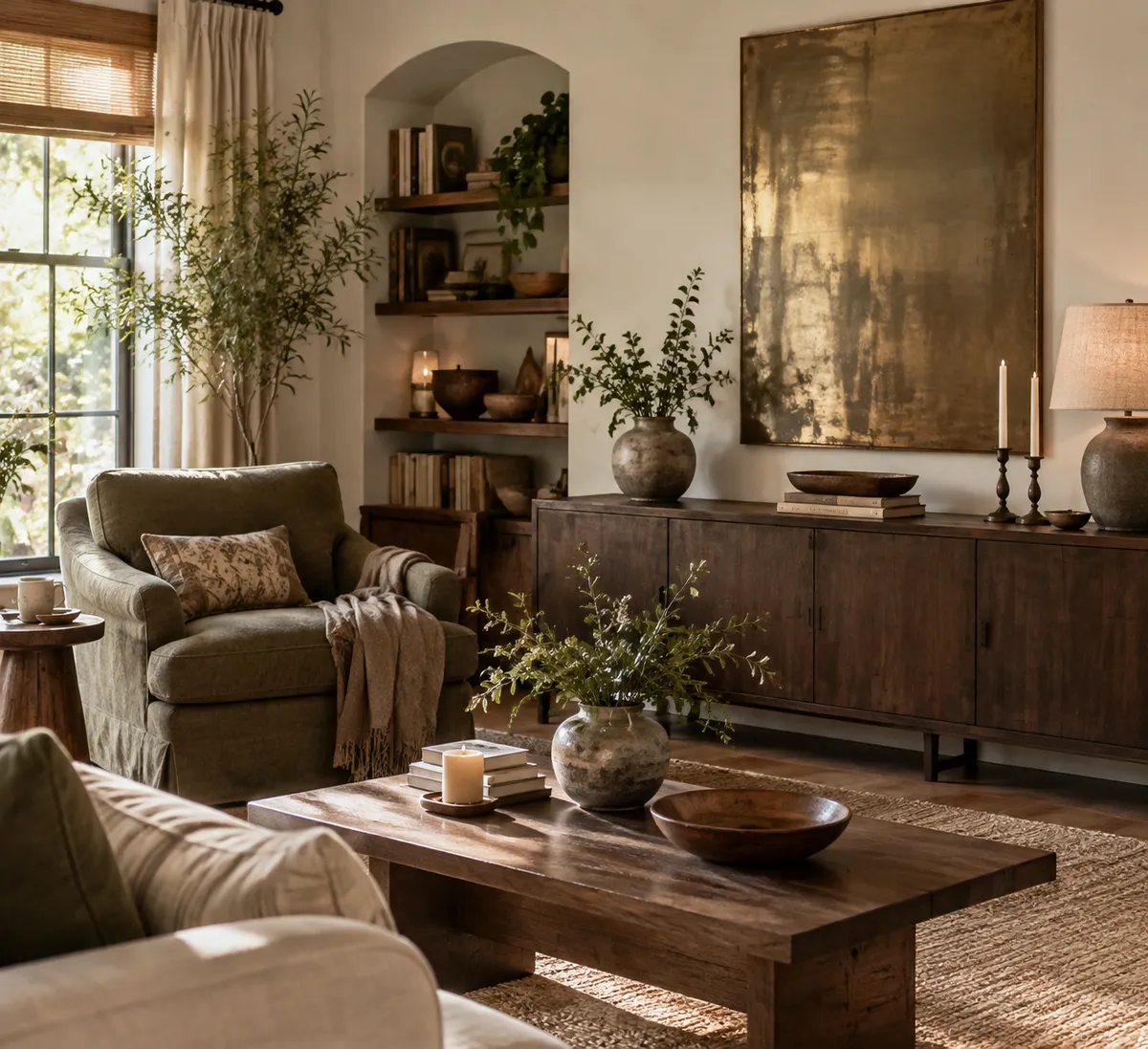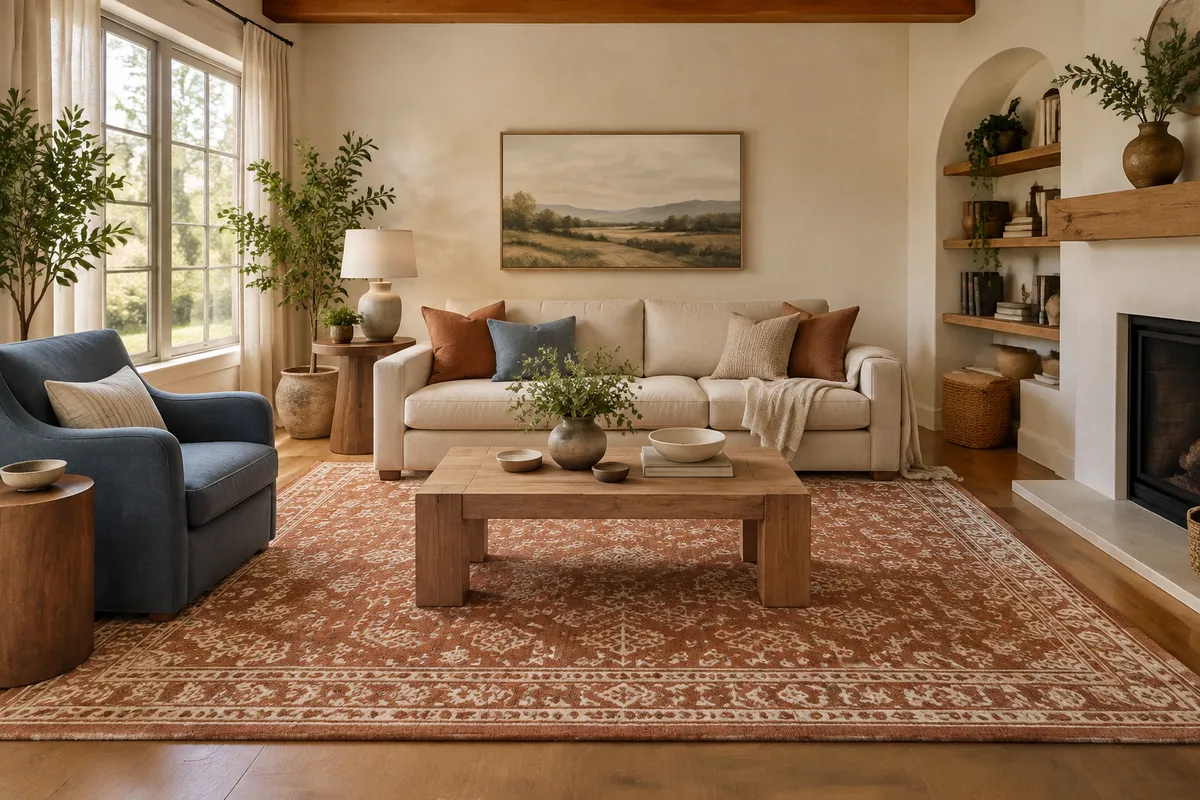
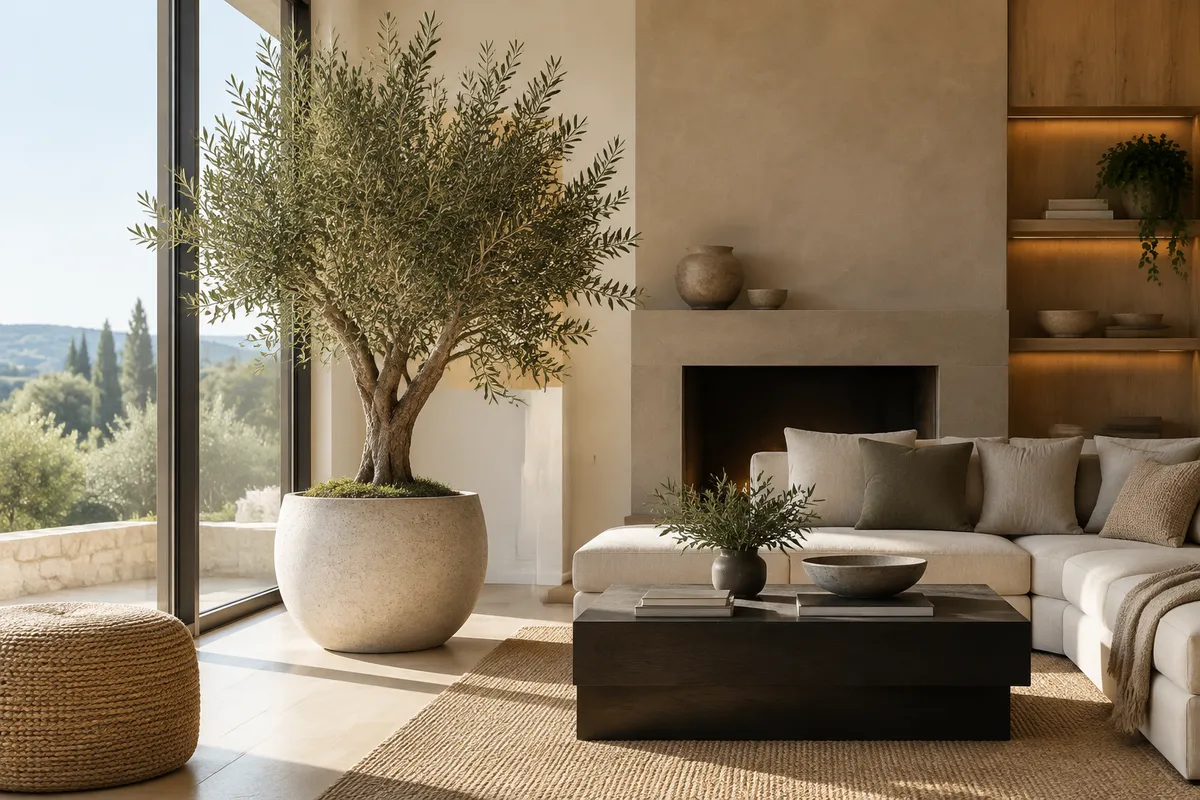
Designers keep pointing to one houseplant when a room needs to look more considered: the olive tree. Homes & Gardens recently highlighted Olea europaea as a designer favorite that brings Mediterranean charm, sculptural shape, and a timeless feel to an interior.
The appeal is the quiet kind of luxury. One well-placed tree can make a space look intentional without a lot of fuss. Below, you'll find how to choose the spot, the size, and the styling, plus the care basics, so the tree earns its place.
Why an Olive Tree Works
Most houseplants add green. An olive tree adds structure. Its branching form reads almost like a sculpture, and the Mediterranean association suits the current appetite for warm minimalist rooms that feel relaxed rather than staged.
That's the logic behind the trend, per Homes & Gardens: people want statement plants that feel luxe and deliberate, not generic. A single olive tree does that job on its own. You don't need a jungle of plants to get the effect.
Pick the Spot First
Placement matters more than any other decision, because an olive tree is a plant that wants light. The smart approach is to find the sunniest spot in your home and design around it, instead of choosing a corner for looks and hoping the tree adapts.
Try this before you buy:
- Walk through your home in the middle of the day and note which spots get the brightest light.
- Check which of those spots has room for a tree to stand without blocking a walkway.
- Pick the one that also shows off the tree from where you usually sit or enter.
A sunny window, an empty corner beside it, or the area next to a glass door are all natural candidates. If your sunniest spot is currently an awkward, unused nook, this is a good way to give it a purpose.
Get the Size and Scale Right
Scale decides whether the tree looks like a design choice or an afterthought. A tiny plant in a big room gets lost. An oversized one in a tight room feels crowded.
For larger rooms
A taller tree can anchor an empty corner, flank a sofa or fireplace, or fill the visual gap beside a big window. Height gives the room presence.
For small spaces
A modest olive tree is a good way to add height and drama without clutter. Because the form is upright and open rather than bushy, it draws the eye up and doesn't swallow floor space. Put it where a floor lamp or a stack of baskets might otherwise go.
A quick sizing check
Stand a broom or tall object in the spot you're considering. Step back to the room's entrance. If it looks lost, go bigger. If it crowds a doorway or furniture, go smaller.
How to Style an Olive Tree
The tree is the hero, so keep what's around it simple. Here's how to make it look intentional.
Choose a planter that matches your style
The pot changes the whole mood:
- Terracotta leans into the Mediterranean look and is usually an affordable choice.
- Stone or concrete-look planters suit modern, pared-back rooms.
- Woven baskets (with a plastic pot tucked inside) soften a traditional or cozy space.
Pick one that's in proportion to the tree. A substantial pot makes the tree look settled and a bit more expensive.
Give it breathing room
Resist surrounding it with lots of small accessories. A clear patch of wall or floor around the trunk lets the branches show as a silhouette, which is where the sculptural effect comes from.
Pair it with texture, not clutter
Warm neutrals, natural wood, linen, and woven pieces all sit comfortably next to an olive tree. One or two of those nearby is plenty.
Care Basics for Keeping It Thriving
An olive tree only delivers the designer look if it stays healthy. Based on the light advice above, the core principle is simple: keep it in your brightest spot and don't move it around much.
A few habits help any indoor tree:
- Watch the light. If growth looks sparse or leggy, it's a sign to consider a brighter position.
- Check the soil before watering. Water when it feels dry rather than on a rigid schedule, and make sure the pot drains so roots aren't sitting in water.
- Rotate occasionally. Turning the pot helps the tree grow evenly toward the light instead of leaning.
- Dust the leaves. A gentle wipe keeps them looking fresh and able to take in light.
For specific watering amounts, feeding schedules, and pruning timing, check the plant tag from the nursery or the care guidance for the variety you buy, since needs vary with conditions in your home.
Budget Notes
A mature, statement-size tree can be a real investment. If that's a stretch, start with a smaller tree in a plain terracotta pot. Your styling choices, such as a sunny spot, clear space around it, and a well-sized planter, do much of the work of making it look special. You can always repot into a larger container as it grows.
The Takeaway
Before you shop, find the sunniest spot in your home and measure the space around it. Build the look from there: one tree, one good planter, and room to breathe.