BuzzFeed Shopping recently rounded up 28 Walmart organizers aimed at banishing junk piles, with the playful promise of conquering those mountains. The roundup's full product list isn't something we can reproduce here, so instead of guessing at specific items, this article gives you something more durable: a simple method for picking the right type of organizer for any pile, so you spend your money once and the clutter stays gone.
You'll finish with a step-by-step plan, a few budget-friendly rules, and a sense of where to start.
Why junk piles keep coming back
A junk pile is usually a missing home. Mail, chargers, shoes, and random bits land on the same counter or chair because nothing else is easier. Buying a bin doesn't fix that on its own. Matching the container to the habit does.
That's the real value of a budget organizer roundup like BuzzFeed's: Walmart's low-cost positioning means you can experiment without a full renovation or a big spend. Just buy with a plan.
Step 1: Pick one pile, not the whole house
Decluttering gets overwhelming when you try to do everything at once. Choose a single mountain: the entry table, the junk drawer, the closet floor, the counter by the door.
Set a 20-minute timer. That's enough to make visible progress and short enough that you won't quit halfway.
Step 2: Sort before you shop
Dump the pile out and make four groups:
- Keep here: things that belong in this spot.
- Keep elsewhere: things that live in another room.
- Donate or sell: things you no longer use.
- Trash or recycle: broken, expired, or empty.
Only the "keep here" group needs an organizer. Often it's a much smaller group than the original pile, which means you'll buy less.
Step 3: Match the organizer to the problem
When you browse any organizer roundup, think in categories rather than individual products.
For drawers: dividers and trays
Junk drawers get messy because everything is loose. Shallow trays or dividers give small items like batteries, tape, and pens their own lanes. Measure the inside of the drawer first so nothing slides around.
For closets and shelves: bins and baskets
Open shelves look tidy when similar things share a container. Use bins with a consistent look, and label the front so everyone in the house knows where things go.
For floors and doors: vertical storage
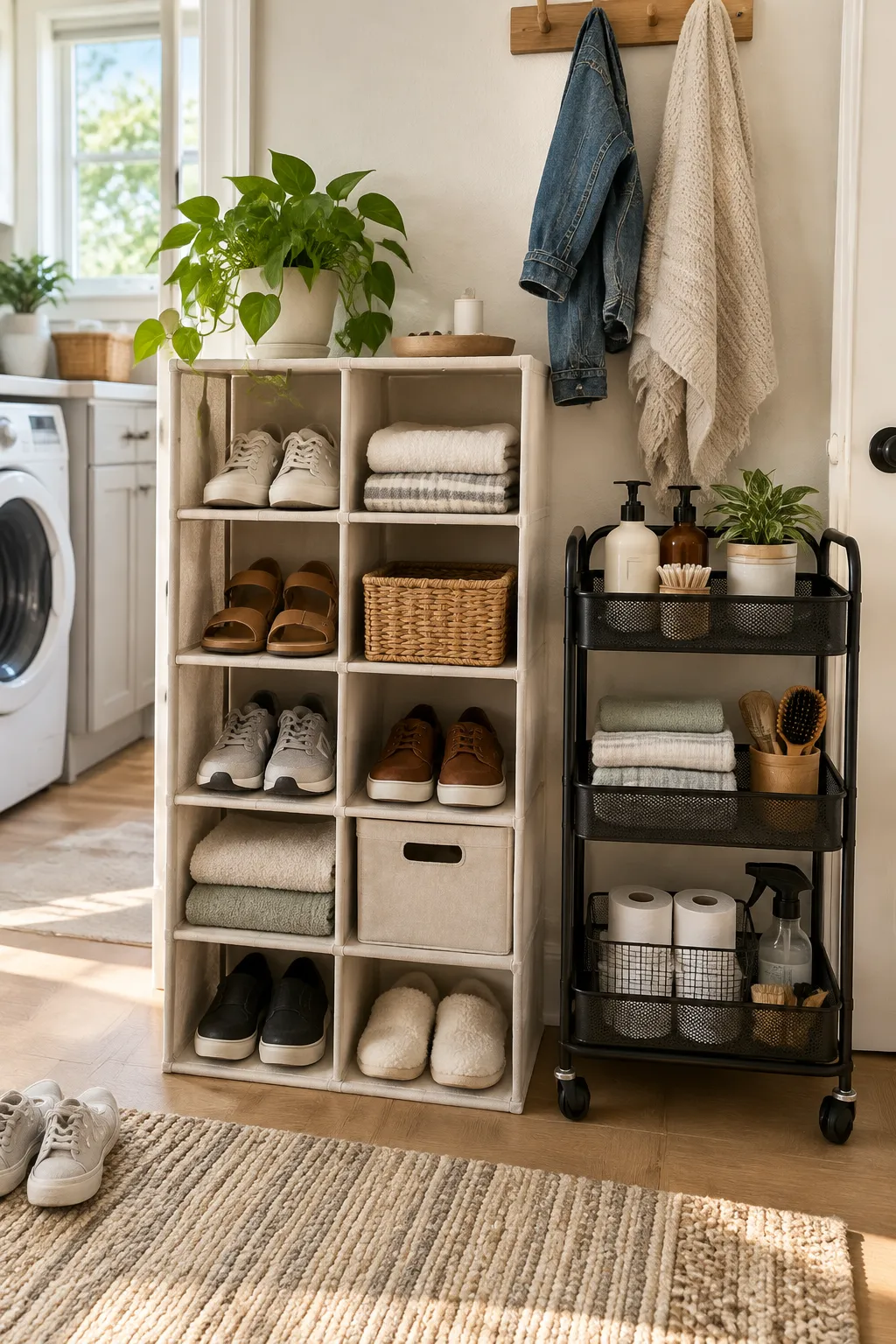
In a small space, go up. Over-the-door racks, hooks, and stackable units use wall and door surface you're already not using. They're especially handy for shoes, bags, and cleaning supplies.
For counters and entryways: a landing zone
A single tray or small basket for keys, wallet, and mail keeps the surface clear. The goal is one designated spot, not a whole system.
Step 4: Measure, then buy
This saves more money than any sale. Before you add something to your cart:
- Measure the width, depth, and height of the space.
- Write the numbers in your phone.
- Check the product dimensions against them.
A bin that's half an inch too wide is a return trip you didn't need.
Budget-friendly rules that actually work
- Start with what you own. Shoeboxes, jars, and baskets can hold your sorted items while you test the layout.
- Buy one category at a time. Fix the drawer, live with it for a week, then decide what's next.
- Pick a matching look. Sticking to one or two colors makes even a cheap setup look intentional.
- Choose open-top containers for daily items. If it takes two steps to put something away, it'll end up on the counter again.
- Save lidded bins for rarely used things. They're better for seasonal items than for what you grab every day.
Making it work in small spaces
If you're short on room, every organizer should earn its footprint. Look for products that stack, hang, or slide under a bed or sofa. Skip anything bulky that just relocates the mess.
In a larger home, the challenge is different: more surface area means more places for piles to form. There, a few clearly labeled baskets in high-traffic zones, like the entry and kitchen, do the heavy lifting.
Keep the reset going
Once your pile has a home, give it a two-minute weekly check. Put stray items back, toss what doesn't belong, and notice whether the organizer is working. If something keeps overflowing, the container is probably too small or in the wrong spot, and that's an easy fix.
To see the full lineup of Walmart picks, check BuzzFeed's original roundup. But before you click, do this: pick one pile, set a timer for 20 minutes, and sort it. You'll know exactly what to buy, and you might discover you need far less than you thought.