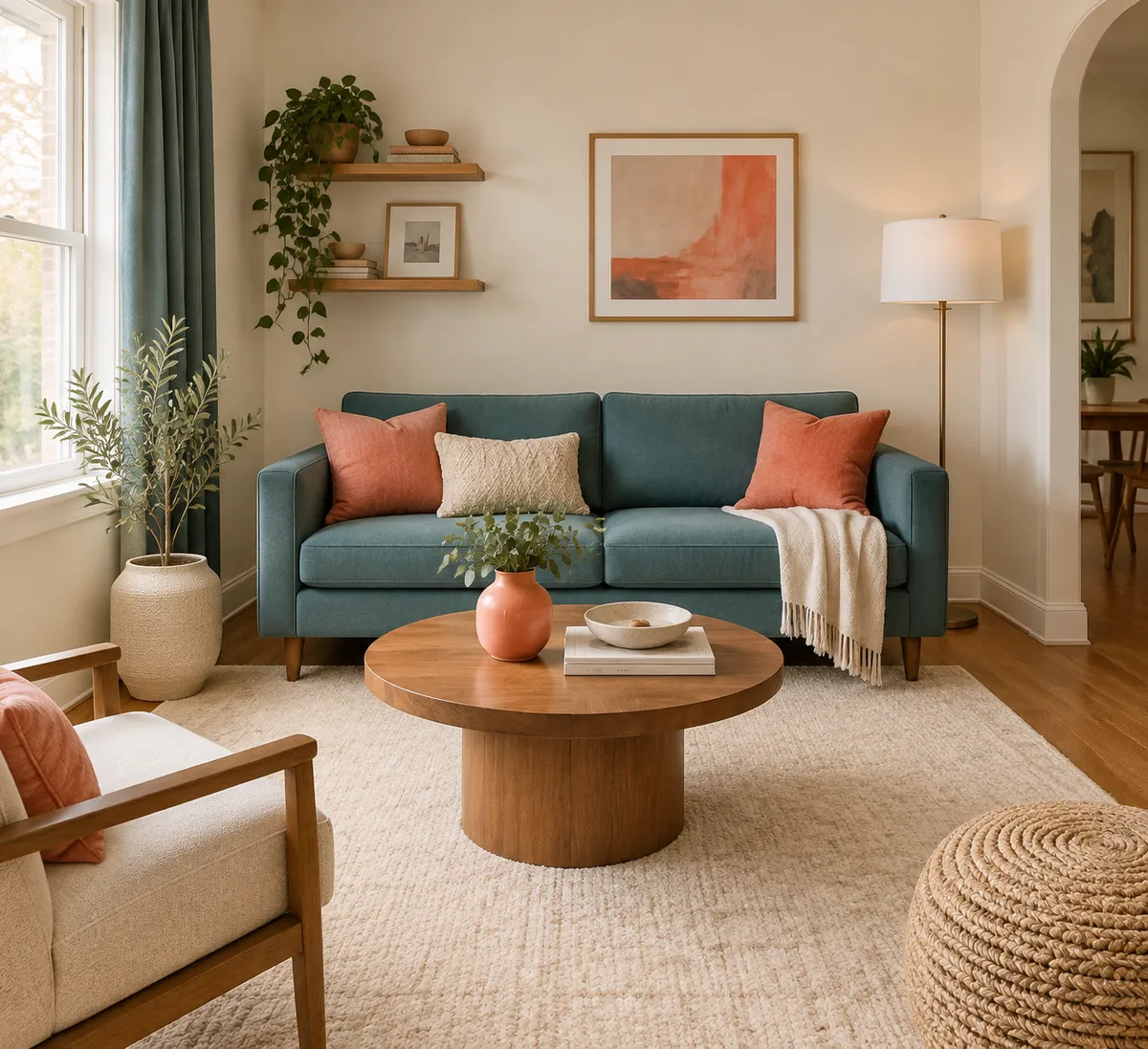
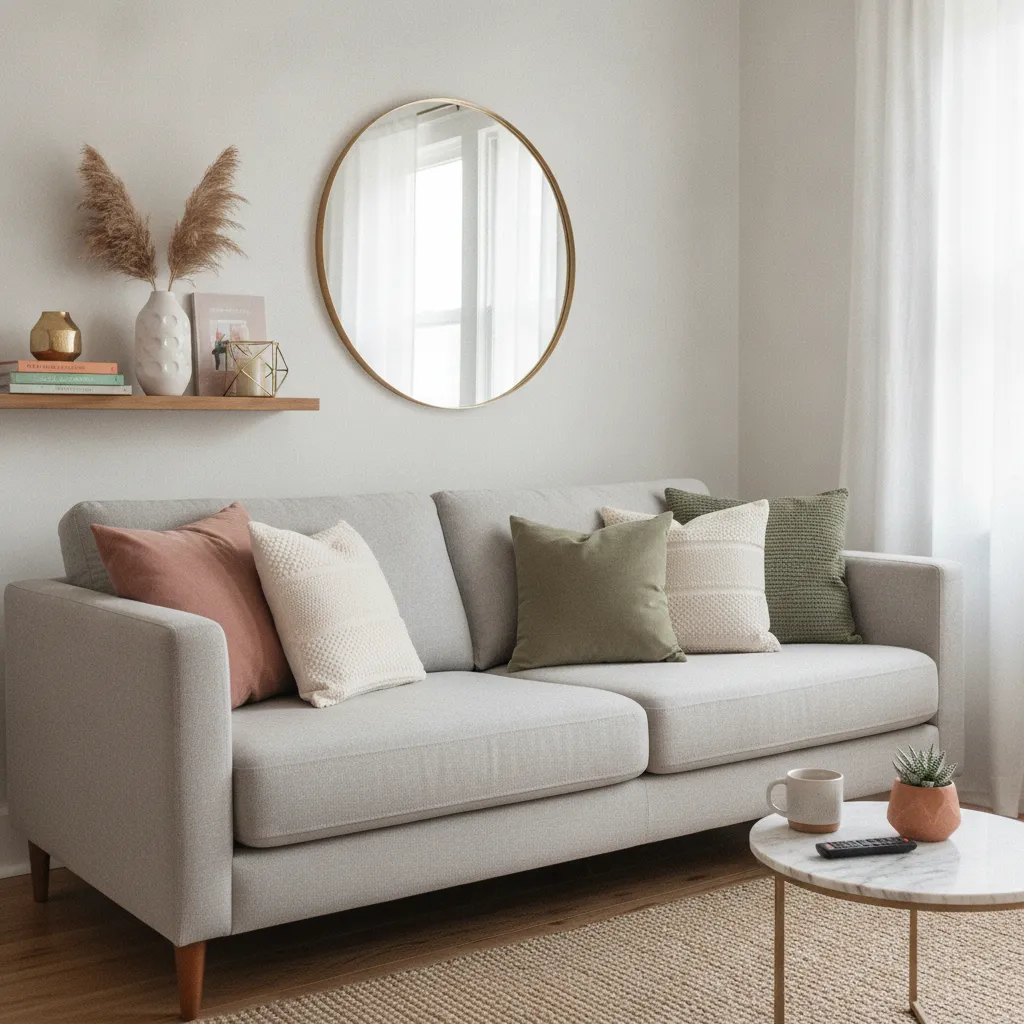
Most small-room advice sounds the same: paint everything white, buy tiny furniture, keep it bare. Designers cited by Yahoo's home decor coverage say some of the better tricks go the other way. Bold color, big pieces and fewer knick-knacks can make a compact space feel larger than the safe approach does.
The common thread is visual continuity, scale and restraint. Here are four tricks you can try, in a rough order from easiest to most committed, with notes on keeping costs down.
1. Lay Down a Large Rug
This is the most common small-room mistake to fix, and it's the most counterintuitive. A small rug feels like the sensible choice in a small room. In practice, a little rug floating in the middle chops the floor into pieces, and a room with a busy, broken-up floor tends to read as smaller.
A large rug does the opposite. It gives the eye one continuous surface to follow, so the room feels unified instead of segmented.
How to try it
- Pick the largest rug that fits your space comfortably, then check how much floor shows around it.
- In a living room, aim to have at least the front legs of your sofa and chairs sitting on the rug, so the seating reads as one group.
- On a budget, look at flat-weave or simple neutral styles from big-box and online retailers, which usually cost less per square foot than plush or hand-knotted options. Prices vary, so measure first and compare.
2. Go for Darker Paint
This one sounds wrong, and that's the point. The designers' argument is that a deep, intentional color can make a room feel more expansive than yet another white wall, in part because dark colors soften corners and edges so the walls are less obvious boundaries. That reasoning is my read on why it works, but the broader idea, that bold paint can beat the white-wall cliché, is the designers' own.
It also fits where design is heading right now: moodier colors and personality-driven interiors.
How to try it
- Test before you commit. Paint a large swatch, or a sample board, and look at it in morning, afternoon and evening light.
- Consider a continuous look. Using the same color on walls and trim can create the continuity this whole approach depends on.
- Start small if you're nervous. A powder room, entryway or bedroom is a lower-stakes place to experiment than your main living area. A gallon of paint is among the cheapest transformations available, and renters can ask their landlord about permission first.
3. Use Oversized Drapes and Lighting
Small rooms don't need small accessories. Designers point to oversized drapes and lighting as a way to use scale on purpose. One large fixture or a pair of generous curtains makes a statement, and it signals that the room was designed rather than squeezed together.
How to try it
- Choose a single standout light fixture rather than several timid ones.
- Pick curtains with plenty of fabric and presence. Simple, solid-color panels can look substantial without costing a lot.
- Hang the rod where it supports the effect. Mounting it higher and wider than the window frame is a common styling approach for making windows feel larger, though check what suits your wall and layout.
If you're watching your budget, this is a good place to spend on one item and save on the rest. A single bold piece does more than five modest ones.
4. Edit Down Your Accessories
The last trick is restraint, and it's free. Even a well-chosen room starts to feel cramped when every shelf and surface is crowded. The designers' advice is to edit your accessories down so the pieces you keep have room to breathe.
Note what this isn't. It isn't a call for a blank, empty room. Bigger rugs, darker walls and statement lighting bring personality. Editing keeps that personality from turning into clutter.
How to try it
- Clear one surface completely, such as a coffee table, shelf or dresser top.
- Put back only the pieces you love or use. Aim for a few meaningful items rather than many small ones.
- Group what's left. Larger objects tend to look calmer than a scatter of tiny ones.
- Store the extras for a few weeks. If you don't miss them, they can go.
Putting the Tricks Together
These tricks work best as a set. A large rug and dark walls give the room a strong, continuous base. Oversized drapes and lighting add scale. Fewer accessories keep the whole look intentional.
You don't need to do all four at once. If you want the cheapest starting point, edit your accessories this weekend. If you can spend a little, swap a small rug for a bigger one. Paint and lighting are the bolder moves once you've seen how the first two change the feel of the room.
Small-space living isn't going anywhere, with housing costs keeping many people in apartments, condos and compact homes. Designers' advice, as reported by Yahoo, is that you don't have to apologize for a small room. Make one confident choice, and see how much bigger the room feels.