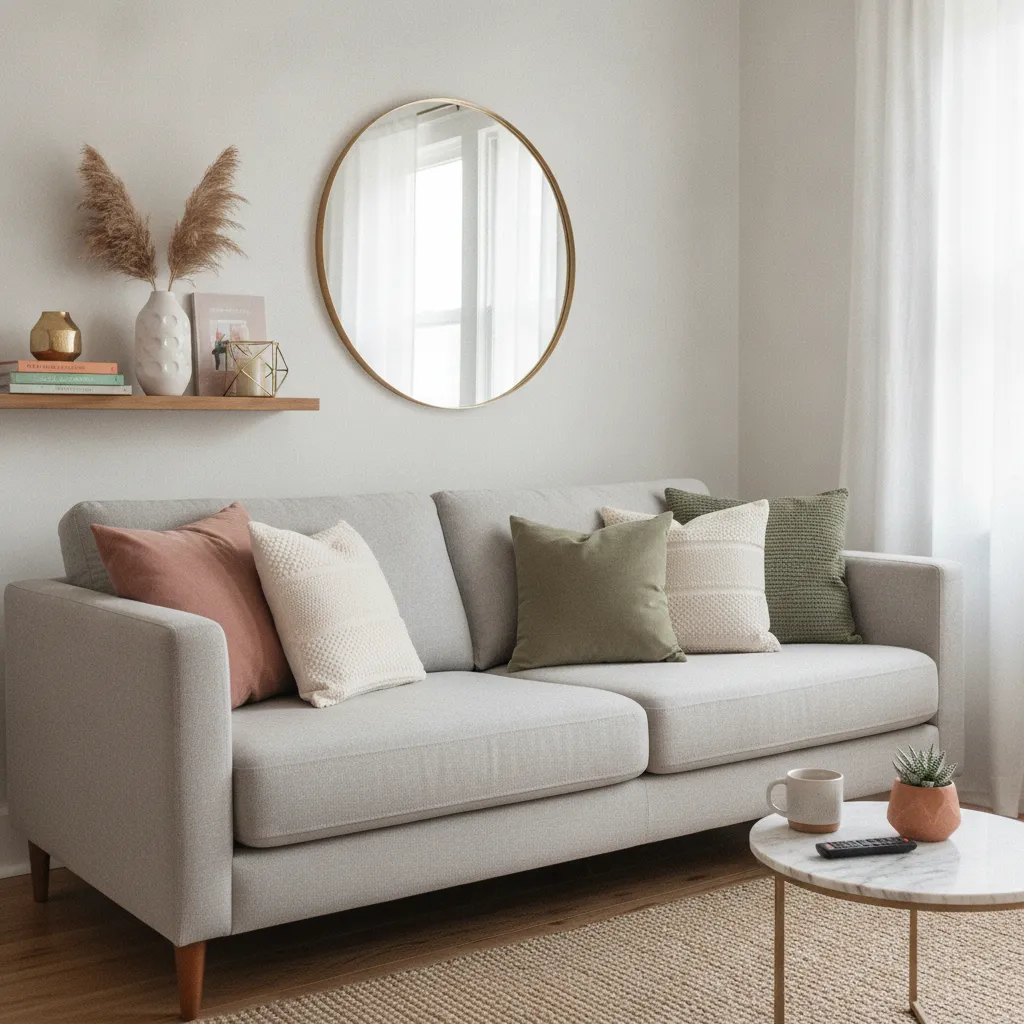
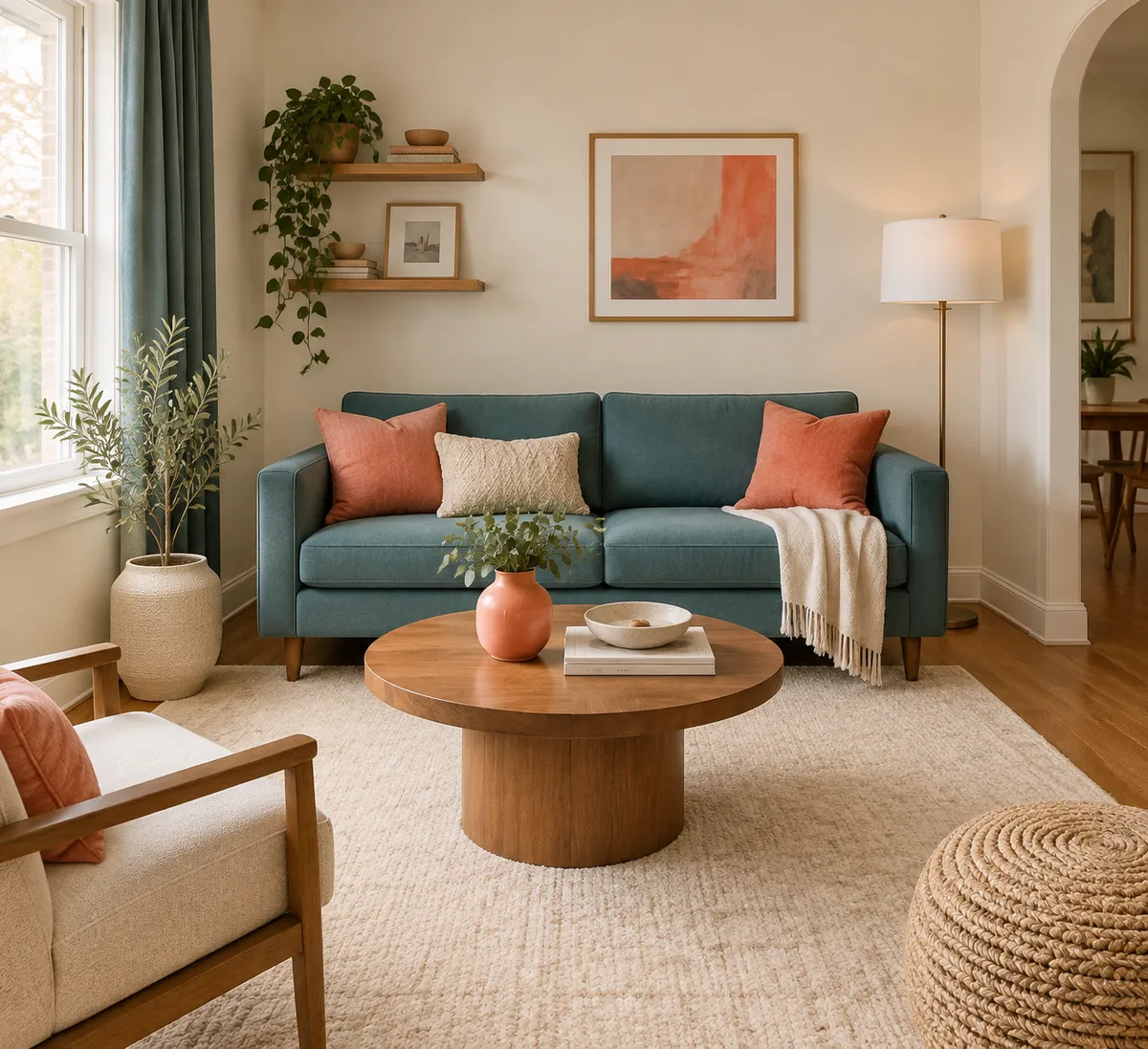
If your room has colors you like but still feels slightly off, the fix may be proportion, not paint. The 60-30-10 color rule is a designer-approved formula for building a balanced palette: 60% dominant color, 30% secondary color, and 10% accent. By the end of this article, you'll know where each percentage lives in a real room and how to apply it without a big budget.
The rule, as covered by HomeDecor via Yahoo, works across bold, minimalist, patterned, and monochromatic interiors. It's a framework, not a style. You supply the taste.
What the 60-30-10 rule actually means
Think of your room's color as a pie with three slices.
- 60% dominant color: the backdrop. It sets the mood and covers the most visual space.
- 30% secondary color: the supporting player. It adds depth and keeps the dominant color from feeling flat.
- 10% accent color: the punch. Small doses, repeated, that make the room feel finished.
The percentages describe visual weight, not exact measurements. You don't need a tape measure. Squint at the room: if one color clearly leads, a second supports, and a third sparkles, you're close.
Where each percentage lives in your home
The rule feels abstract until you assign it to actual objects. Here's a practical map.
The 60: walls and the biggest surfaces
Walls are the obvious home for your dominant color, but a large rug or a big sofa can carry it too. Pick the color you want to feel surrounded by. Softer, quieter shades make the easiest base, though a bold wall color works if you're committed to it.
The 30: furniture, curtains, and bedding
Your secondary color usually shows up in mid-sized pieces: an armchair, curtains, a bed's duvet, a dresser, or an area rug. This layer creates contrast with the walls without competing for attention.
The 10: pillows, art, lighting, and small objects
Accents are the easiest and cheapest place to experiment. Throw pillows, artwork, a lamp, a vase, or a blanket can all carry the accent color. Trim can play a role here, too, if you want a crisp line of contrast.
A sample room, broken down
Here's one way to build a living room. This is an illustrative example, not a prescription.
- 60%: warm white walls and a pale neutral rug
- 30%: a deep green sofa and green-toned curtains
- 10%: rust-orange pillows, a brass lamp, and one piece of art with a touch of rust
Notice the accent shows up in three different places. Repeating the 10% across the room moves the eye around and makes the palette look intentional.
How it works in different styles
The formula is flexible because it only governs proportion.
- Bold interiors: make the 60 a saturated color, then balance it with a calmer 30 and a contrasting 10.
- Minimalist rooms: keep all three colors quiet and close in tone, letting texture do some of the work.
- Patterned rooms: treat a pattern as one of your colors. A patterned rug might be your 30, with its dominant shade guiding the rest.
- Monochromatic spaces: use three shades of the same color family: light for the 60, mid-tone for the 30, deep for the 10.
Using the rule in rentals and small spaces
When you can't repaint, adapt. Treat the existing walls as your 60, even if they're rental beige, then choose your 30 and 10 around them.
- Name your walls' color as the 60. Don't fight it.
- Pick the 30 from movable items. A rug, curtains, or bedding is the fastest, most affordable swap.
- Save the 10 for cheap extras. Pillow covers, a framed print, or a small lamp cost little and are easy to change by season.
In a small room, the rule also keeps things from feeling cluttered. Three colors, repeated, read as calmer than six colors scattered.
A quick budget-friendly palette check
Before buying anything, try this:
- Take a photo of your room and look at it on your phone. Which color dominates?
- Identify what's currently your 30 and 10. If the accent color is taking up a third of the room, that's likely why it feels chaotic.
- Fix the imbalance with the smallest change: swap a few pillow covers, move art, or shift a bold throw to a less prominent spot.
Often, one or two swaps are enough.
When to break the rule on purpose
The 60-30-10 rule is a starting point. A room with a dramatic, color-drenched look might lean 90% on one shade. A collector's gallery wall might break the accent limit. If you break it, do it knowingly and keep a clear lead color so the room still has a sense of order.
Your next step
Stand in the doorway of your most frustrating room, name the 60, the 30, and the 10 out loud, and change just one item that's out of proportion. That single swap will tell you whether the rule works for you.