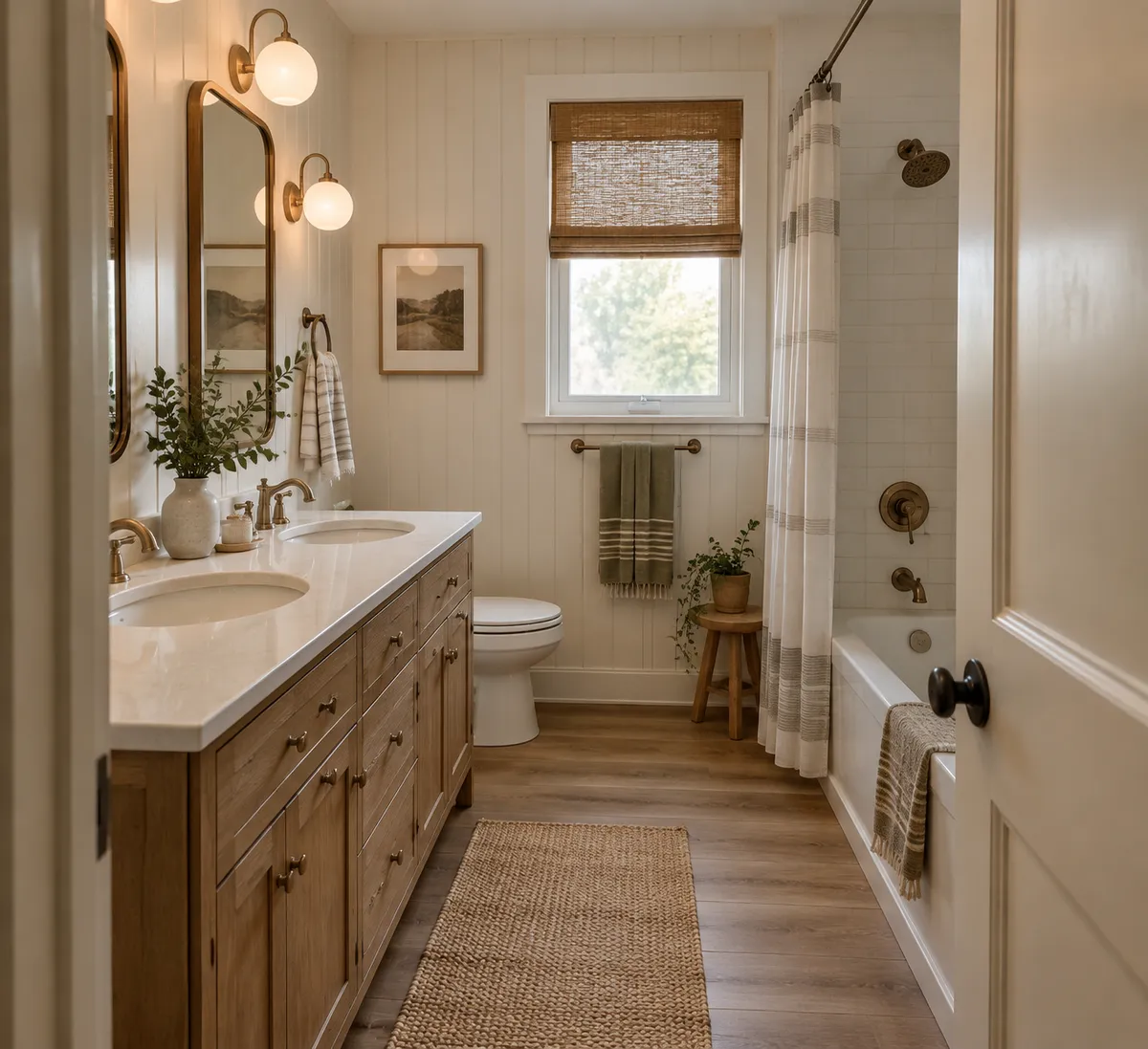
A dated, mismatched primary bath in a 1962 home has gotten a makeover that's brighter, more functional, and packed with more storage than you'd expect, according to Apartment Therapy. The owners did it as a DIY project, and they kept some of the vintage flair along the way.
You don't need a mid-century house to borrow from it. The strategy is useful for any older bathroom: spend on the pieces that do real work, and restore what's already good instead of tearing it out.
Start With a Vanity That Does the Heavy Lifting
The biggest storage win in this project came from an IKEA double vanity. Per Apartment Therapy, it's one of the budget-friendly choices that helped the room become more functional.
A vanity is the hardest-working piece in a bathroom. It holds the sinks, hides the clutter, and takes up the most visual space. If you swap a dated or mismatched setup for one cohesive unit, you get two benefits at once: more places to put things and a cleaner look.
What to check before you buy
- Measure the wall, not just the floor. A double vanity needs enough width for two basins to be usable, so measure twice.
- Look at the drawers, not only the cabinets. Drawers keep small items visible and reachable, while deep cabinets tend to swallow them.
- Plan the plumbing. Two sinks means two sets of connections, so confirm what your setup can handle before you commit.
Restore the Vintage Tub Instead of Replacing It
The original vintage tub was restored rather than ripped out. That's a smart move for two reasons. It keeps the character that makes an older home feel like itself, and it gives the new finishes something with history to play against.
A fully modern bathroom can feel generic. One original feature, kept and refreshed, gives the room a point of view without costing you a new fixture.
If you have a tub, tile, or other original feature that's still solid, ask whether it needs replacing or just refreshing. Restoration isn't always cheaper, so get a quote, but it's worth pricing out before you default to new.
Choose Waterproof Flooring You Can Install Yourself
The floor in this redo is waterproof engineered hardwood. That's a notable pick for a bathroom, where moisture is the constant enemy, because it brings warmth underfoot that cold tile often doesn't.
When shopping for something similar, look for a product explicitly rated as waterproof, and follow the manufacturer's installation instructions. Don't assume a regular wood floor will hold up near a tub.
Use Wall Paneling to Add Texture
Wall paneling was another budget-friendly element in the redo. Paneling does a lot for the price: it adds texture, covers up tired walls, and makes a plain bathroom feel designed.
It also pairs well with vintage pieces. A restored tub against a paneled wall looks intentional rather than leftover.
Tips for a bathroom paneling job
- Pick a finish suited to a humid room.
- Keep the paint or color light if your bathroom is small, since the redo's overall effect was a brighter space.
- Let the paneling be the pattern, and keep the rest of the palette simple.
Why This Approach Works for Almost Any Older Bathroom
The project's logic is easy to copy at any budget:
- Fix the function first. Storage and sink space matter more than any decorative upgrade.
- Keep one star feature. Here, that's the vintage tub.
- Choose materials that handle moisture. Waterproof flooring is a practical example.
- Add warmth and texture cheaply. Paneling does this well.
This redo didn't need a full gut renovation to go from dated to modern. It needed a few good decisions, made in the right order.
Smaller Bathroom? Scale It Down
The source project involved a primary bath, and not every bathroom has that kind of room. Still, the ideas shrink well. A single vanity with plenty of drawers offers the same storage logic. A restored fixture or a paneled accent wall brings the same character. Brighter finishes help any small room feel more open.
The report details on this project don't include exact costs or dimensions, so check Apartment Therapy's full tour if you want to see specifics before planning your own budget.
Your Next Step
Before you buy anything, walk into your bathroom and decide which one original feature is worth saving. Build the rest of the plan around that, then spend your money on storage.