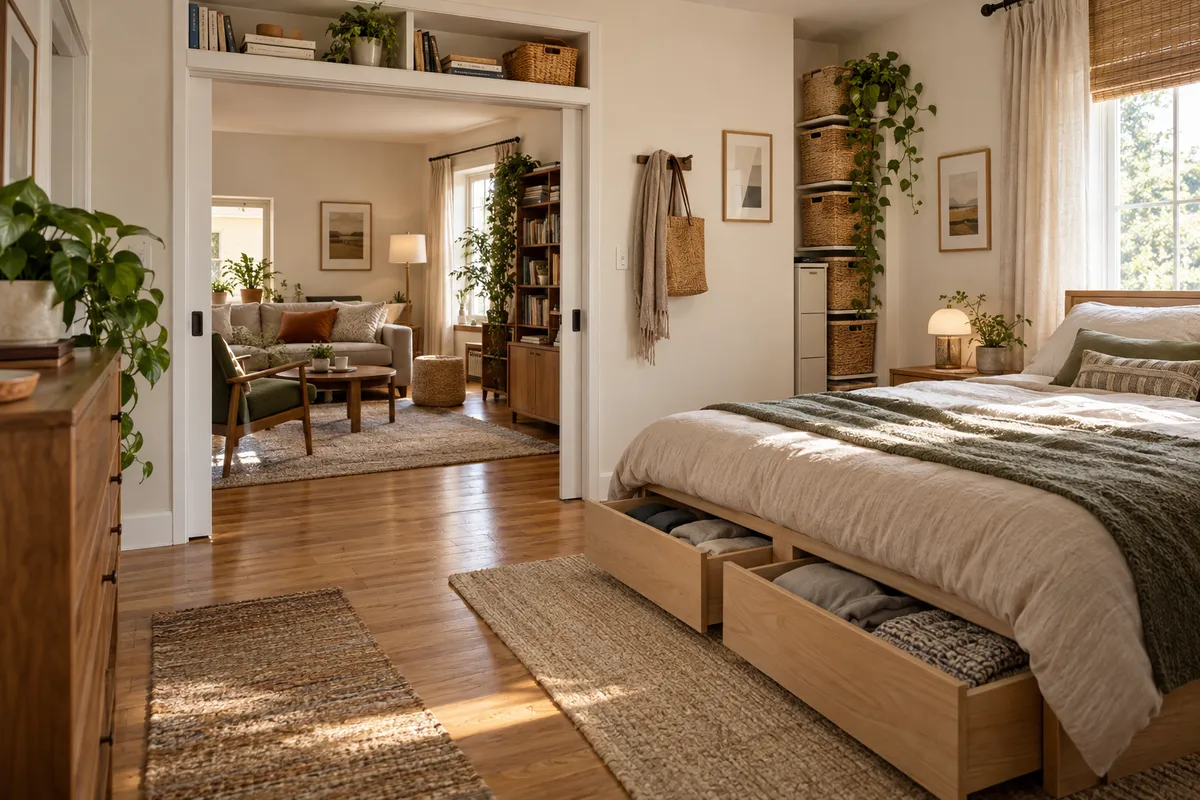
BuzzFeed Shopping recently rounded up 31 organization products aimed at a clutter-free home. Its pitch: if you think your home "isn't big enough," some of these products can help you use space you didn't realize you had. The full list isn't reproduced here, so I won't walk you through those picks. The idea behind the pitch is the useful part, though, and you can use it today.
Below is a room-by-room way to spot unused space, plus what kind of organizer solves each problem. Start with the room that annoys you most.
Start with the annoyance, not the product
The fastest way to waste money on organizers is to buy them before you know what's wrong. Spend five minutes in one room and write down every small daily irritation. Things like:
- The pile of shoes by the door
- The pan lid avalanche
- The cords you can never find
- The towels that won't stay folded
Each annoyance points to a specific type of storage. That list is your shopping list, and it keeps you from buying a bin that just relocates the mess.
Entryway: use the wall and the floor edge
Entries are usually small, so go vertical first.
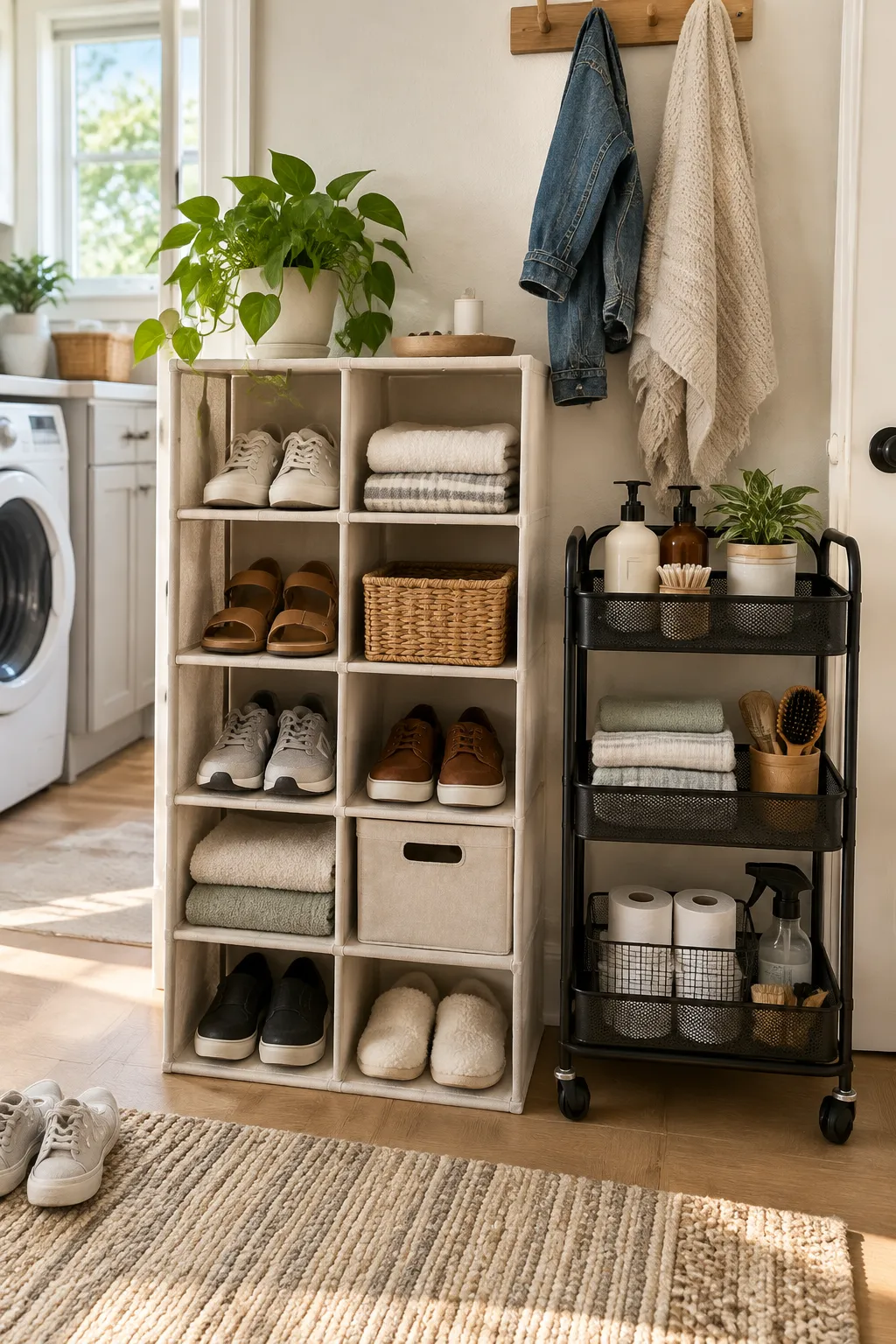
- Wall hooks hold bags, coats, and dog leashes off the floor. A row of hooks is among the cheapest upgrades you can make.
- A shallow shoe rack or tray keeps footwear contained. Even a boot tray from the hardware store works.
- A small basket or bowl on a shelf gives keys, sunglasses, and mail one home.
The rule: if it comes in with you daily, it needs a spot within arm's reach of the door.
Kitchen: look up, look behind, look inside
Kitchens hide more unused space than any other room.
Inside cabinets
Most cabinets waste the vertical gap above your dishes. A shelf riser or stackable shelf turns one layer into two. Lid and pan organizers stop the avalanche.
Behind doors
The inside of a cabinet door can hold an over-the-door rack or adhesive hooks for measuring cups, cutting boards, or cleaning supplies.
On the counter
Resist the urge to add more stuff. Clear off everything you don't use daily, then use one tray to group oil, salt, and pepper. It looks intentional instead of cluttered.
Bedroom: claim the space under and over
- Under the bed: Flat, lidded containers or rolling drawers suit off-season clothes and extra bedding. Measure your clearance first so they actually fit.
- Closet: Double-hang rods add a second hanging level for shirts and pants. Slim hangers free up inches too.
- Behind the door: An over-the-door organizer handles accessories, scarves, or shoes.
If your nightstand is a junk magnet, give it one drawer divider and a rule: only things you use at night live there.
Bathroom: tame the small stuff
Bathrooms fill with tiny items that have no home.
- Drawer dividers keep makeup, razors, and hair ties sorted.
- Under-sink stackable bins or a tiered caddy work around the plumbing instead of fighting it.
- Over-the-toilet shelving adds storage in space that is otherwise empty.
- Shower caddies that hang or stick on keep bottles off the tub edge.
Living room: hide the clutter in plain sight
The goal here is storage that looks like decor.
- Lidded baskets or storage ottomans swallow remotes, blankets, and kids' toys.
- A cord organizer or cable box tidies the tangle behind the TV.
- Floating shelves give you display space without eating floor area.
Choose baskets in a matching material or color so the room feels calm rather than busy.
Small-space rules that save money
Whatever your budget or square footage, a few habits keep organizing from becoming its own clutter.
- Declutter first. Organizers work best on what's left after you edit. Storing things you never use just hides them.
- Measure twice. Note the width, depth, and height of the shelf, drawer, or gap before you shop.
- Buy one room at a time. You'll learn what works before you spend more.
- Try cheap fixes first. Hooks, shoeboxes, and jars you already own can test an idea before you buy a nicer version.
- Pick a consistent look. Matching containers make even a packed shelf look tidy.
Treat roundups as a menu
Shopping lists like BuzzFeed's are handy for spotting ideas you hadn't considered. Before you click buy on anything, check it against your own annoyance list and your measurements. A product that solves a problem you actually have is worth it. One that just looks tidy online is not.
Pick one room today, find the single biggest annoyance, and fix only that. One solved problem makes the next one easier to tackle.