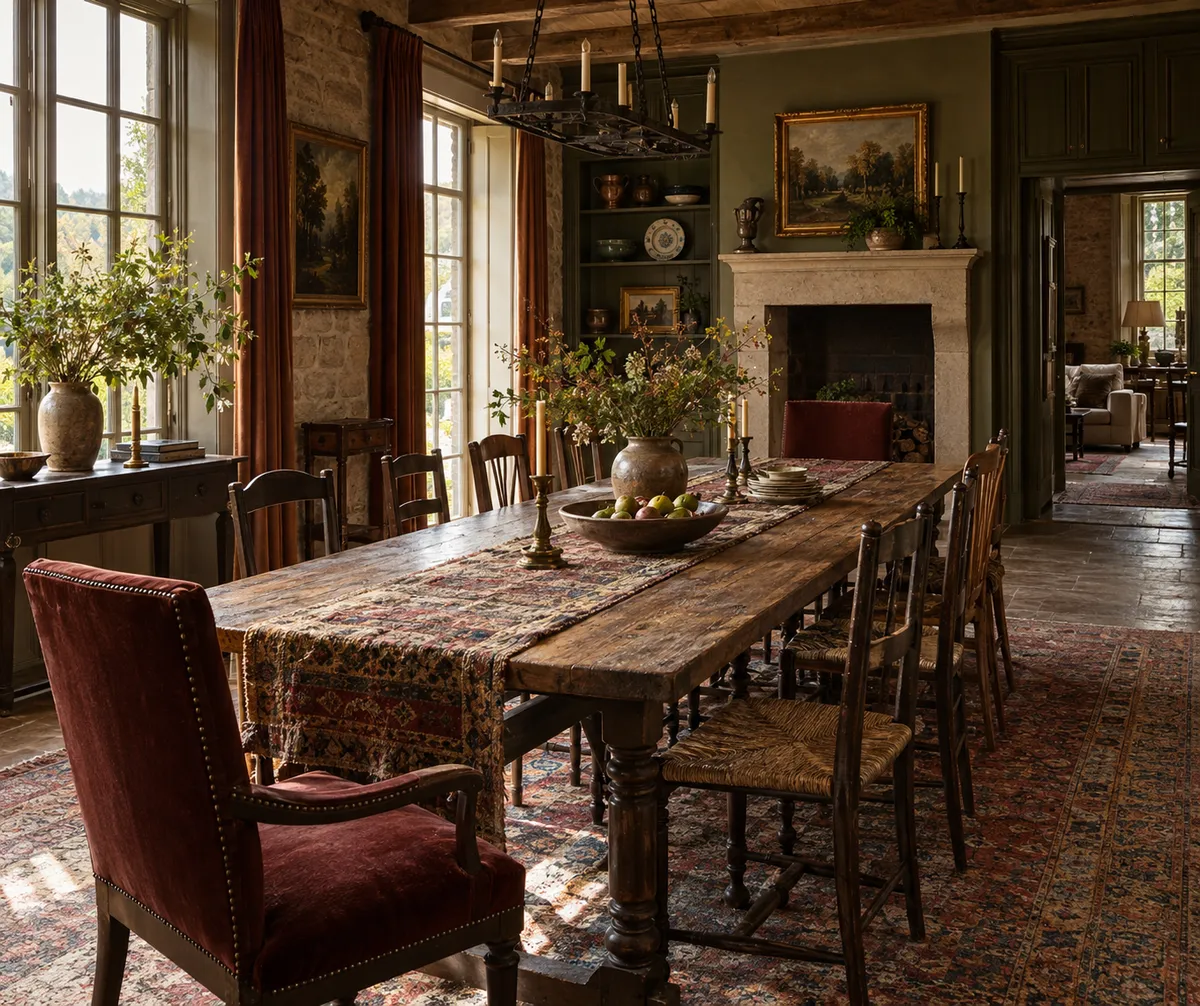
Most of us want the room finished by the weekend. A stone farmhouse in Lancaster County, Pennsylvania, offers the opposite lesson, and it's a useful one: your home gets better when you stop rushing it.
Per Veranda, designer Richard Keith Langham and his lifelong friend Follin Smith spent 20 years transforming an 1850 stone farmhouse. The result is described as an expression of friendship, patience, and a very clear design vision. You probably don't have two decades or a historic homestead. You can still steal the method, and most of it costs nothing.
Let the House Take Its Time
The core idea in Veranda's profile is slow renovation. Instead of finishing everything at once, the pair built the house through patience, memory, antique finds, and rich textiles.
You can do a small version of this at home:
- Live in a room for a month before you buy anything big. Notice where you sit, where light lands, and what annoys you.
- Fix the essentials first. Function comes before finishing touches.
- Leave a few gaps on purpose. An empty corner is a good place for a future find.
Slow doesn't mean unfinished. It means every piece earns its spot.
Start With a Specific Dream
Veranda notes that the design process was built around highly specific dream-room visions. That detail matters. "Cozy and warm" is a mood. A clear picture of the room you'd love to walk into is a plan.
Try this exercise for one room:
- Write down the single moment you want the room to support, like a long dinner with friends or a quiet Sunday read.
- Describe the colors, textures, and lighting in that moment, in as much detail as you can.
- Hold every purchase up against that description.
A specific vision makes shopping easier and cheaper, because most things quickly become a no.
Build Around the Pieces You Already Love
The profile points to antique finds and long-held treasures as the backbone of the interiors. Designing around heirlooms flips the usual process. You don't pick a style and then shop for it. You start with what matters and let the room form around it.
A few budget-friendly ways to do that:
- Pick one anchor piece per room. A family table, a mirror, a quilt, a painting. Choose colors that flatter it.
- Reupholster or re-cover before you replace. Fabric can change a sofa or chair's whole personality.
- Shop secondhand with your list in hand. Thrift stores, estate sales, and flea markets reward people who know what they're looking for.
Use Rich Textiles to Add Depth
Textiles are named as a key ingredient in the farmhouse's character. They're also one of the most affordable ways to make a space feel collected rather than shopped in one afternoon.
Layer a few types in each room: curtains with some weight, a throw you actually use, pillows in mixed patterns, a rug with some age or pattern to it. Mixing is the point. Matching sets read as flat, while varied textures read as lived in.
Skip the Farmhouse Clichés
A farmhouse doesn't need a word sign or a barn-door-everything look to feel like one. The appeal here comes from personal history and distinctive details, not from a trend checklist. That's my read of the profile, not a quote from it, but the principle holds.
To keep your own place from feeling generic:
- Choose a few items with a story over a lot of items with a theme.
- Mix eras. Something old next to something plain and modern looks intentional.
- Edit anything that's only there because "farmhouse" told you to put it there.
Why Personal History Makes Rooms Memorable
Part of what makes this house compelling is who made it: two lifelong friends with decades of shared taste and memories. You can't buy that. You can, though, put your own history to work. Frame a map from a place you've lived. Display a collection instead of hiding it. Hang the odd painting you can't explain.
Rooms people remember tend to feel like one particular person's. Yours can too, without a designer.
The Takeaway
Pick one room this week and write down your specific dream for it, then buy nothing until a piece fits that description. Twenty years is optional. Patience isn't.