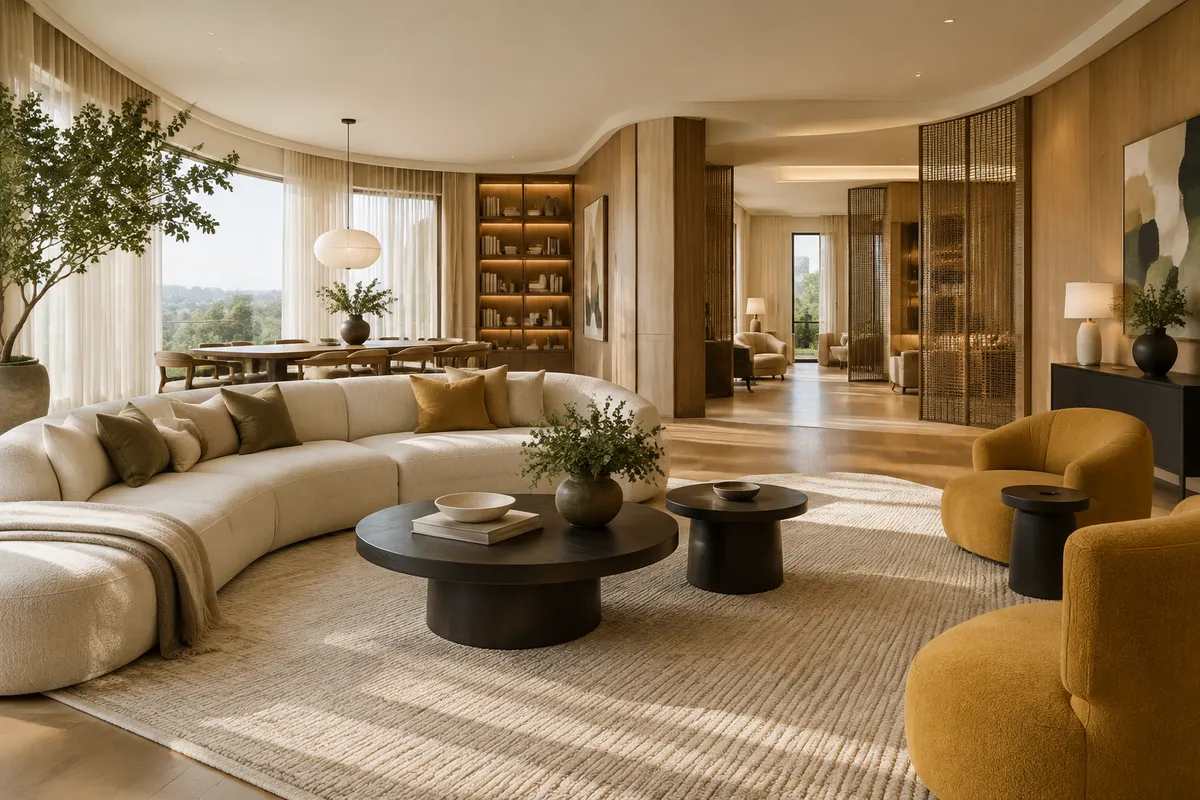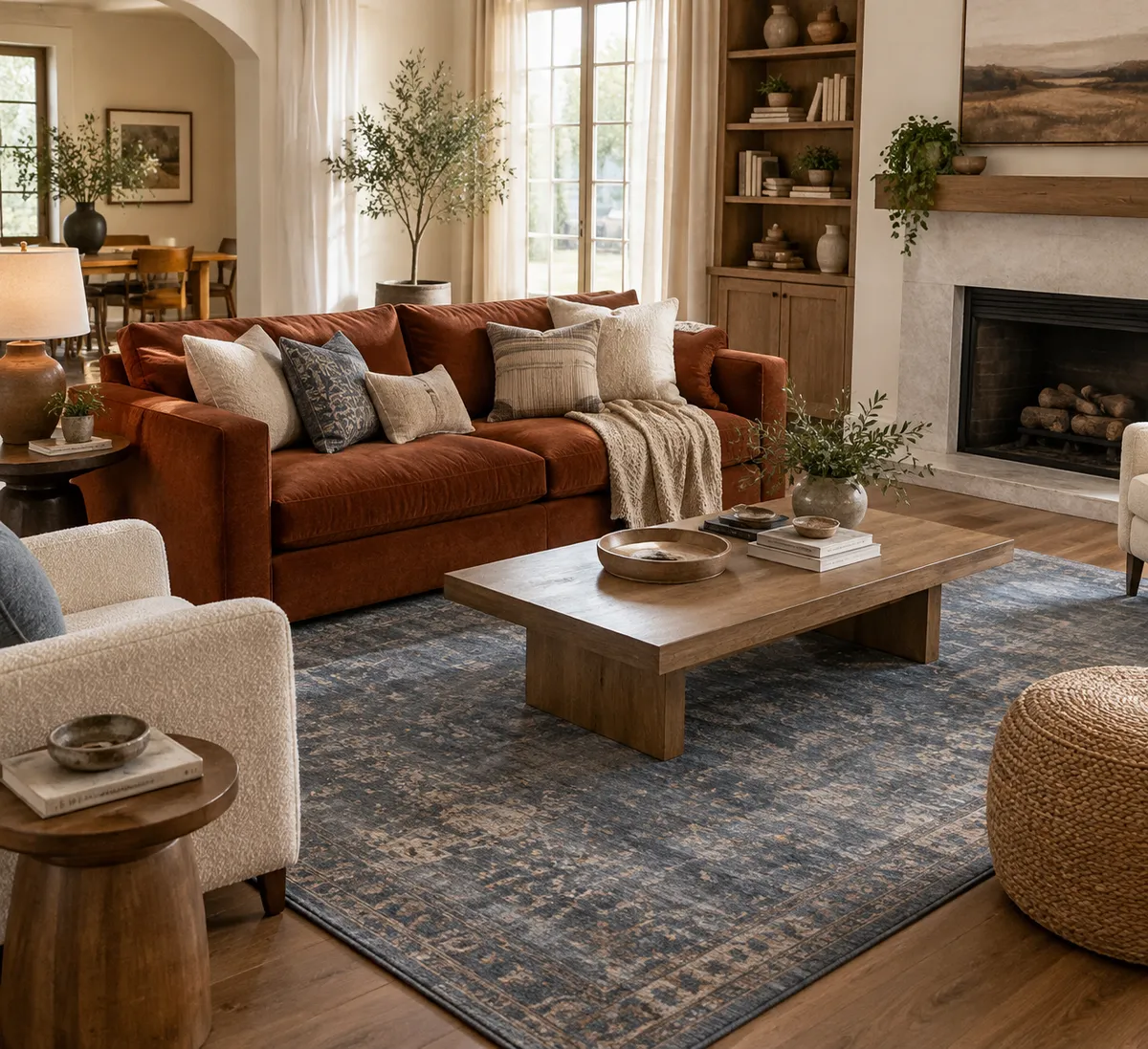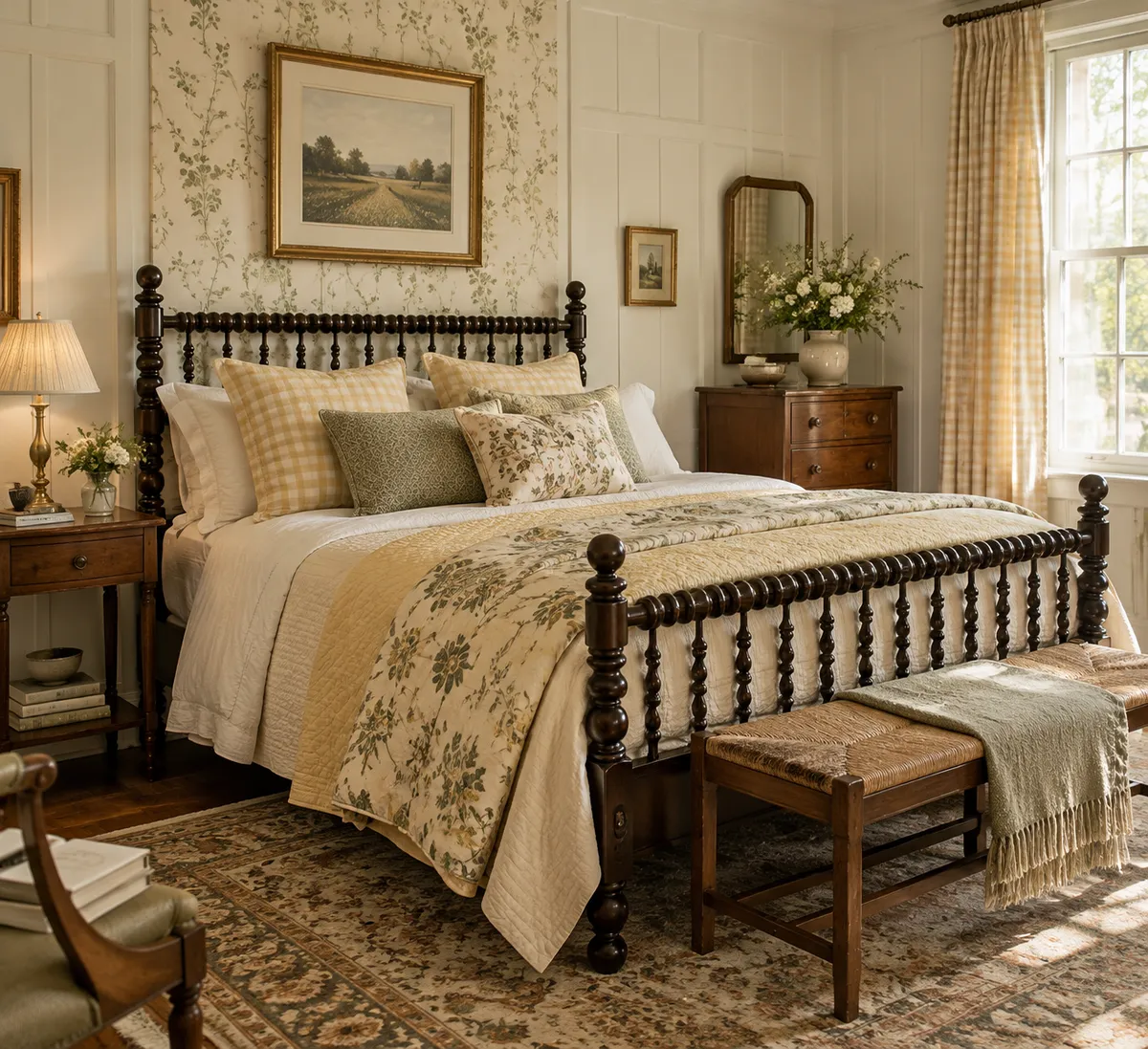
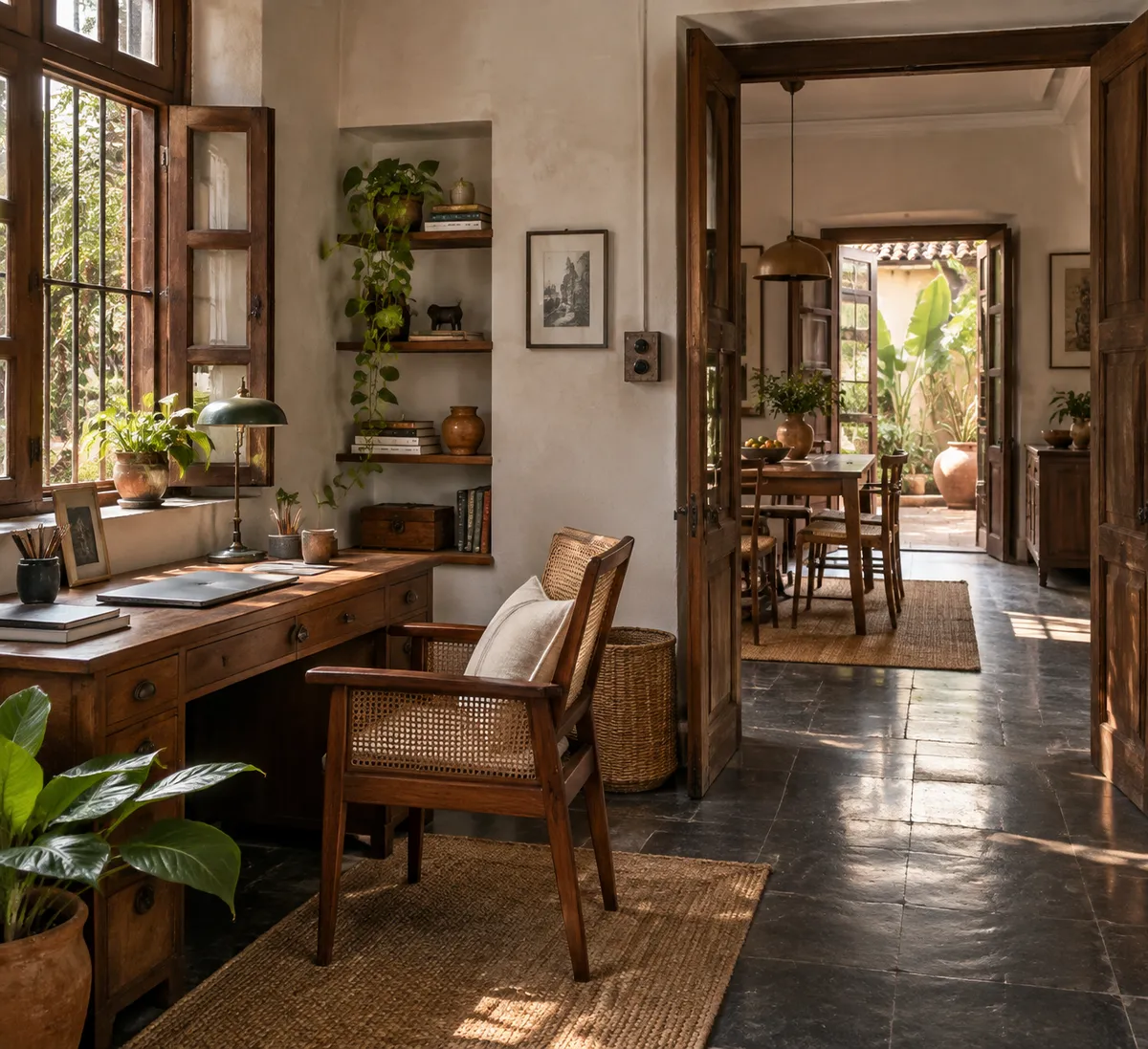
Architectural Digest India recently rounded up five Indian homes that have been turned into intimate workspaces, from a minimalist retreat in Mumbai to a nostalgic, cosy studio in Chennai. The thread running through them, per the piece, is a move away from sterile corporate offices toward spaces that feel personal, adaptive, and rooted in place.
You probably aren't converting a bungalow. But you can borrow the thinking. Here's how to make the spot where you work, whether it's a spare room or a corner of the living room, feel more human and less like a cubicle.
What the five homes have in common
The roundup covers five projects: Extending Office Hours, Home Sweet Office, The Charm Of A Bandra Bungalow, Rising From The Ruins, and Reviving The Haveli. The source describes architects and creative teams turning domestic layouts into offices that keep warmth, character, and flexibility.
The broader argument: as hybrid work reshapes office culture, businesses are rethinking what a workplace should feel like. Many are choosing comfort, heritage, and human scale over glass-tower uniformity. In dense Indian cities, reusing existing homes is also framed as a response to sustainability, preservation, and changing work habits.
I'm working from that summary rather than the full feature, so I won't describe specific floor plans or finishes. What follows are practical takeaways inspired by the details the roundup highlights: light, texture, courtyards, terraces, and old rooms.
Lesson 1: Let the room stay a room
The big idea here is that these workplaces keep their domestic bones. A home has a scale that feels natural: doorways, windows, rooms you can actually settle into.
At home, resist the urge to make your workspace look like an office. Skip the all-grey palette and the rolling cart of supplies. Keep the things that make the room feel like yours, such as a rug, a favorite chair, art you'd normally hang in a living space.
Budget tip: Swap harsh overhead bulbs for warm-white bulbs (usually labeled around 2700K) and add a lamp. It costs a few dollars and changes the mood immediately.
Lesson 2: Work near the best light you have
Light is one of the domestic details the roundup points to as making workplaces more creative and humane. You don't need a courtyard to apply that.
- Put your desk beside a window, angled so the glare doesn't hit your screen.
- Keep window treatments light and easy to adjust.
- If you have a balcony, porch, or terrace, take a call or a thinking session out there.
If your only window is in the living room, that's a perfectly good reason to work there and pack up at the end of the day.
Lesson 3: Add texture, not clutter
Corporate spaces tend to be smooth, flat, and uniform. Homes are layered. You can borrow that without crowding a small desk area.
- A woven basket for papers or cables
- A linen or cotton throw over the chair back
- A wooden tray to corral pens and a notebook
- A small plant, real or not, whichever you'll actually maintain
Pick two or three textures and repeat them. Repetition looks intentional; a pile of mismatched extras looks messy.
Lesson 4: Use what's already there
Several of the featured projects are about adaptive reuse, giving existing buildings a second life. The same logic saves you money in your own place.
Before buying a desk, look around:
- A console table or dining table can be a perfectly good workspace.
- A bookshelf can double as storage and a visual backdrop for video calls.
- An old armchair or bench can become your reading-and-thinking spot, separate from your screen.
Secondhand furniture also brings the character the roundup celebrates in heritage homes. A piece with some wear tells a story a flat-pack desk doesn't.
Lesson 5: Make it easy to switch off
The hardest part of a work-from-home setup is that the office is also the house. The flexible, adaptive spirit in these projects is a good reminder that a workspace can be set up and put away.
In a small home, try these:
- Use a lidded box or basket for your laptop and notes so they disappear at the end of the day.
- Choose a lamp that you turn on only when you start work.
- Face your desk away from the main living area if you can, or hang a simple curtain or fabric panel to separate it.
These small rituals signal when work starts and stops, which matters more than the size of the room.
Scaling it to your space
Studio or one-bedroom: Pick one corner, add a lamp and a small rug, and keep everything in one basket or tray.
Spare room: Treat it like a real room. Add art, a comfortable chair, and layered lighting, not just a desk.
Bigger home or outdoor space: Set up a second spot, such as a porch or sunny nook, for work that doesn't need a screen.
The takeaway
You don't need to build a better office; you need to make the place you already live in a better place to work. Start tonight: move your desk toward the window, swap one cold bulb for a warm one, and add one textured thing you love.