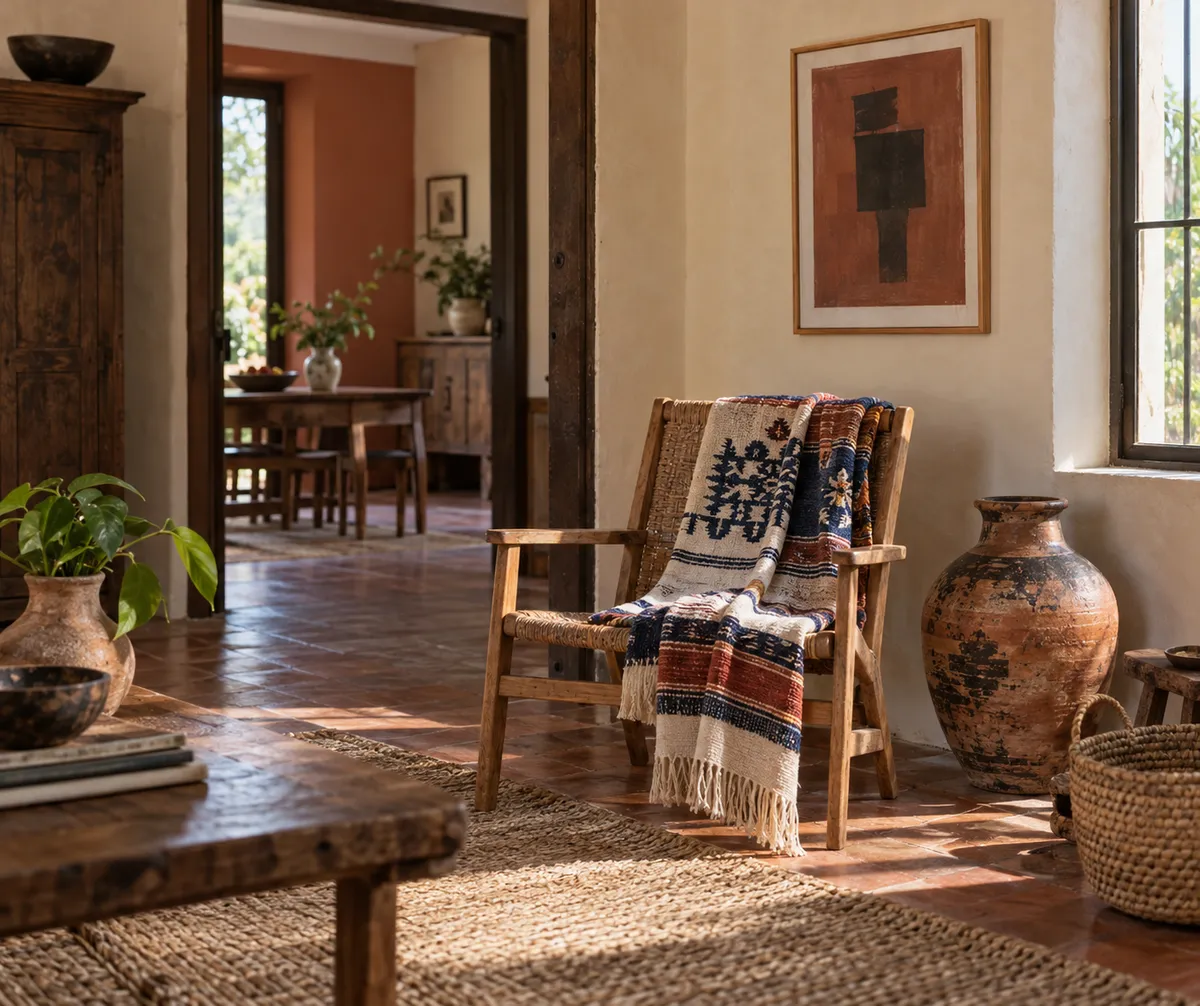
Vogue recently took readers inside Casa Flora, designer Carla Fernández's home and studio in Mérida, Mexico. The home appears in Mesoamerican Modern, a book by Su Wu. It's filled with Indigenous textiles, Mesoamerican art, and artisan-made design. The book's argument, as Vogue frames it, is that pre-Hispanic and Indigenous design ideas aren't museum pieces. They're living influences that shape how people decorate today.
You probably don't have a studio in Mérida. You can still borrow the thinking. Here's how to bring that lived-in, handmade approach into a home of any size, without a big budget.
Treat Handmade Pieces as Part of Daily Life
The most useful takeaway from Casa Flora is the mindset: handmade objects belong in rooms people actually use, not behind glass. Per Vogue's coverage, the home blends fashion, art, and architecture in one space, and the pieces sit alongside everyday living.
To try this at home:
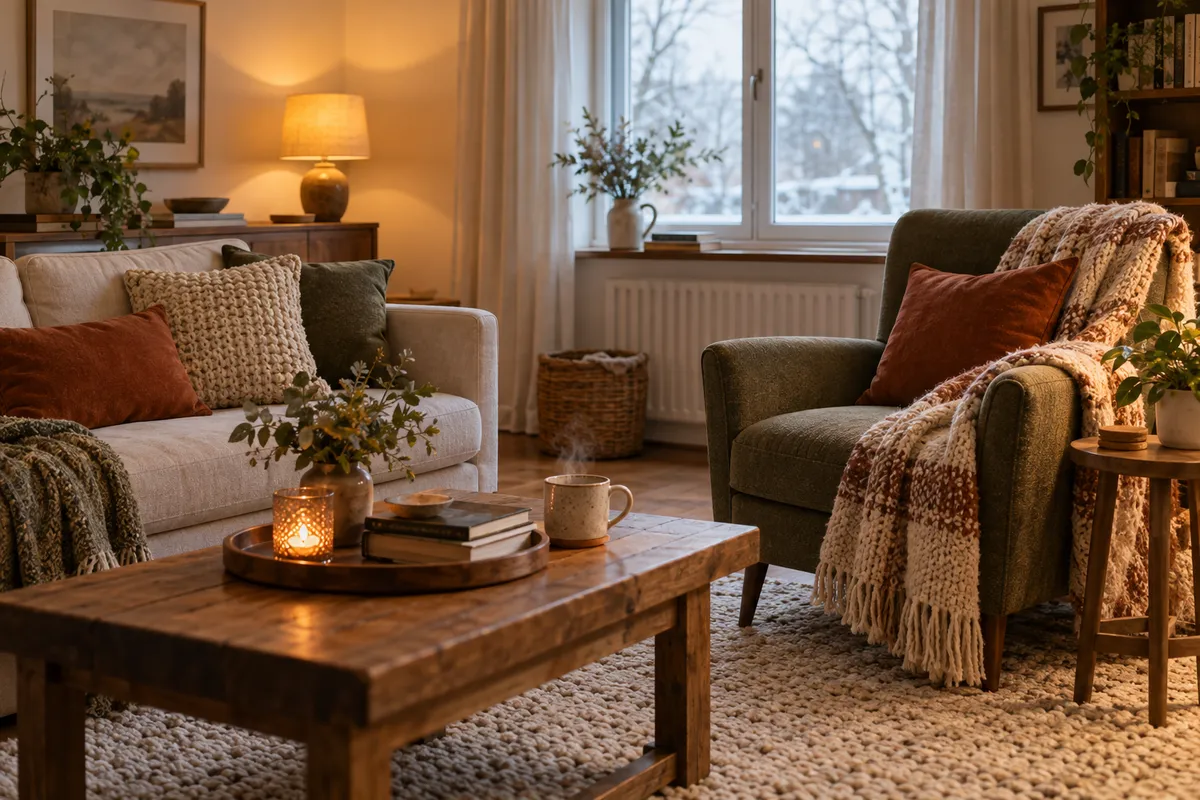
- Use a woven textile as a throw on the sofa instead of folding it in a closet.
- Put a handmade bowl on the table where you drop your keys.
- Drink from the ceramic mug you love, not the one you're saving.
A few well-chosen pieces that get touched and used will make a room feel more lived-in than a shelf of untouchable treasures.
Start With One Textile
Indigenous textiles are central to Casa Flora, and textiles are also the easiest entry point for most budgets. One piece can change a room's mood quickly.
Good spots to start:
- Over the back of a chair or the end of a bed, as a runner or throw.
- On a wall, hung from a simple rod or a few clips, if it's a flat woven piece.
- As a table covering for a console or side table.
Choose one that you genuinely respond to in color and pattern, then build the rest of the room calmly around it. If your walls and furniture are neutral, a single bold textile will carry the space.
Buy With Care and Know the Maker
The conversation around this book, per Vogue, includes Indigenous authorship and artisan collaboration. That's a good filter for shopping, too. Handmade doesn't have to mean expensive, but it does mean someone made it.
Some practical habits:
- Buy directly from makers, cooperatives, or small shops that name the artisans behind their work when you can.
- Ask where a piece was made and by whom. A good seller will be happy to tell you.
- Be wary of mass-produced items that copy traditional patterns without credit. If the price is suspiciously low and the origin vague, that's a clue.
- Save for fewer, better pieces rather than filling a room with imitations.
This approach tends to be cheaper in the long run, because you stop replacing things you never loved.
Let a Central Gathering Spot Anchor the Home
One of the angles in the coverage is the patio as the heart of Mesoamerican-inspired home design. Whether or not you have an actual courtyard, the idea translates: decide where your home's center is, and design around it.
In a small space, that might be:
- A balcony with two chairs and a plant or two.
- A dining nook with a textile on the table and art within sight.
- A corner of the living room set up for sitting together, not just facing a screen.
Put your favorite handmade pieces in that spot. It makes the whole home feel organized around something, instead of scattered.
Mix Art, Craft, and Function
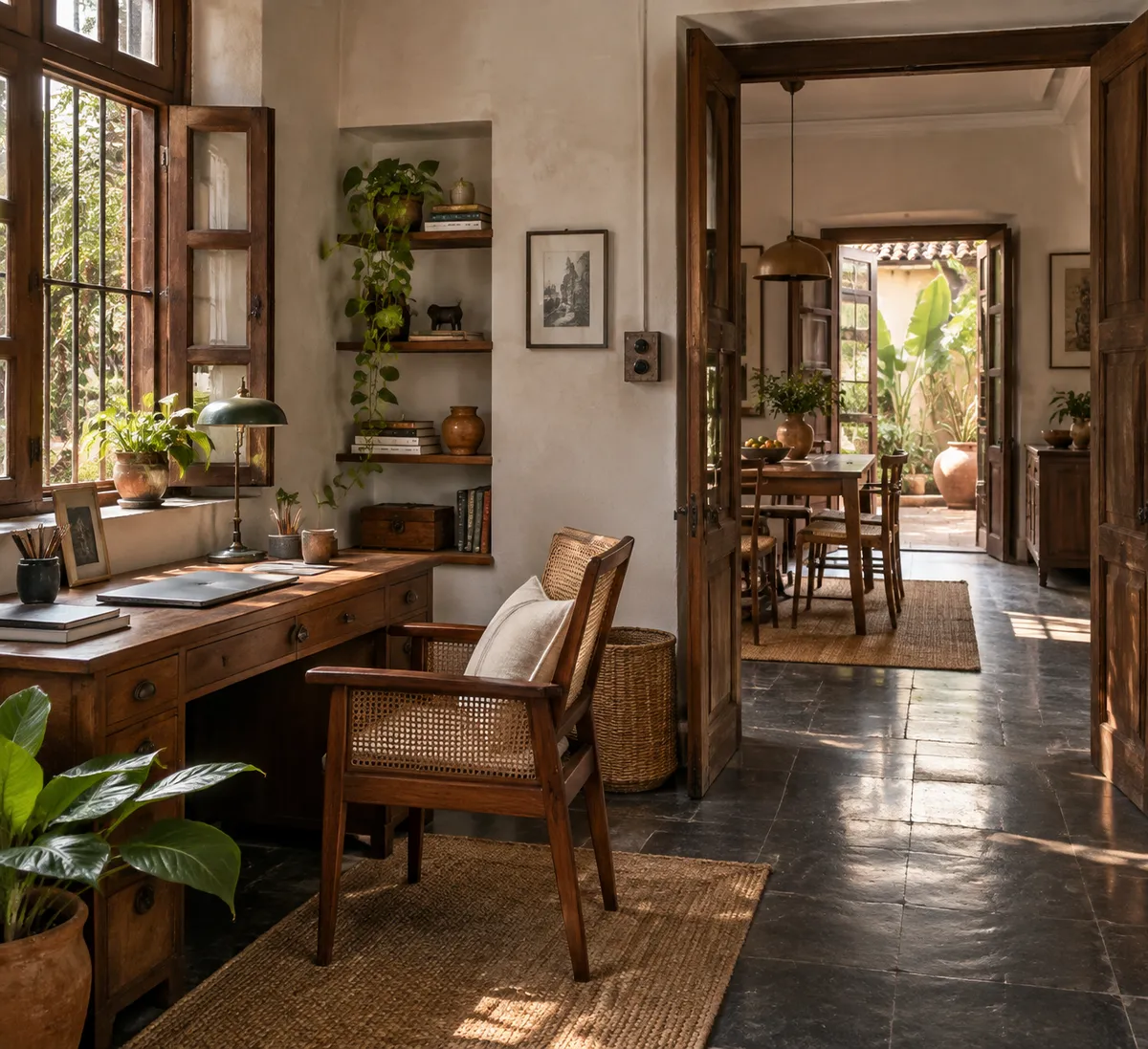
Casa Flora is described as a place where art and artisan-made design live together. You can do this without collecting expensive art. Treat a framed textile scrap, a woven basket, and a ceramic piece as equals on the same shelf or wall.
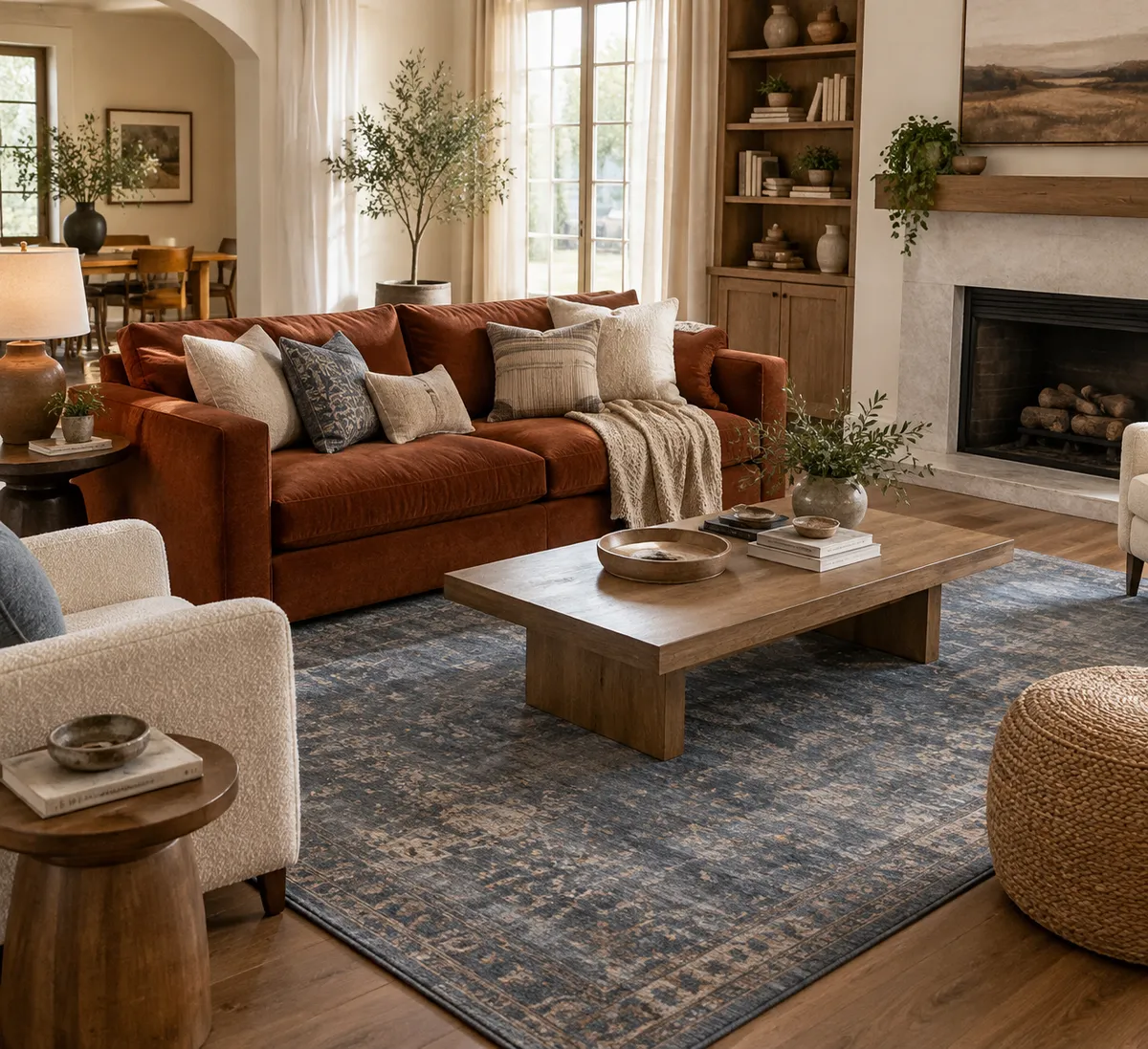
A simple formula for a shelf or wall grouping:
- One flat piece (art, a textile, or a print).
- One sculptural piece (a pot, a carved object, a basket).
- One functional piece you use (a bowl, a tray, a candleholder).
Keep a bit of empty space around them so each item reads clearly.
Think Memory, Not Just Aesthetics
The heart of Su Wu's argument, as Vogue describes it, is designing with cultural memory rather than just visual inspiration. For most of us, the same idea works on a personal scale. Choose objects with a story: a textile from a trip, a piece a family member made, something you bought from a maker you met.
That's what keeps a home from looking staged. Pieces with a story tend to get used, repaired, and kept, which is the opposite of a trend cycle.
A Starter Plan for This Weekend
- Pull out any handmade item you've been saving and put it where you'll use it.
- Pick one spot in your home to be the gathering center, and tidy it.
- If you're buying, add a single textile from a maker you can name.
That's enough to start. A home built this way gets better slowly, one real object at a time.
Take the lesson from Casa Flora and use the thing you love today.