An interior designer recently told Business Insider what her wealthy clients rarely put in their living rooms. Her argument: a high-end look comes from curation, scale, and personality, not from simply spending more money.
That's good news, because all four things on her list can be fixed on a normal budget. Here's what to skip and what to do instead.
1. Skip the Matching Furniture Set
The sofa, loveseat, and armchair in the same fabric, bought in one trip, is the classic showroom look. Per the designer's account, it's something wealthy clients tend to avoid, because a room built in one purchase can feel like a catalog page instead of a home.
What to do instead
- Keep one anchor piece. Your sofa can stay. Change what sits around it.
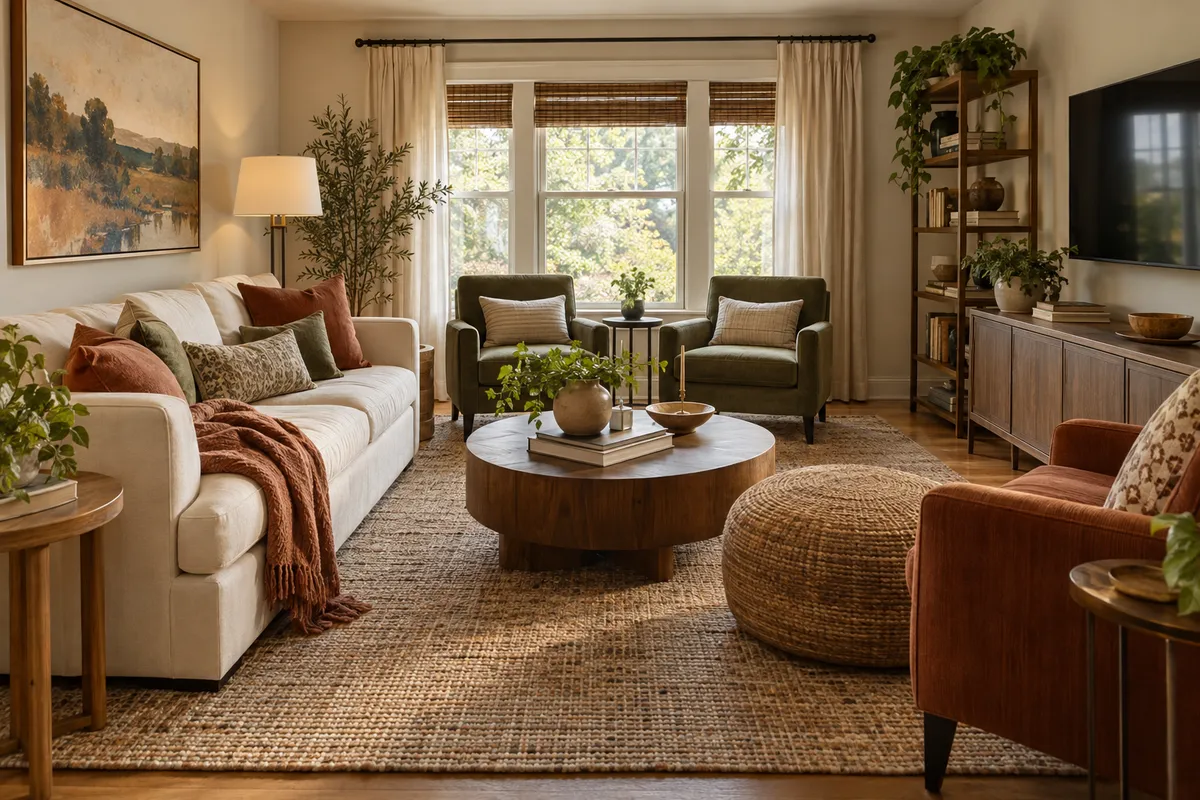
- Mix finishes on purpose. Pair a wood coffee table with a metal-framed side table, or a upholstered chair in a different color than the sofa.
- Shop secondhand for the extras. Thrift stores, marketplace listings, and estate sales are cheap sources for side tables, accent chairs, and lamps that don't match anything, which is the point.
A simple rule that helps: let pieces share a color family, a mood, or a level of formality, so the mix feels chosen, not accidental.
2. Skip the Rug That's Too Small
A small rug floating in the middle of the room is one of the quickest ways to make a space feel unfinished. The fix is about proportion, not price tag.
How to size it
These are general decorating guidelines, not figures from the designer:
- Aim for a rug large enough that at least the front legs of your sofa and chairs sit on it.
- Leave a border of bare floor around the edges so the rug looks like part of the layout.
- Measure first. Lay painter's tape on the floor to outline the size you're considering and live with it for a day.
Budget angle
Big rugs get expensive fast. Look at flatweave and jute styles, shop sales on larger sizes, or layer a smaller rug on top of an inexpensive neutral one to create the scale you need.
3. Skip the Generic, Mass-Produced Art
The same oversized print that hangs in a thousand living rooms doesn't say anything about you. The designer points to this as another thing wealthy clients tend to leave out.
Personality is the goal here, and personality is cheap.
Swaps that cost little
- Frame what you already have. Travel photos, kids' drawings, postcards, fabric scraps, or a map from a place you love.
- Buy from local artists or student shows. Small original pieces often cost about the same as a chain-store print.
- Hunt flea markets. Old frames and odd paintings add character, and you can replace the artwork inside a good frame later.
- Group with intention. A cluster of mixed pieces on one wall reads as collected over time.
4. Don't Let the TV Run the Room
The fourth item is a television dominating the room. If every seat points at a black screen, the room is organized around the TV instead of around you and your guests.
Ways to tone it down
- Rearrange the seating. Angle chairs toward each other so conversation is as natural as watching a show.
- Give the eye something else to land on. A strong piece of art, a bookshelf, or a nice window view can compete with the screen.
- Style around it. Put shelves, plants, or a gallery arrangement near the TV so it becomes one element among several.
- Consider a frame-style cover or a closed cabinet if you want it out of sight when it's off. Check that any cabinet has ventilation and fits your model.
You don't have to get rid of your TV. You just don't have to build the whole room as its altar.
How to Start Without Spending Much
You don't need to fix all four at once. Pick based on what bugs you most:
- Cheapest and fastest: rearrange seating and rehang or reframe art. Cost: near zero.
- Biggest visual payoff: the rug. Measure and tape it out before you buy.
- Slowest, most rewarding: swapping matched pieces for a collected mix as you find good secondhand items.
The common thread in the designer's list is that expensive-looking rooms feel considered. Someone chose each thing, sized it right, and let the room reflect the people who live there. You can do that on any budget.
This week, tape out the rug size you actually need, and see how much bigger your living room starts to look.