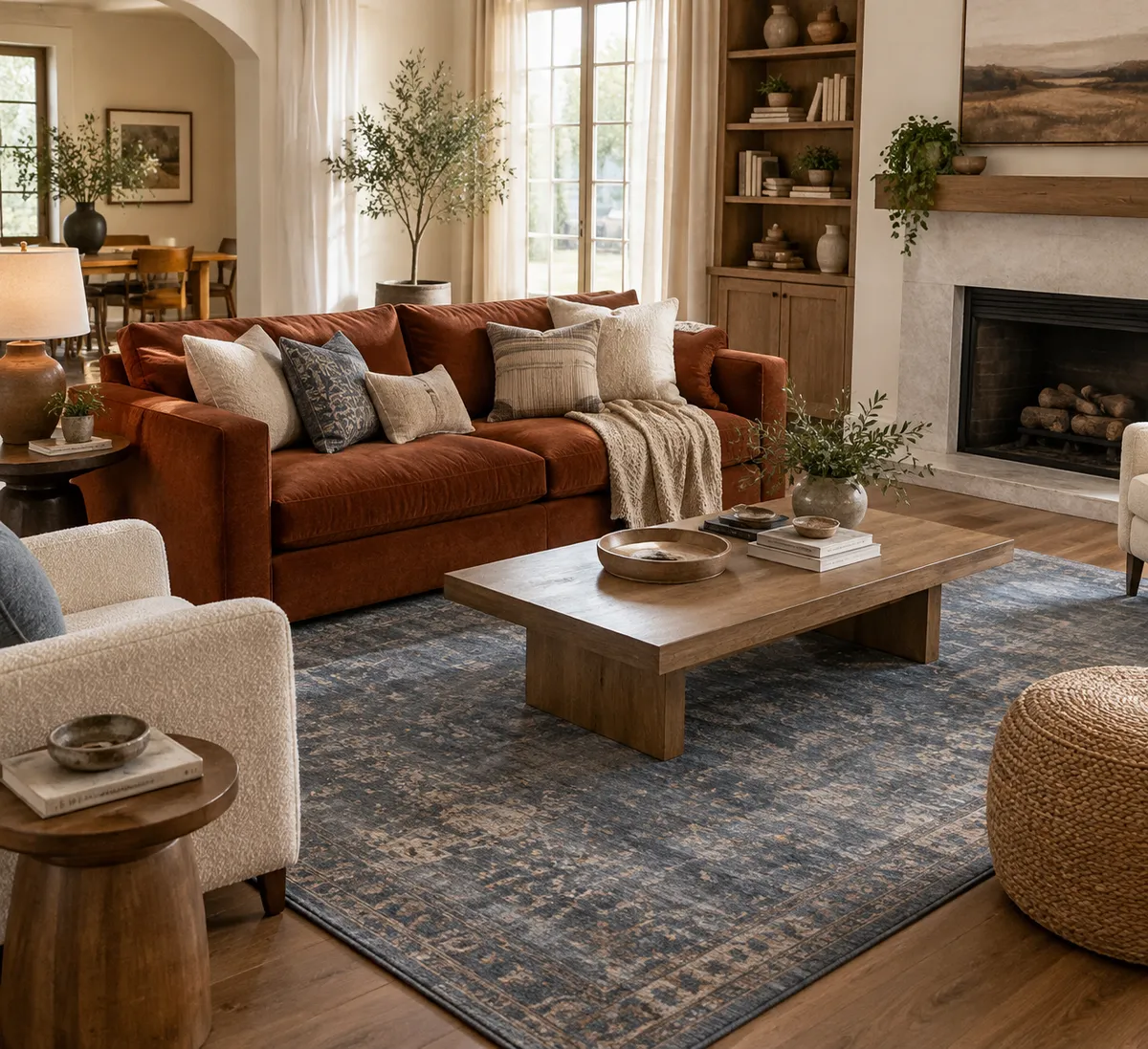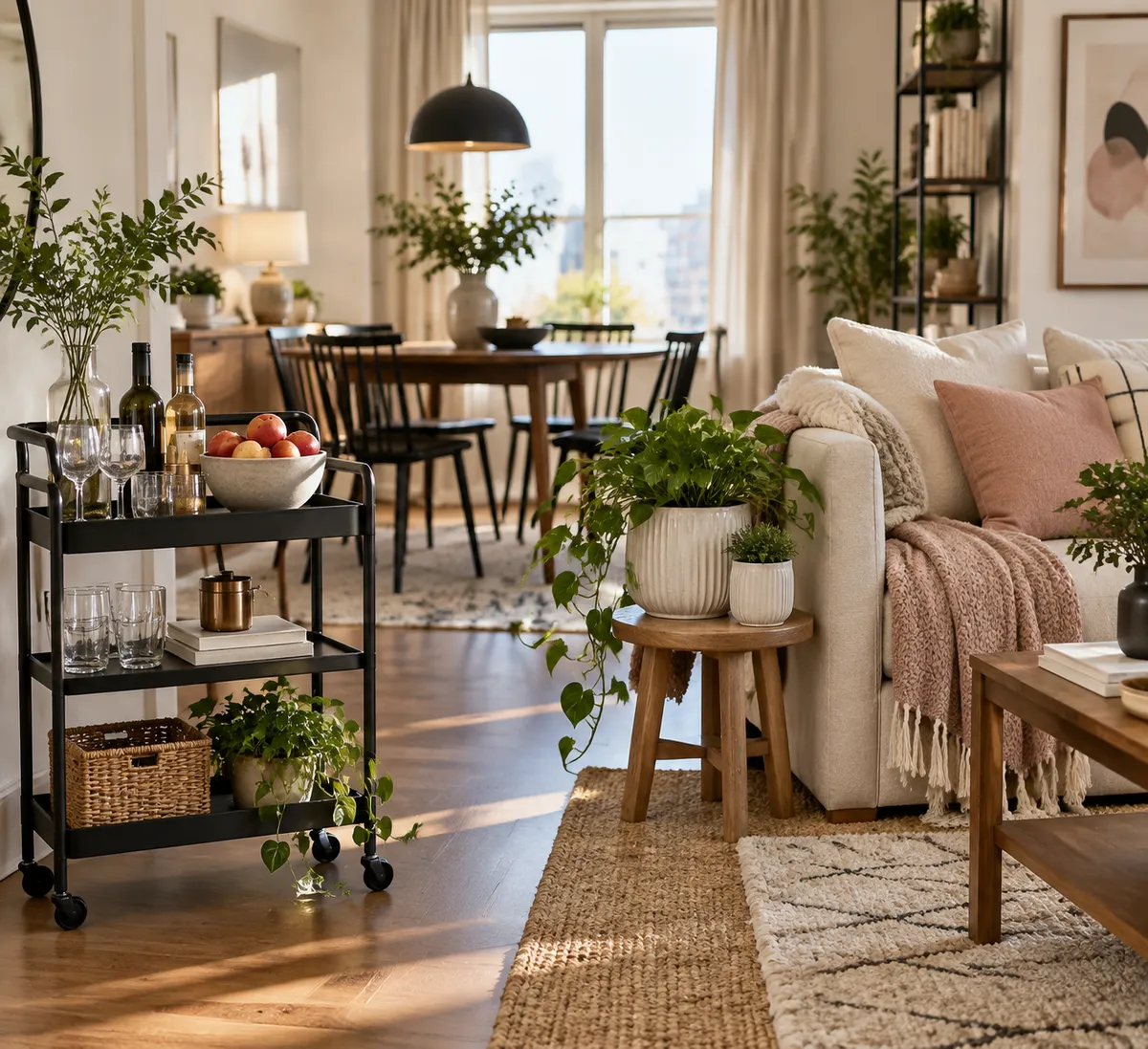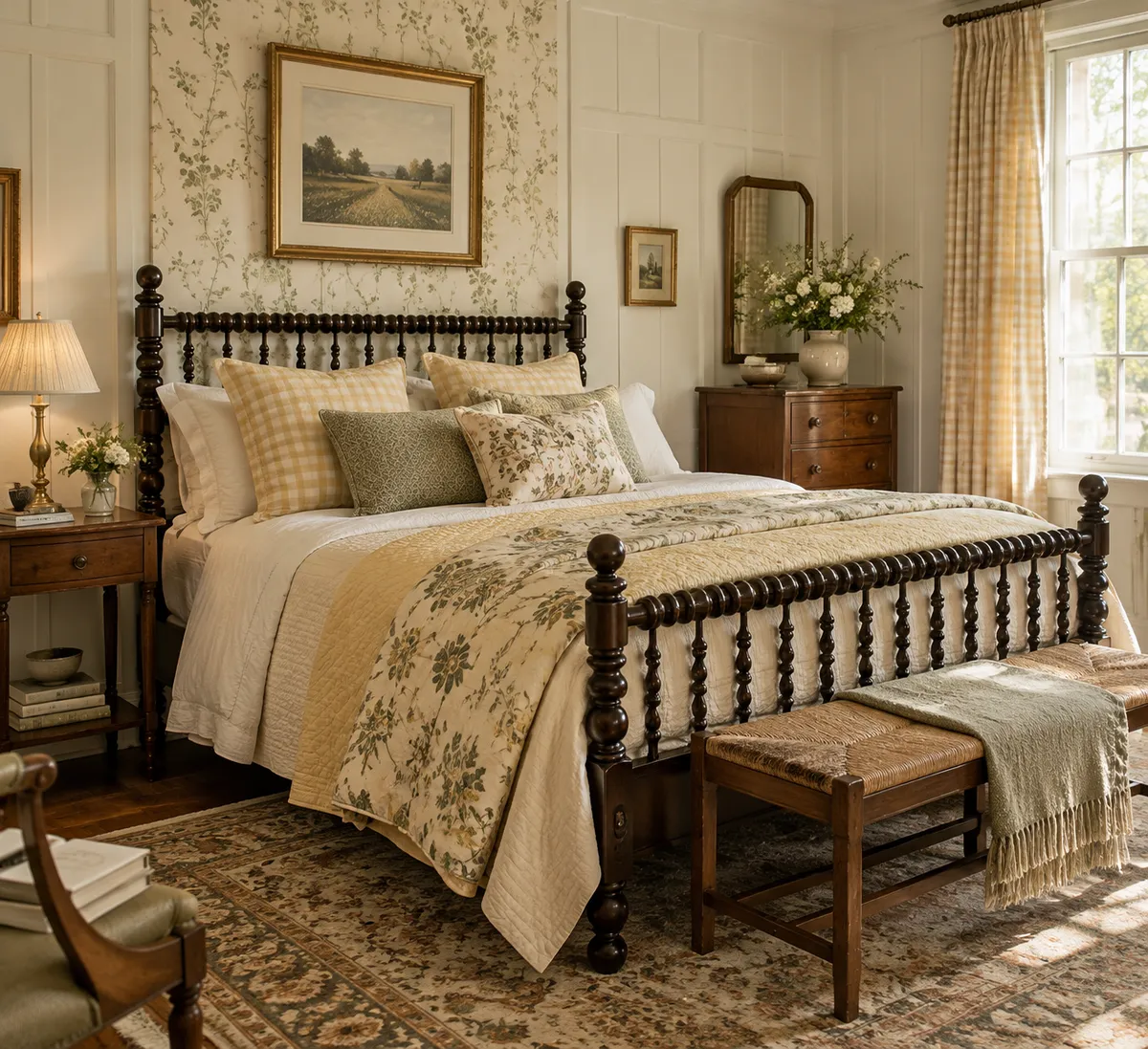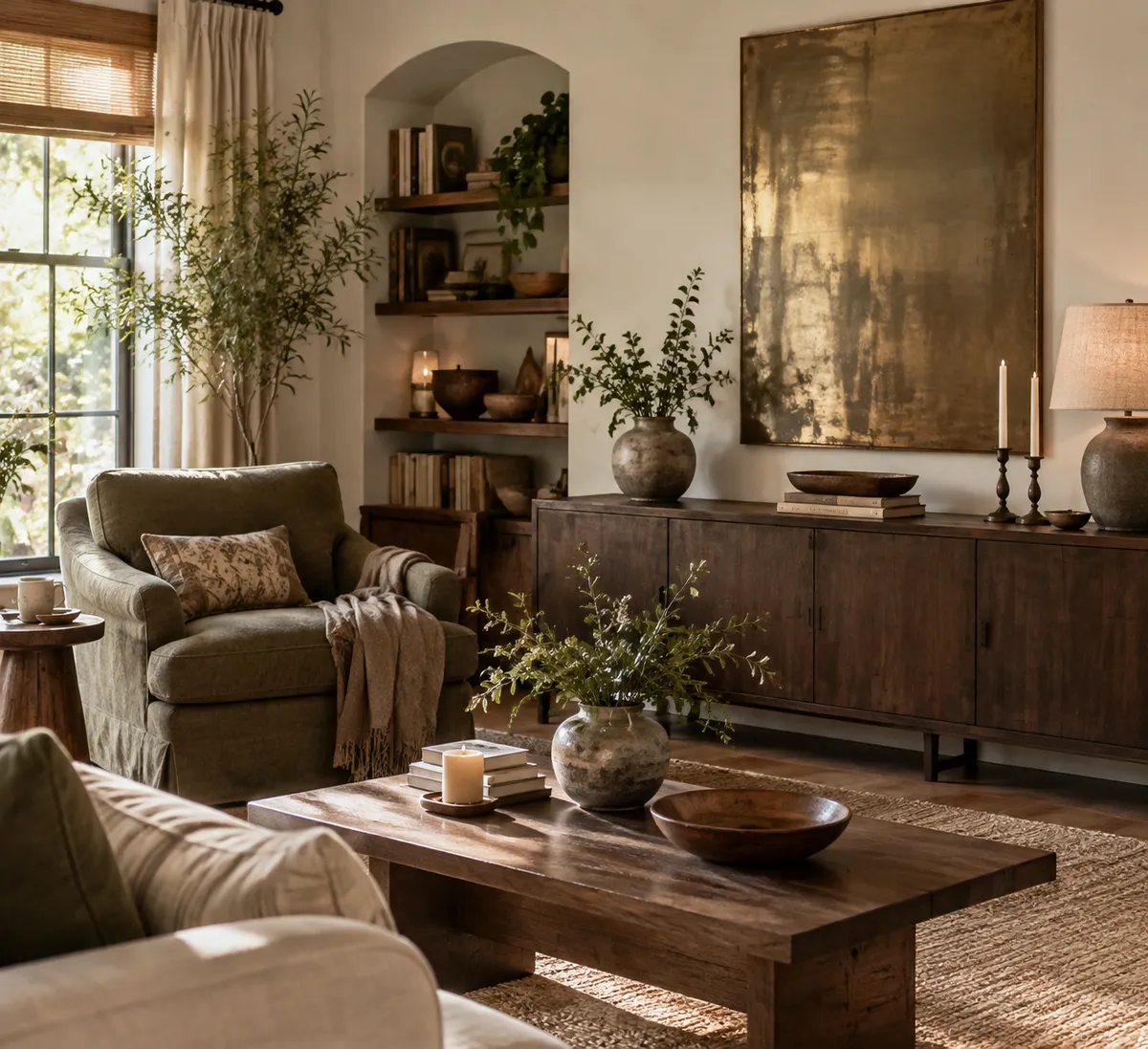
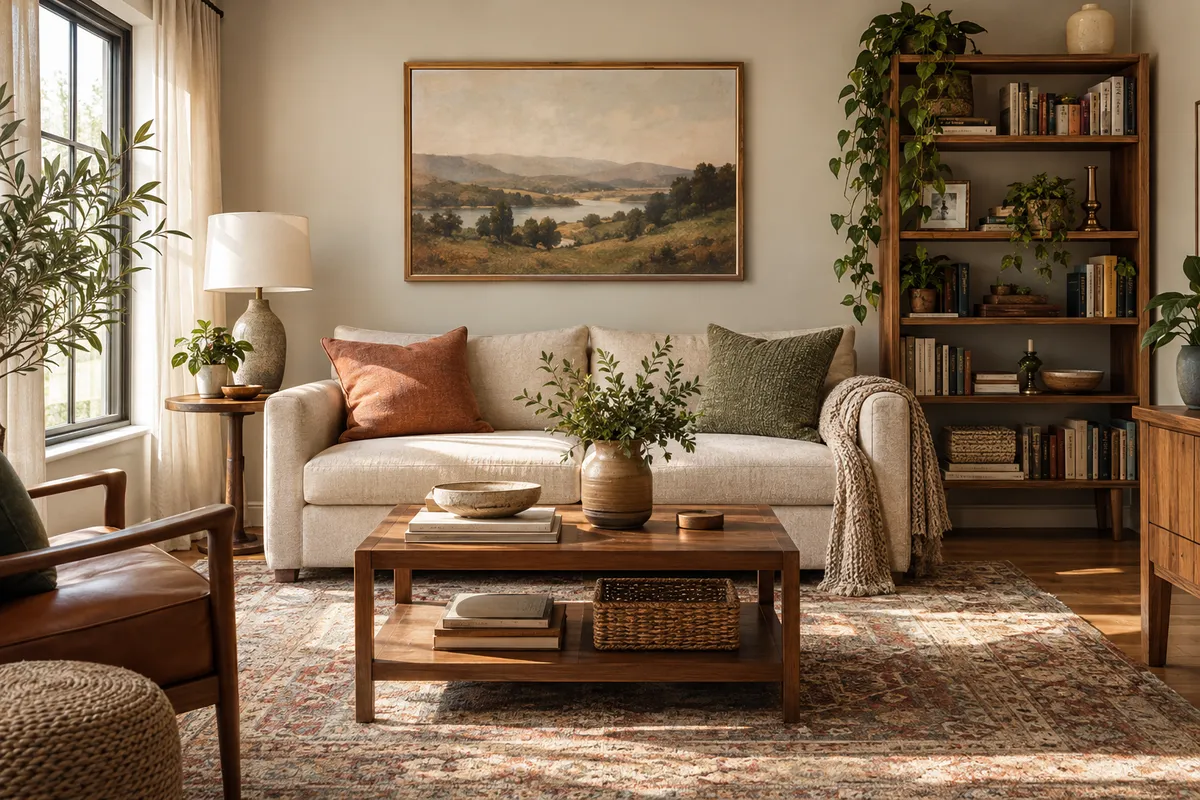
A room can have a great sofa, nice paint, and decent lighting and still feel like it's missing something. Often the culprit isn't a big purchase. It's a handful of small styling choices that make a space look unplanned or copy-pasted.
Per a roundup originally reported by Yahoo (from HomeDecor), there are five common mistakes designers tend to spot right away, from poorly scaled art to bookshelves styled with the same trendy items everywhere. The shared message: a home looks better when choices feel intentional, personal, and properly scaled.
Here's each one, with fixes that work in a studio or a big house, and don't need a big budget.
1. Hanging Too Many Small Pieces of Art
A wall dotted with lots of little frames can read as scattered, especially when the pieces are small relative to the wall or the furniture below them.
Try this:
- Swap several small pieces for one larger piece that fits the wall.
- If you love the small ones, group them tightly into one deliberate cluster instead of spreading them out.
- Before you drill, tape paper cutouts to the wall to test size and placement. It costs nothing and saves you from patching holes.
In a small space, one bigger piece over the sofa or bed often feels calmer than a busy gallery.
2. Relying on So-So Pillows
Limp, flat, or forgettable pillows are one of the quickest ways a sofa can look tired. Pillows are also one of the cheapest things to upgrade, which makes this an easy win.
Try this:
- Replace sad inserts with fuller ones so the pillows hold their shape.
- Choose covers you actually like rather than whatever came in a set.
- Mix a couple of textures or patterns instead of buying everything matching.
Covers are usually much cheaper than new pillows, so you can refresh a sofa with just the covers and keep your existing inserts if they're still plump.
3. Choosing Mass-Market Art Only
There's nothing wrong with affordable prints. The issue is when everything on your walls could be in anyone's home. That's the exact generic feeling designers notice.
Try this:
- Mix in something with a story: a thrifted frame, a vintage find, a print from a local artist, or a piece you made.
- Frame something personal, like a map of a place you love, a child's drawing, or a postcard from a trip.
- Keep a few store-bought pieces if you like them. The goal is a blend, not a purge.
This is also the most budget-friendly fix on the list. Flea markets, secondhand shops, and your own photos cost little and add personality you can't buy off a shelf.
4. Turning Books Backwards
Turning books so the pages face out creates a uniform, neutral look, but it can also make a shelf feel like a stage set. Backwards books hide titles and colors, and the shelf loses the personal touch that real books bring.
Try this:
- Put books spine-out, the way they're meant to be read.
- Stack a few horizontally to vary the rhythm, and set a small object on top.
- If the colors feel chaotic, group by tone rather than flipping them around.
Your books say something about you. Letting them show is free, and it's one of the fastest ways to make a shelf feel lived in.
5. Treating Every Shelf the Same with Trendy Items
When every shelf gets the same formula, such as the same trendy objects repeated in the same arrangement, the result feels like a catalog page rather than your home.
Try this:
- Give each shelf a slightly different job: one for books, one for a favorite object, one with breathing room.
- Add personal items like souvenirs, family photos, ceramics, or vintage finds.
- Leave some empty space. Not every inch needs an accessory.
If you're working with a single small bookcase, the same idea applies. Vary heights, mix objects with books, and edit down to the pieces that mean something to you.
Why This Matters Right Now
Many homes are styled with social media in mind, and that can push spaces toward the same look. There's a broader move toward personality-driven interiors, vintage finds, and meaningful decor over copy-paste trends. Fixing these five mistakes fits right into that shift.
Do a 15-Minute Audit
Walk into your living room as if you were a guest. Look at the art, the pillows, and the shelves, and ask of each one: is this the right size, and does it feel like mine?
Pick the one that bugs you most and fix just that this weekend. Flip the books, swap a pillow cover, or tape up paper to test a bigger piece of art. One small change is enough to make the room feel more intentional.